
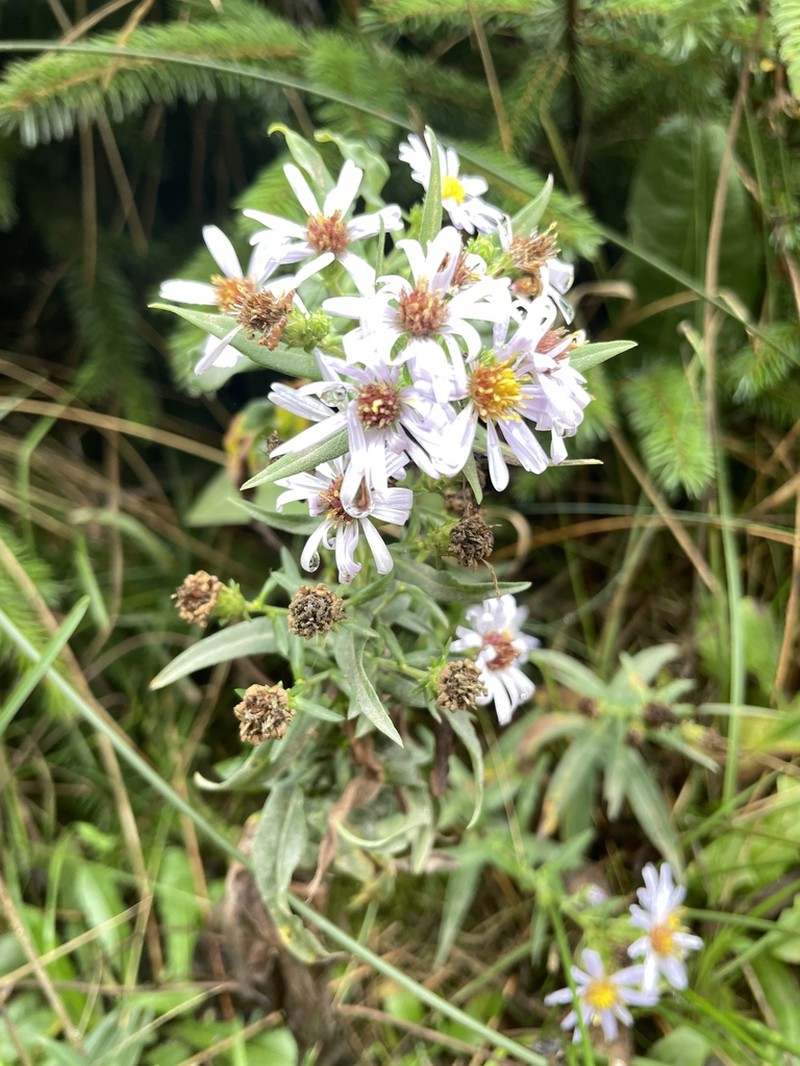
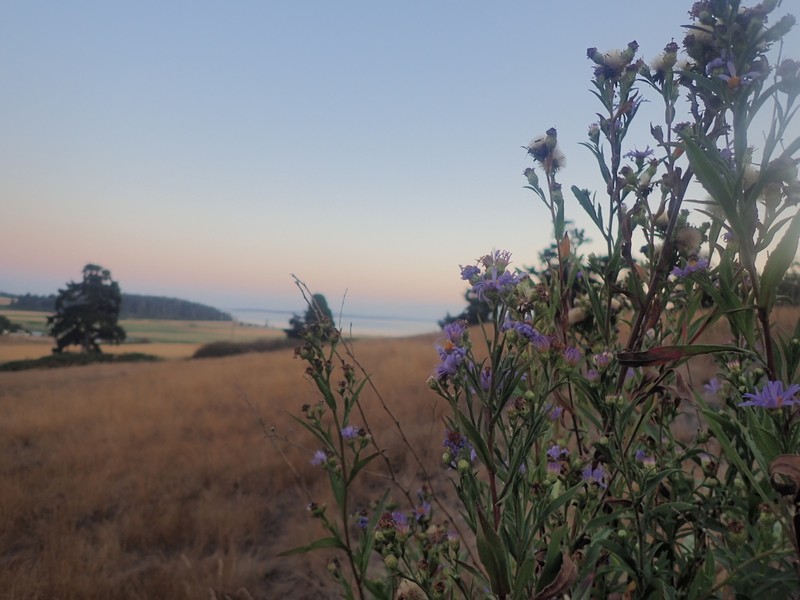
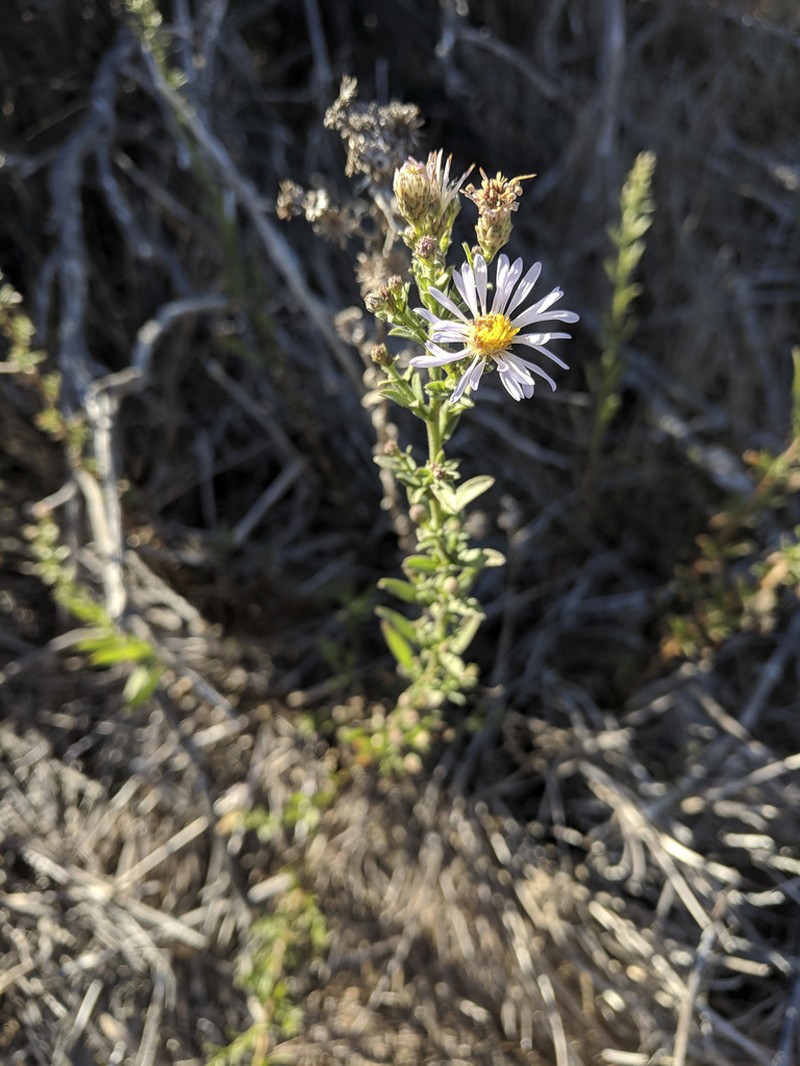
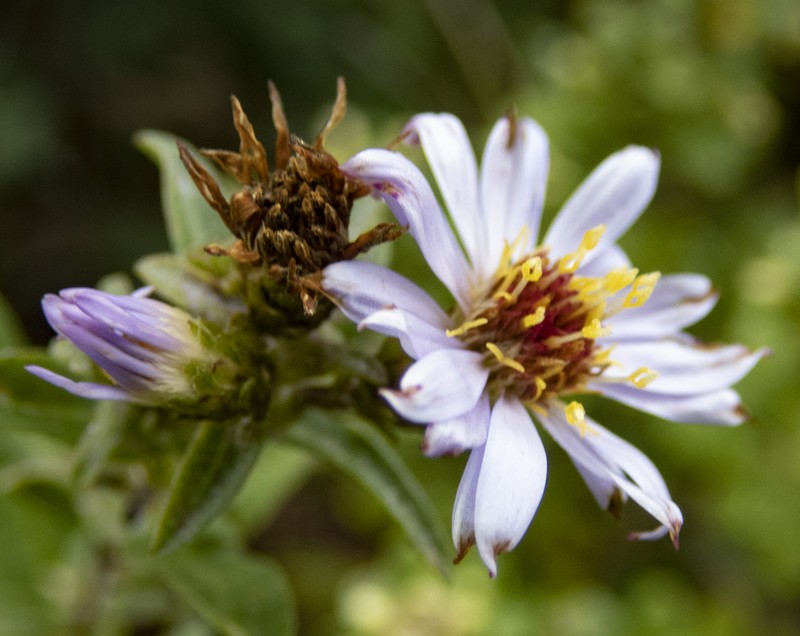
Pacific Aster
Symphyotrichum chilense
- Native to:
- Canada, United States
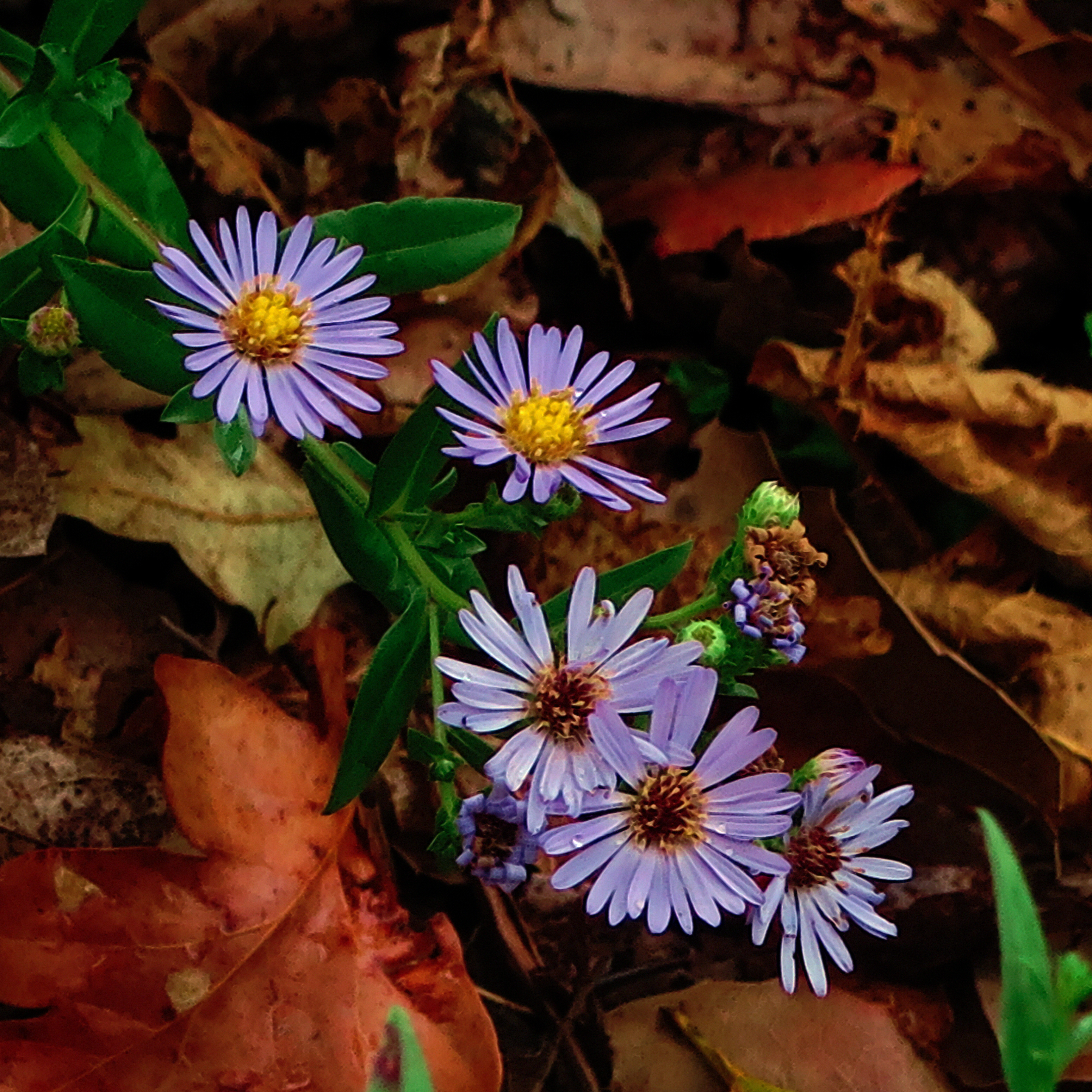
John Rusk (www.flickr.com) from Berkeley, CA, United States of America
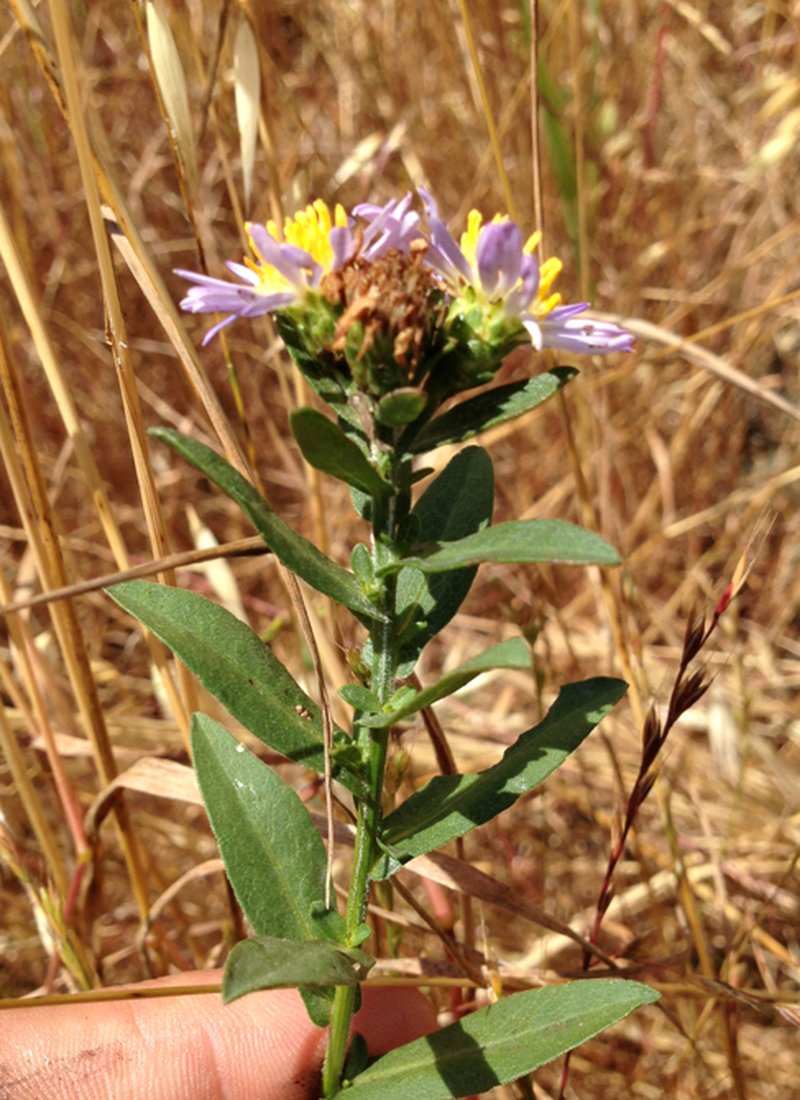
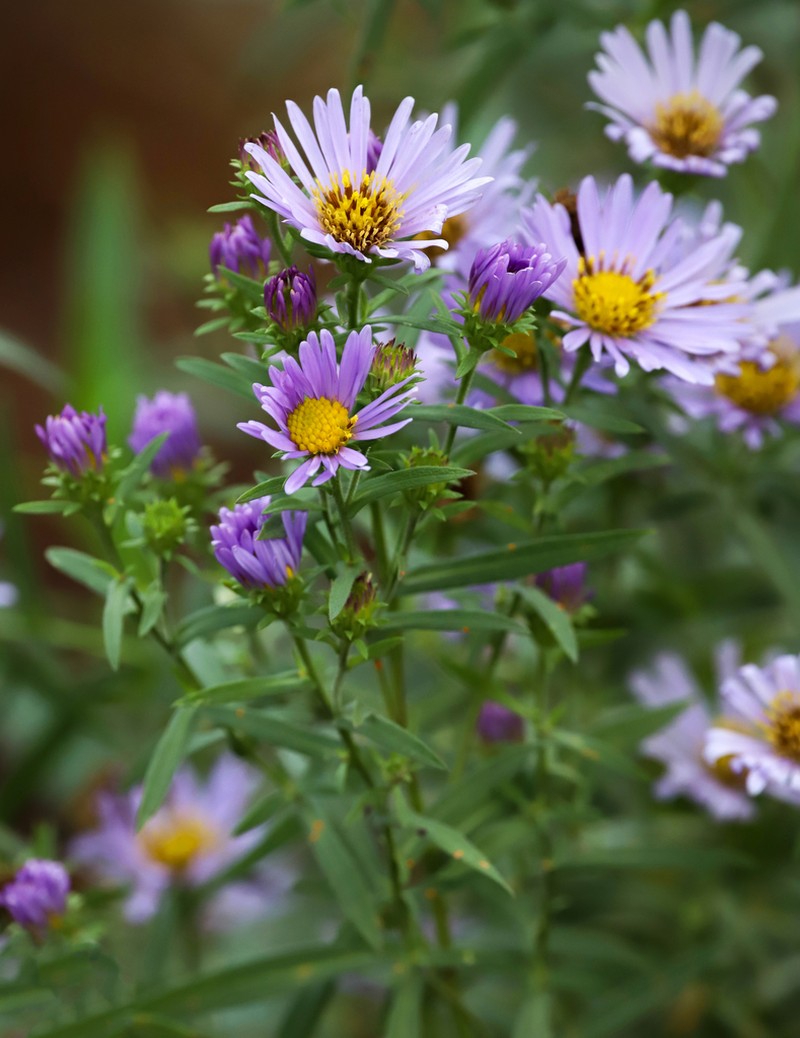
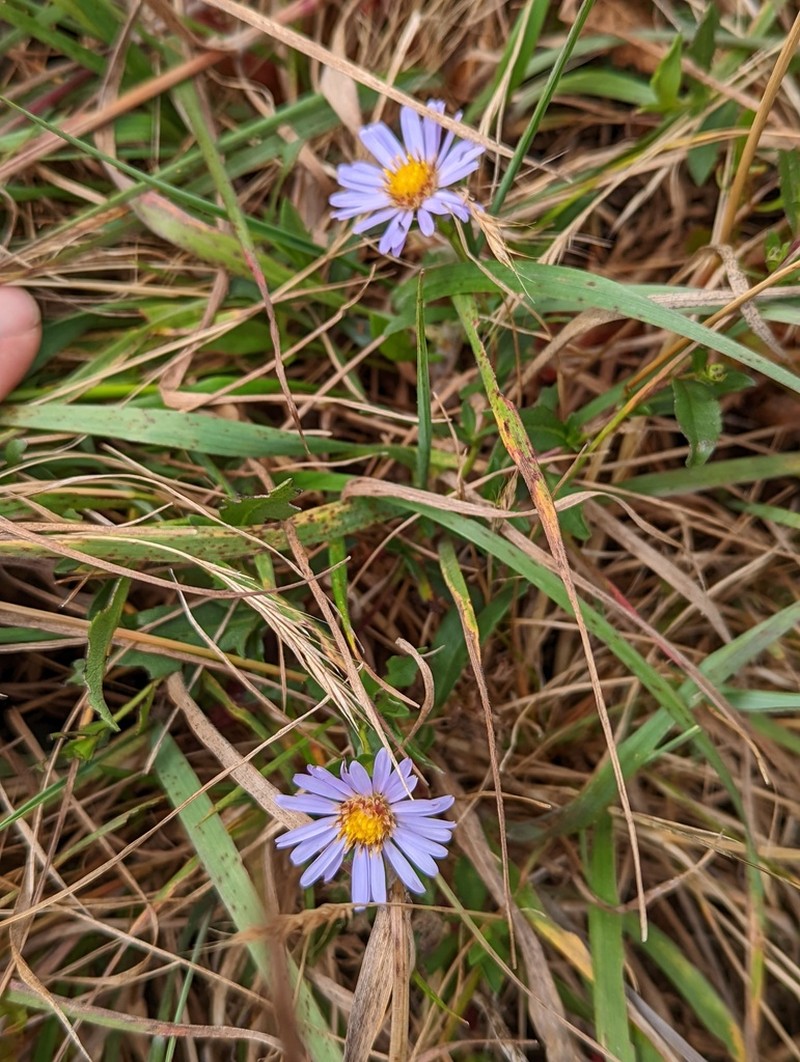
Taxonomy
- Division:
- Magnoliophyta | - Flowering plants
- Family:
- Asteraceae
- Genus:
- Symphyotrichum
- Species:
- Symphyotrichum chilense
- USDA Symbol:
- SYCH4
Growth Characteristics
- Life Cycle:
- Perennial
- Growth Habit:
- Forb/herb
- Height:
- 100 cm
- Light Requirements:
- Full Sun
- Drought Tolerance:
- Medium
- Bloom Months:
- jun,jul,aug,sep,oct
- Bloom Colors:
- purple, blue, pink
Wildlife Benefits
- Bees:
- ★★★☆☆ Documented bee visitation (GBIF)
- Butterflies & Moths:
- ★★★☆☆ Documented Lepidoptera association (GBIF)
Keystone Species Ranking
- Caterpillar Keystone:
- ★★★★☆ Butterfly & moth species supported by this genus (NWF)
- Pollen Specialist Bee Keystone:
- ★★★★☆ Native pollen specialist bee species supported by this genus (NWF)
Host Plant for Caterpillars
Meadow Crescent (Phyciodes pratensis)
Reported Fauna Sightings
Bees: Anthophora urbana, Fuzzy-horned bumble bee (Bombus mixtus), Sitka bumble bee (Bombus sitkensis), Two-form bumble bee (Bombus bifarius), ⚠️Western honey bee (Apis mellifera) Moths:Gnorimoschema subterranea Butterflies:American Lady (Vanessa virginiensis), Field Crescent (Phyciodes pulchella), Fiery Skipper (Hylephila phyleus), Gray Buckeye (Junonia grisea), Mylitta crescent (Phyciodes mylitta), Woodland Skipper (Ochlodes sylvanoides)
Garden & Ecology Notes
- Wildlife Value:
- bees, butterflies, birds
Soil Requirements
- Soil Type:
- moist, well-drained sandy loam
- pH:
- 5.5 - 7.5 (slightly acidic to neutral)
- Drainage:
- good drainage required
- Moisture:
- consistently moist
- Notes:
- native to coastal areas, prefers moist conditions
Propagation & Germination
- Stratification:
- Cold/moist stratification required — 30–60 days
- Germination Time:
- 14–30 days
- Notes:
- Seeds benefit from cold moist stratification for 30-60 days to break dormancy.
Pre-treatment: None required
Establishment: Seeds are collected between August 1st and November 30th. Mature inflorescences are brown. Seed is brown at maturity. S. chilense var. chilense is found from sea level to 4500 feet elevation in many plant communities; from southwestern Oregon to Santa Barbara County, California.
Source: npn.rngr.net
Where to Buy
Nationwide Seller
- Native Seed Group (seeds)