
New England Aster
Symphyotrichum novae-angliae
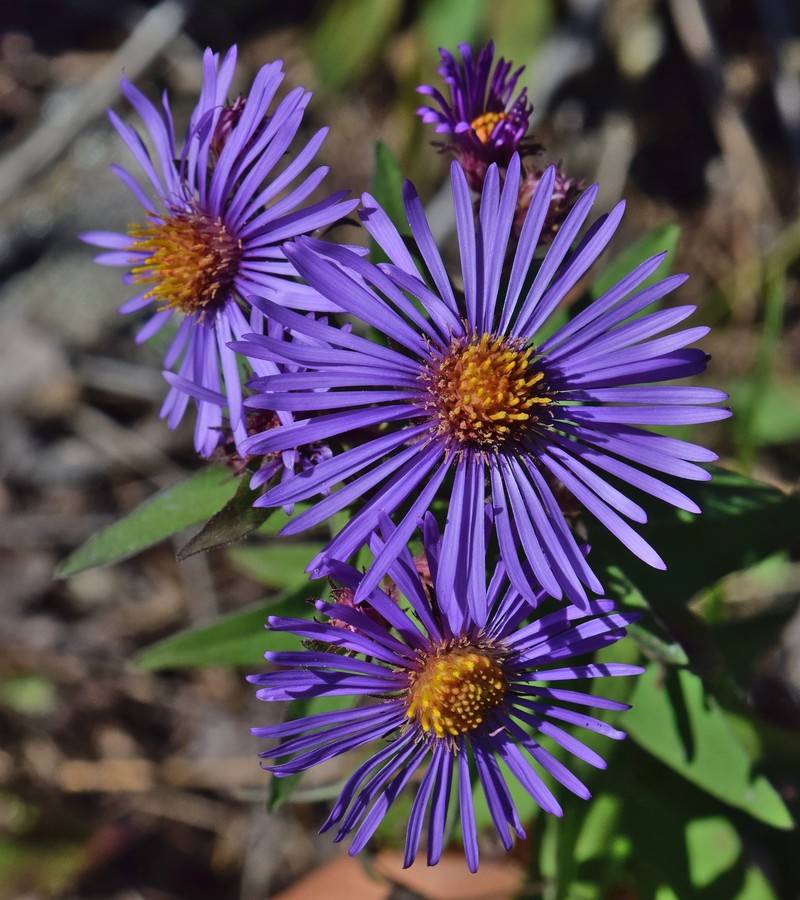
Taxonomy
- Division:
- Magnoliophyta | - Flowering plants
- Family:
- Asteraceae
- Genus:
- Symphyotrichum
- Species:
- Symphyotrichum novae-angliae
Growth Characteristics
- Life Cycle:
- Perennial
- Growth Habit:
- Forb/herb
- Height:
- 6-8 ft
- Light Requirements:
- Part Shade
- Drought Tolerance:
- High
- Bloom Months:
- aug, sep, oct
- Bloom Colors:
- Pink, Purple
Native Range
United States: Alabama, Arkansas, California, Colorado, Connecticut, District of Columbia, Delaware, Georgia, Iowa, Illinois, Indiana, Kansas, Kentucky, Massachusetts, Maryland, Maine, Michigan, Minnesota, Missouri, Mississippi, Montana, North Carolina, North Dakota, Nebraska, New Hampshire, New Jersey, New Mexico, New York, Ohio, Oklahoma, Oregon, Pennsylvania, Rhode Island, South Carolina, South Dakota, Tennessee, Utah, Virginia, Vermont, Washington, Wisconsin, West Virginia, Wyoming, Canada: British Columbia, Manitoba, New Brunswick, Nova Scotia, Ontario, Quebec
Keystone Species Ranking
- Caterpillar Keystone:
- ★★☆☆☆ Based on number of butterfly and moth species using this genus as host plant (Source: National Wildlife Federation)
- Bee Keystone:
- ★★☆☆☆ Based on number of native bee species using this genus for pollen and nectar (Source: National Wildlife Federation)
Host Plant for Caterpillars
Reported Fauna Sightings
Soil Requirements
- Soil Type:
- rich, well-drained loamy soil
- pH:
- 5.5 - 7.5 (slightly acidic to neutral)
- Drainage:
- good drainage preferred
- Moisture:
- consistently moist
- Notes:
- Thrives in prairies and meadows
Germination Information
Pre-treatment: Mix the seeds with an equal amount of moist perlite or vermiculite in a sealable plastic bag or container. Cold store at 34-42 degrees F for 1-4 months. If unable to plant in the fall due to weather, store the seed dry in cold storage.
Establishment: Seeds are collected from locally native plants or from nursery stock. The plant flowers from July to August and seed is harvested from September to November. The protocols vary slightly in temperature settings and seed treatment methods.
Source: npn.rngr.net