
Rough Cocklebur
Xanthium strumarium
- Native to:
- Afghanistan, Albania, Algeria, Andaman Is., Baleares, Bulgaria, Cambodia, Canada, China, Corse, Czechia-Slovakia, East Aegean Is., France, Greece, Hainan, Hungary, India, Iran, Italy, Kriti, Krym, Laos, Lebanon-Syria, Morocco, Myanmar, Nepal, Nicobar Is., North Caucasus, NW. Balkan Pen., Pakistan, Palestine, Portugal, Puerto Rico, Romania, Russia, Sardegna, Sicilia, Sinai, Spain, Sri Lanka, Switzerland, Tadzhikistan, Taiwan, Thailand, Transcaucasus, Türkiye, Türkiye-in-Europe, Turkmenistan, U.S. Minor Outlying Islands, Ukraine, United States, Uzbekistan
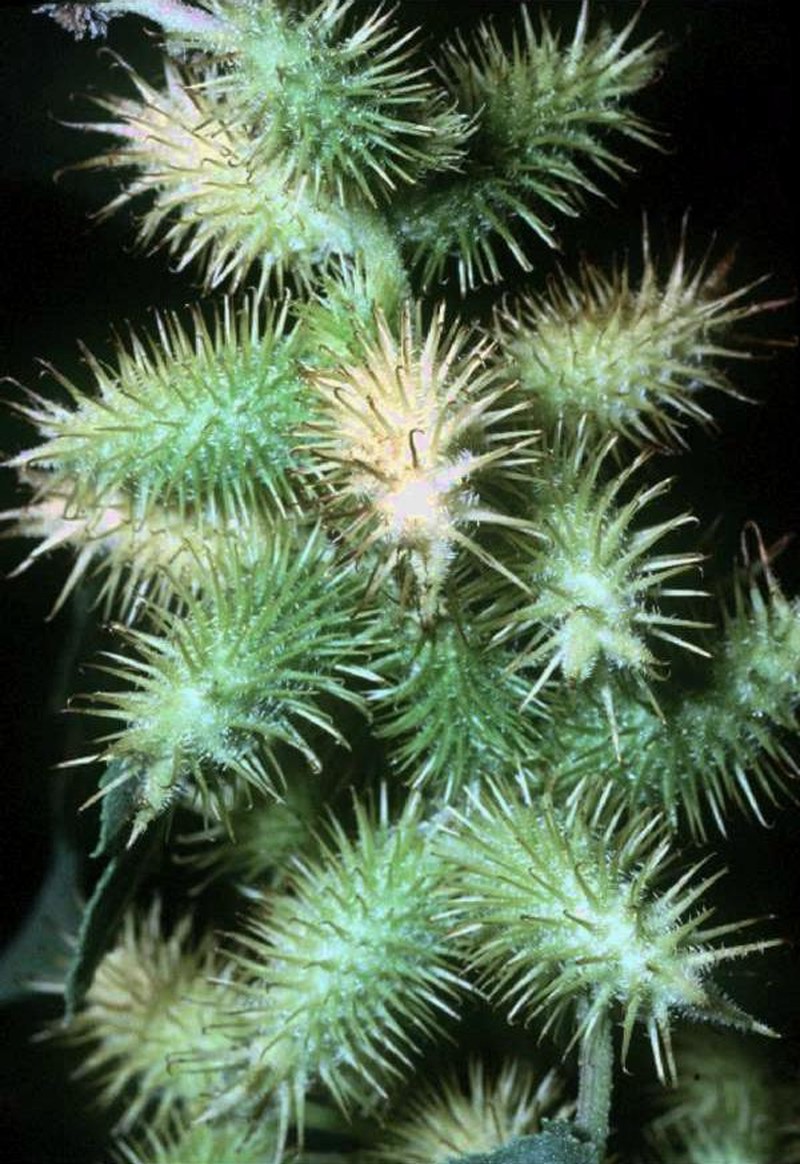
Roger Culos
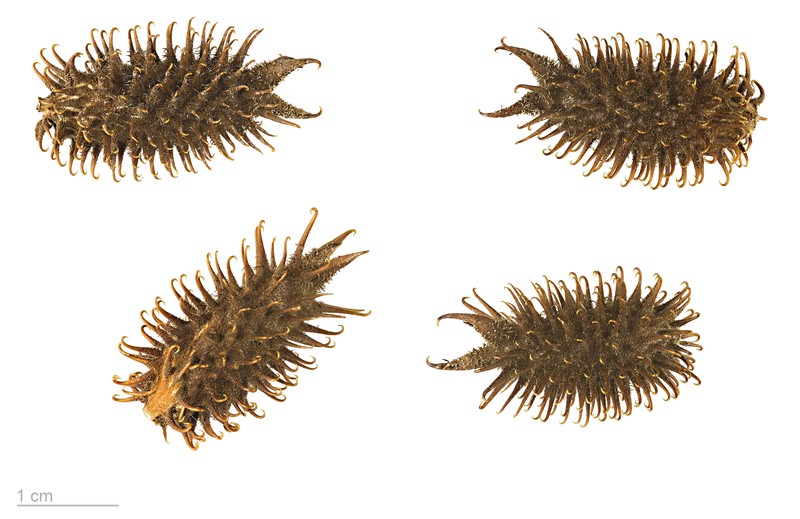
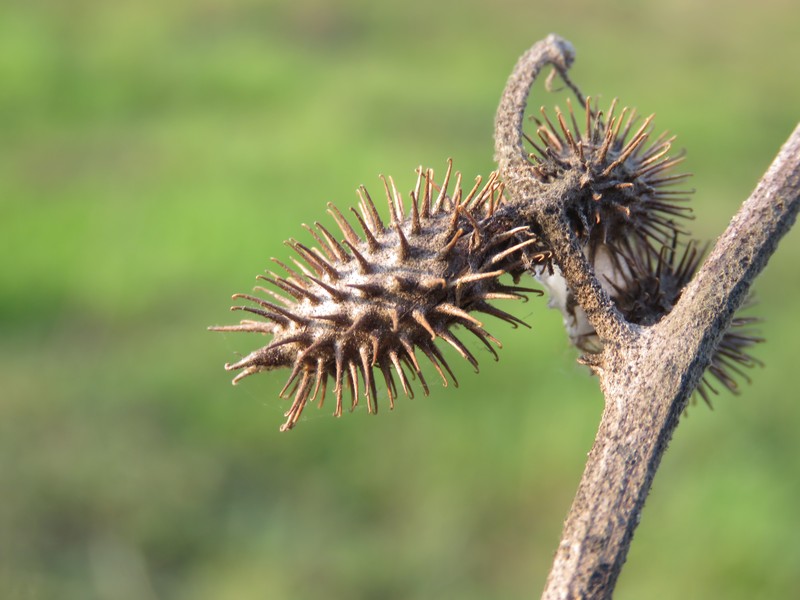
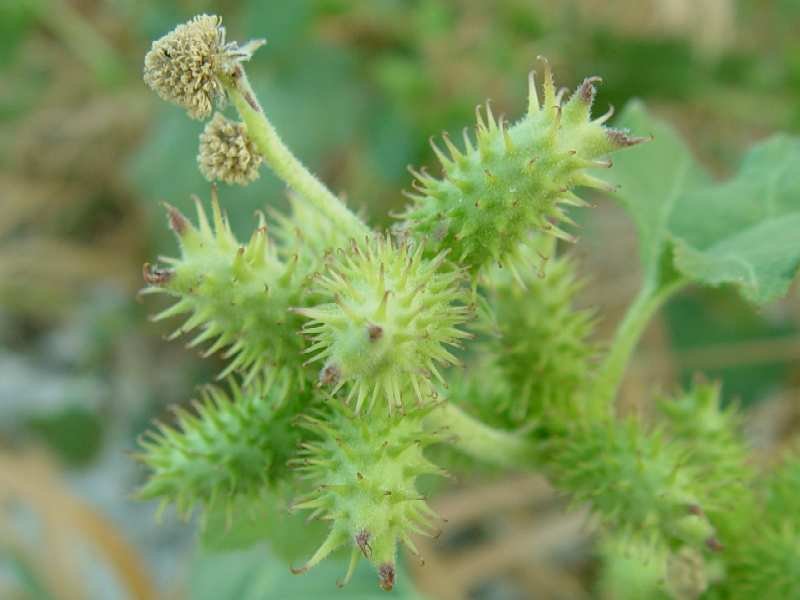
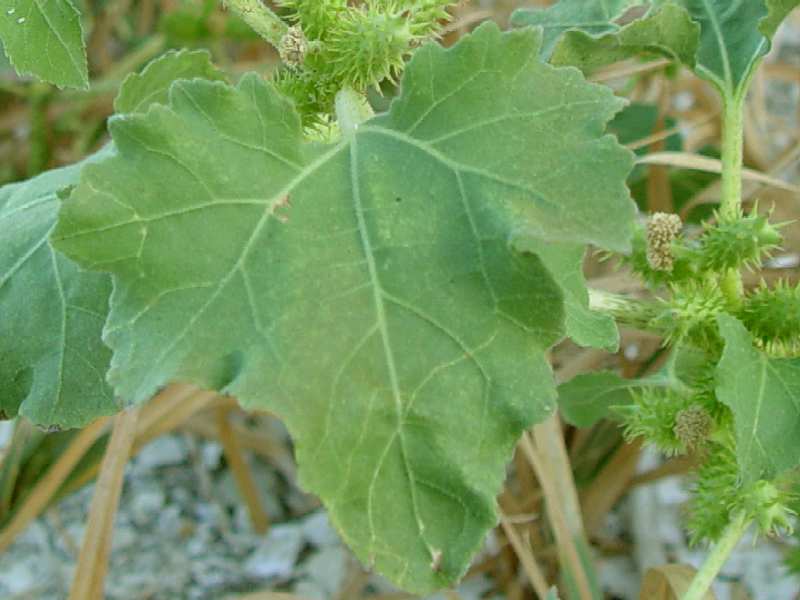
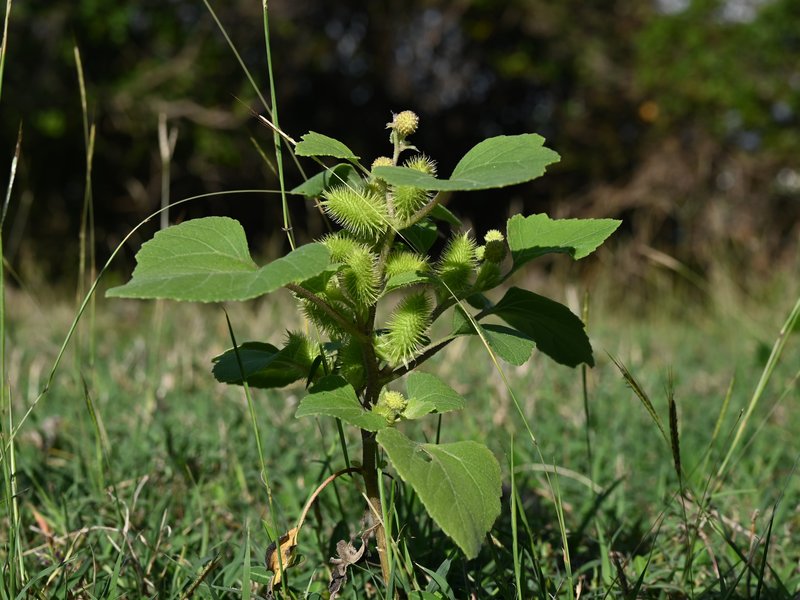
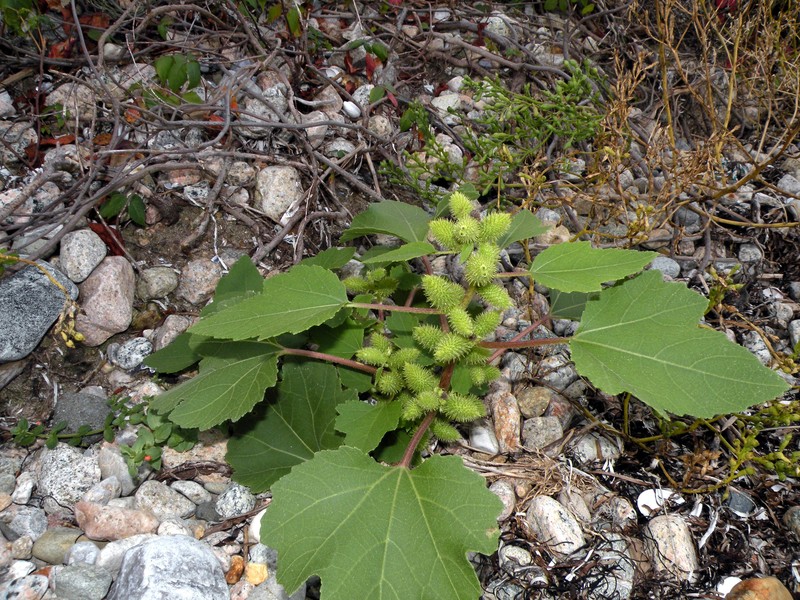
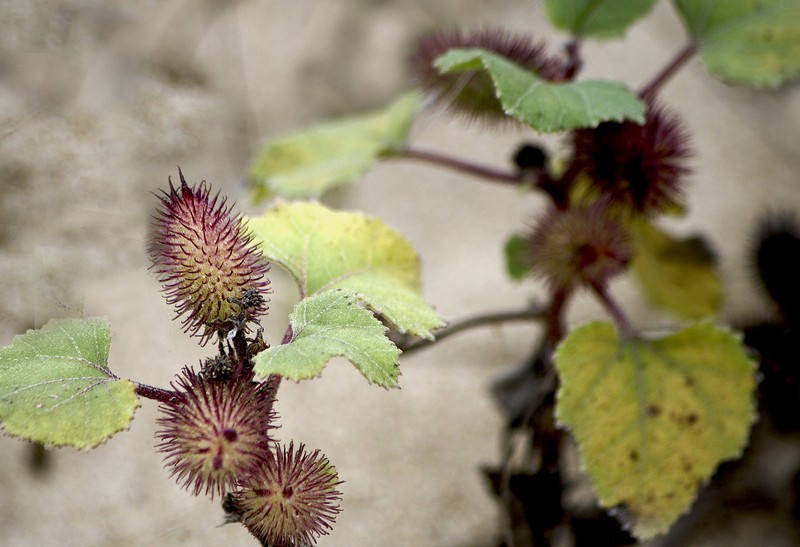
Taxonomy
- Division:
- Magnoliophyta | - Flowering plants
- Family:
- Asteraceae
- Genus:
- Xanthium
- Species:
- Xanthium strumarium
- USDA Symbol:
- XAST
Growth Characteristics
- Life Cycle:
- Annual
- Growth Habit:
- Forb/herb
- Height:
- 150 cm
- Light Requirements:
- Full Sun
- Drought Tolerance:
- Low
- Bloom Months:
- jul,aug,sep
- Bloom Colors:
- green
Wildlife Benefits
- Bees:
- ★☆☆☆☆ Documented bee visitation (GBIF)
- Butterflies & Moths:
- ★★★☆☆ Documented Lepidoptera association (GBIF)
- Caterpillars:
- ★★☆☆☆ Recorded caterpillar host plant (HOSTS Database)
Host Plant for Caterpillars
Adaina montana, Common Pinkband (Ogdoconta cinereola), corn earworm (Helicoverpa zea), Fall armyworm (Spodoptera frugiperda), Helcystogramma melantherella, Phaneta imbridana, Ragweed Borer Moth (Epiblema strenuana), stalk borer moth (Papaipema nebris), underworld dart (Agrotis subterranea), Variegated cutworm (Peridroma saucia), Bordered Patch (Chlosyne lacinia)
Garden & Ecology Notes
- Wildlife Value:
- birds
- Deer Resistant:
- Yes
Soil Requirements
- Soil Type:
- sandy, nutrient-poor, well-drained soil
- pH:
- 5.5 - 7.5 (slightly acidic to neutral)
- Drainage:
- tolerates poor drainage
- Moisture:
- dry to moderate
- Notes:
- often found in disturbed areas and riverbanks
Propagation & Germination
- Stratification:
- Cold/moist stratification required — 30–60 days
- Germination Time:
- 14–30 days
- Notes:
- Seeds germinate readily after cold stratification; sow in spring after last frost.
Where to Buy
Nationwide Seller
- Sheffield's Seed (seeds)