
Hollyleaved Barberry
Berberis aquifolium
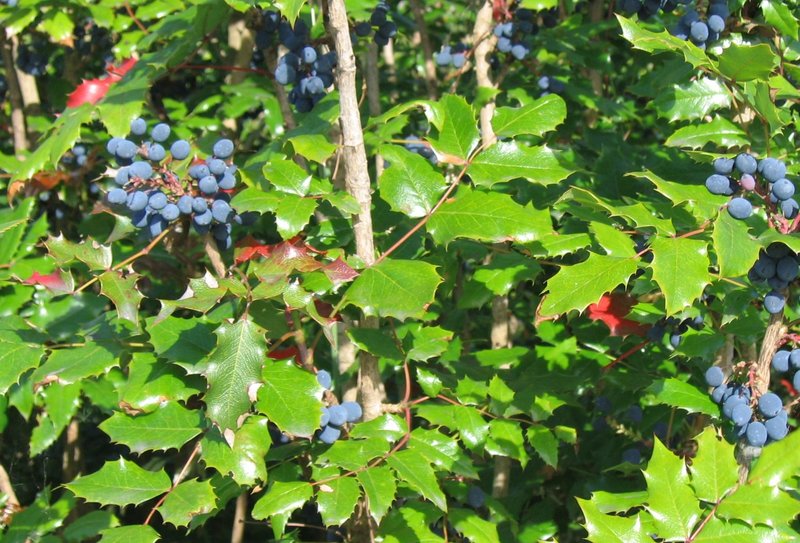
The original uploader was Meggar at English Wikipedia.
Taxonomy
- Division:
- Magnoliophyta | - Flowering plants
- Family:
- Berberidaceae
- Genus:
- Berberis
- Species:
- Berberis aquifolium
Growth Characteristics
- Life Cycle:
- Perennial
- Growth Habit:
- Shrub , Subshrub
- Height:
- 12-20 ft
- Light Requirements:
- Part Shade, Shade
- Drought Tolerance:
- High
- Bloom Months:
- mar, apr, may
- Bloom Colors:
- Yellow
- Evergreen Shrub:
- Yes
- Landscaping Shrub:
- Yes
Native Range
United States: California, District of Columbia, Georgia, Idaho, Kentucky, Michigan, Montana, New Jersey, New York, Ohio, Oregon, Washington, Canada: Alberta, British Columbia, Ontario, Quebec
Host Plant for Caterpillars
Reported Fauna Sightings
Soil Requirements
- Soil Type:
- rich, well-drained loamy soil
- pH:
- 5.0 - 7.0 (slightly acidic to neutral)
- Drainage:
- excellent drainage required
- Moisture:
- dry to moderate
Germination Information
Pre-treatment: Seeds are soaked in a 1% hydrogen peroxide solution for 24 hours, rinsed, and placed in water for an additional 48 hours. Then, they are placed in warm stratification (10 °C) for 45 days, checked weekly for mold. If mold is found, seeds are treated with 1% hydrogen peroxide. Following warm stratification, seeds are layered in peat and placed into cold stratification (1 to 3 °C) for 70 days.
Establishment: Seeds should not be allowed to dry out after collection. Ripe fruits may be picked by hand, using heavy gloves, or flailed onto cloth beneath the bushes. Native to deep, conifer forests and open, rocky woods from British Columbia to Idaho and northwest Montana, south to northern CA.
Source: npn.rngr.net