
Fremont's Mahonia
Berberis fremontii
- Native to:
- Mexico, United States
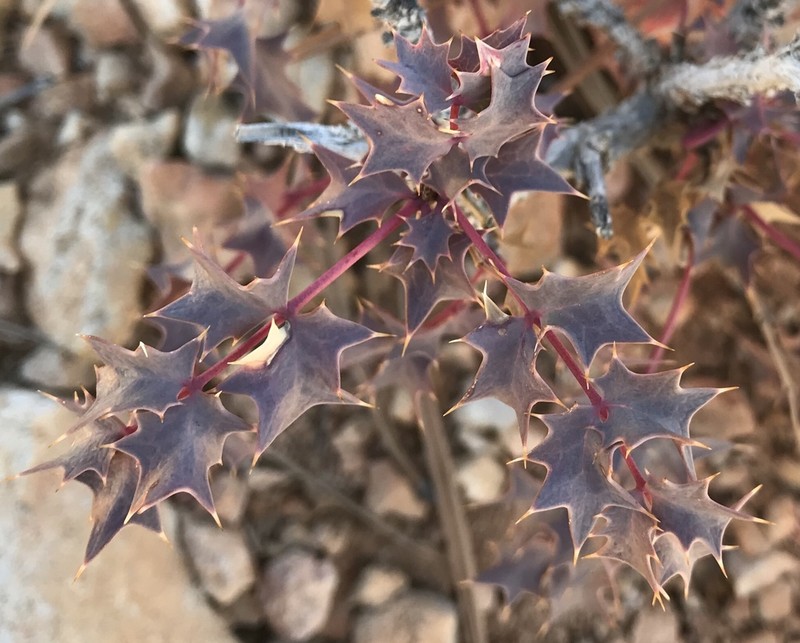
iNaturalist: © matthewh19 (iNaturalist #19186106)
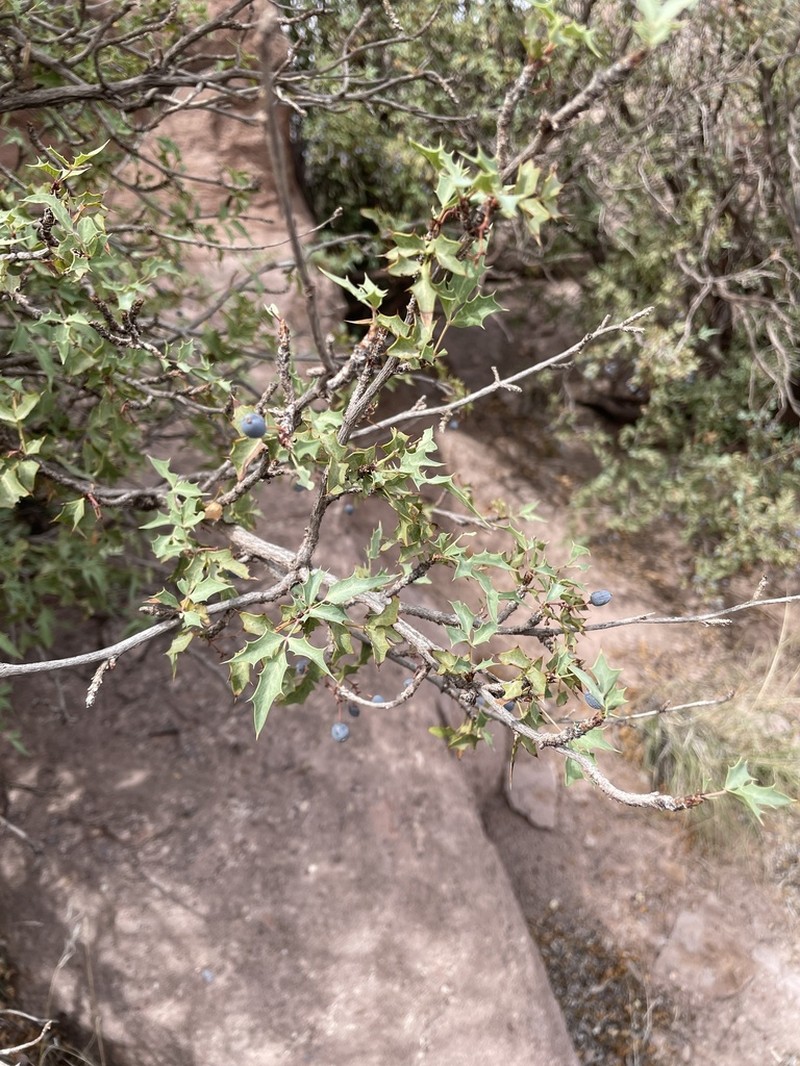
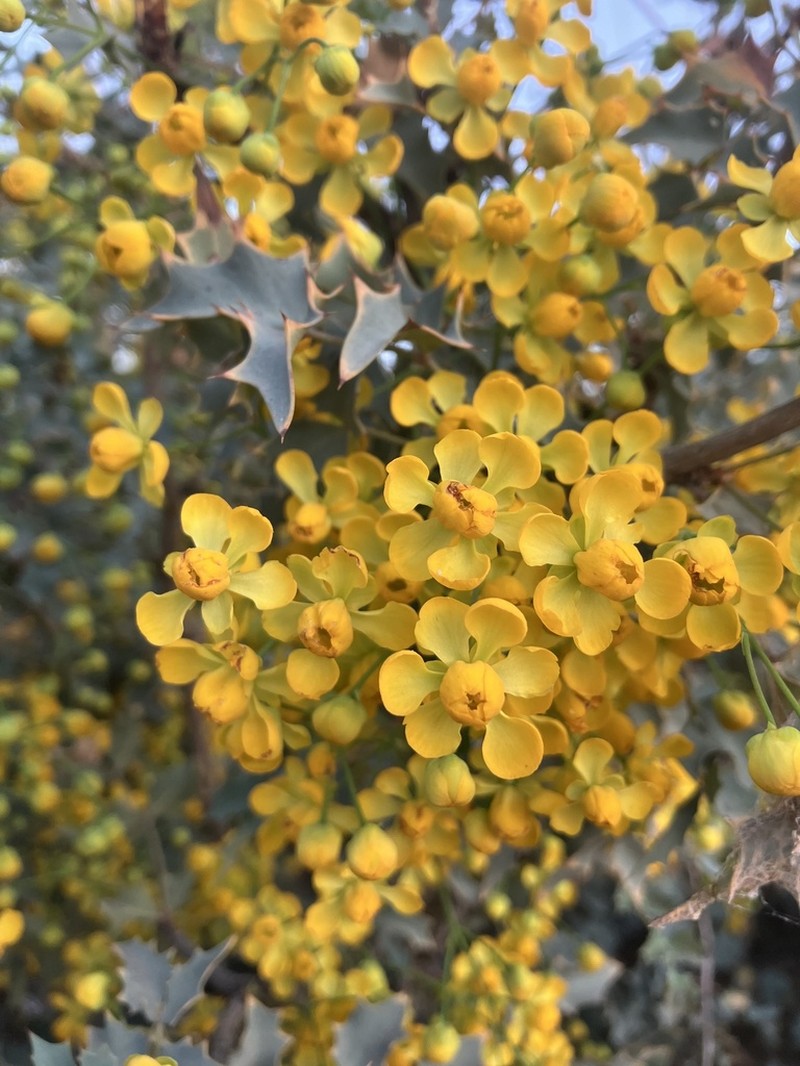
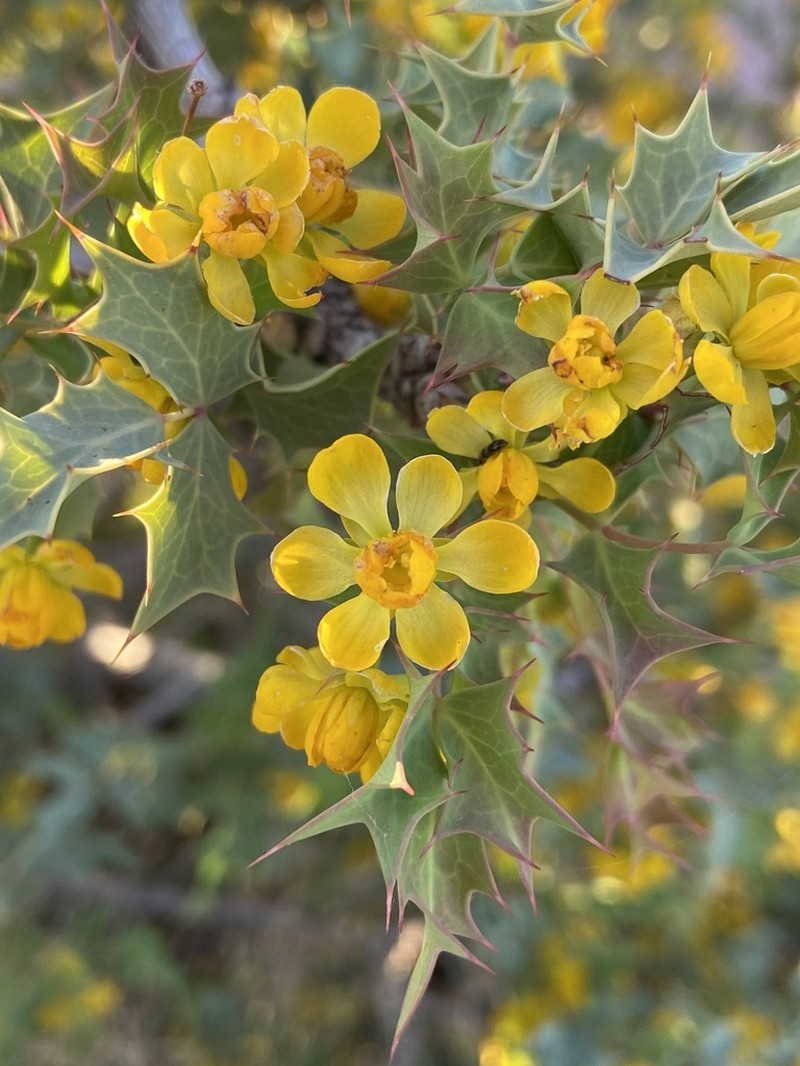
Taxonomy
- Division:
- Magnoliophyta | - Flowering plants
- Family:
- Berberidaceae
- Genus:
- Berberis
- Species:
- Berberis fremontii
- USDA Symbol:
- MAFR3
Growth Characteristics
- Life Cycle:
- Perennial
- Growth Habit:
- Shrub
- Height:
- 300 cm
- Light Requirements:
- Full Sun
- Drought Tolerance:
- High
- Bloom Months:
- apr,may,jun
- Bloom Colors:
- yellow
- Landscaping Shrub:
- Yes
Wildlife Benefits
- Butterflies & Moths:
- ★★☆☆☆ Documented Lepidoptera association (GBIF)
- Caterpillars:
- ★☆☆☆☆ Recorded caterpillar host plant (HOSTS Database)
Host Plant for Caterpillars
Western tent caterpillar (Malacosoma californica)
Garden & Ecology Notes
- Wildlife Value:
- birds, small mammals
- Deer Resistant:
- Yes
- Fall Color:
- red, orange
Soil Requirements
- Soil Type:
- rocky, well-drained, nutrient-poor soil
- pH:
- 6.0 - 8.0 (neutral to slightly alkaline)
- Drainage:
- excellent drainage required
- Moisture:
- dry to moderate
- Notes:
- adapted to arid, rocky environments
Propagation & Germination
- Stratification:
- Cold/moist stratification required — 60–90 days
- Germination Time:
- 30–90 days
- Notes:
- Seeds benefit from cold stratification for 60-90 days to break dormancy; germination is often slow and erratic.
Pre-treatment: Seeds are placed in cold stratification or stratified naturally by planting them in the fall in a thin layer of sand on mulched field beds.
Establishment: M. fremontii is found in southern Colorado and Utah and northern New Mexico and Arizona, as well as in the southwestern United States and Great Basin from California to Colorado and New Mexico. Germination was equal in light and dark. Seeds are wild collected during fall months and are kept separated according to site, elevation and source. Mature fruit is a blue berry containing several seeds.
Source: npn.rngr.net