
Creeping Barberry
Berberis repens
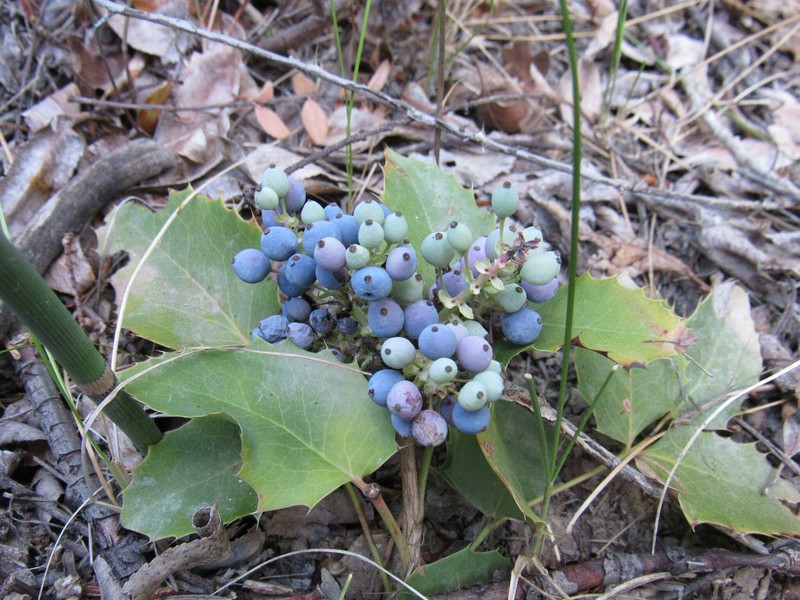
Anders Hastings https://www.inaturalist.org/people/andershastings
Taxonomy
- Division:
- Magnoliophyta | - Flowering plants
- Family:
- Berberidaceae
- Genus:
- Berberis
- Species:
- Berberis repens
Growth Characteristics
- Life Cycle:
- Perennial
- Growth Habit:
- Shrub , Subshrub
- Height:
- 6 in - 1 ft
- Light Requirements:
- Part Shade
- Drought Tolerance:
- High
- Bloom Months:
- apr, may, jun, jul
- Bloom Colors:
- Yellow
- Ground Cover:
- Yes
- Evergreen Shrub:
- Yes
Native Range
United States: Arizona, California, Colorado, Delaware, Idaho, Indiana, Minnesota, Montana, North Dakota, Nebraska, New Mexico, Nevada, Oregon, Pennsylvania, South Dakota, Texas, Utah, Washington, Wyoming, Canada: Alberta, British Columbia, Ontario
Host Plant for Caterpillars
Soil Requirements
- Soil Type:
- rich, well-drained loamy soil
- pH:
- 5.5 - 7.0 (slightly acidic to neutral)
- Drainage:
- excellent drainage required
- Moisture:
- dry to moderate
- Notes:
- prefers shaded or semi-shaded areas
Germination Information
Pre-treatment: For seeds: Soak in water for 48 hours, then bury in moist peat moss for 2 months at 70°F (21°C), followed by 5 months cold moist stratification at 37°F (3°C). For cuttings: Recut base at an angle, wound base with a shallow 1-inch slice, treat with fungicide and 1,000 to 3,000 ppm IBA.
Establishment: Seeds are collected in early August when fruit turns dark blue to purple. Cuttings are collected in mid-summer. Germination rates and times may vary depending on the source and treatment of the propagules.
Source: npn.rngr.net