
Hazel Alder
Alnus serrulata
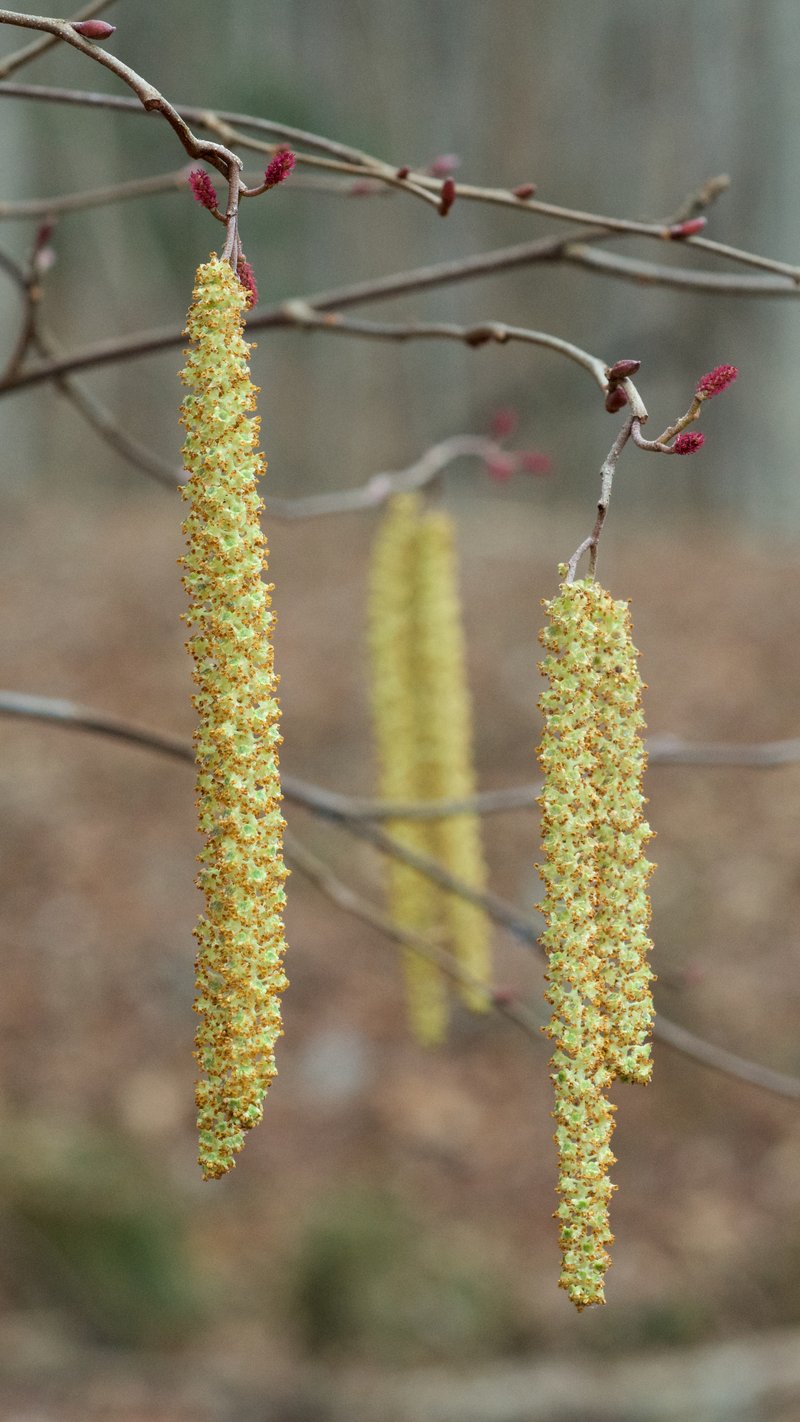
Taxonomy
- Division:
- Magnoliophyta | - Flowering plants
- Family:
- Betulaceae
- Genus:
- Alnus
- Species:
- Alnus serrulata
Growth Characteristics
- Life Cycle:
- Perennial
- Growth Habit:
- Shrub , Tree
- Height:
- 12-20 ft
- Light Requirements:
- Full Sun, Part Shade, Shade
- Drought Tolerance:
- High
- Bloom Months:
- mar, apr
- Bloom Colors:
- Red, Green, Brown
Native Range
United States: Alabama, Arkansas, Connecticut, District of Columbia, Delaware, Florida, Georgia, Illinois, Indiana, Kansas, Kentucky, Louisiana, Massachusetts, Maryland, Maine, Missouri, Mississippi, North Carolina, New Hampshire, New Jersey, New York, Ohio, Oklahoma, Pennsylvania, Rhode Island, South Carolina, Tennessee, Texas, Virginia, Vermont, West Virginia, Canada: New Brunswick, Nova Scotia, Quebec
Keystone Species Ranking
- Caterpillar Keystone:
- ★☆☆☆☆ Based on number of butterfly and moth species using this genus as host plant (Source: National Wildlife Federation)
Host Plant for Caterpillars
Soil Requirements
- Soil Type:
- moist, fertile, well-drained loamy soil
- pH:
- 5.0 - 7.0 (slightly acidic to neutral)
- Drainage:
- tolerates poor drainage
- Moisture:
- consistently moist
- Notes:
- Commonly found along streams and wetlands
Germination Information
Pre-treatment: Sow seed in nursery beds within one month of harvest as it does not maintain its germination in storage.
Establishment: Smooth alder is native to the eastern United States in USDA plant hardiness zones 5 through 8. It grows best in wet bottomlands and stream margins as well as in moist, well drained upland areas. It is moderately shade tolerant, but is weak-wooded and susceptible to wind and ice damage. It is not adapted to alkaline, saline, droughty, or extremely acid soils. Use of 'Panbowl' is recommended only in specific USDA Major Land Resource Areas where it was tested.
Source: npn.rngr.net