
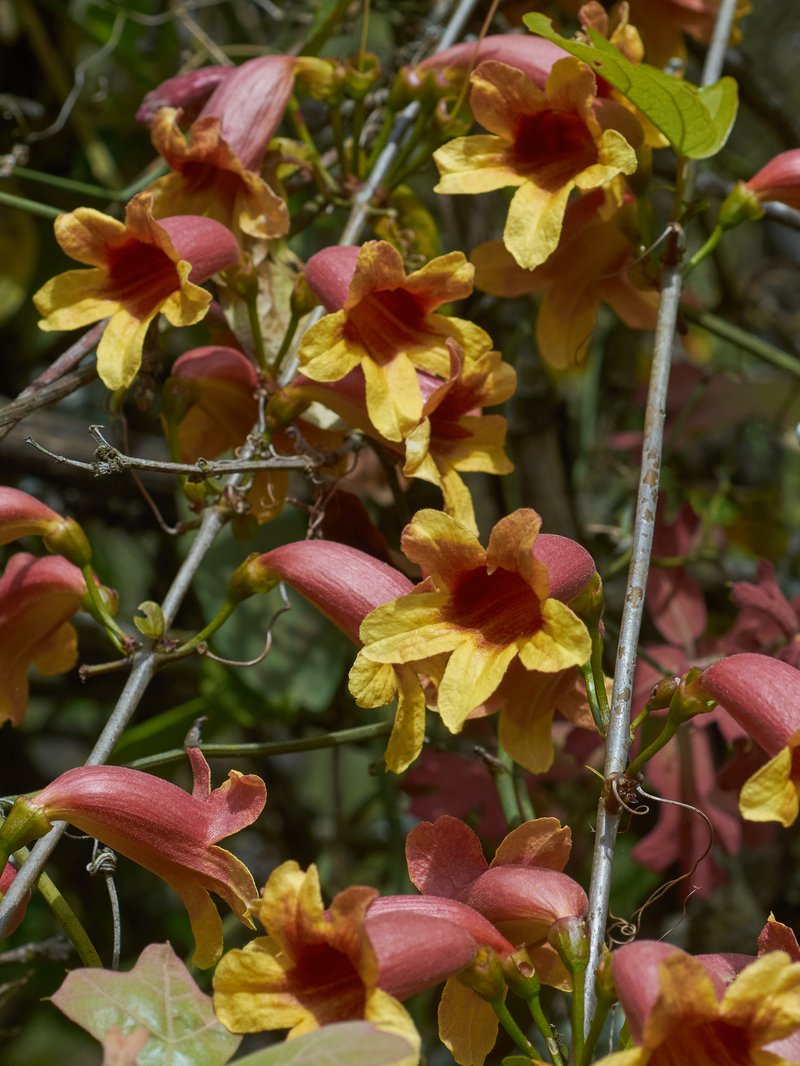
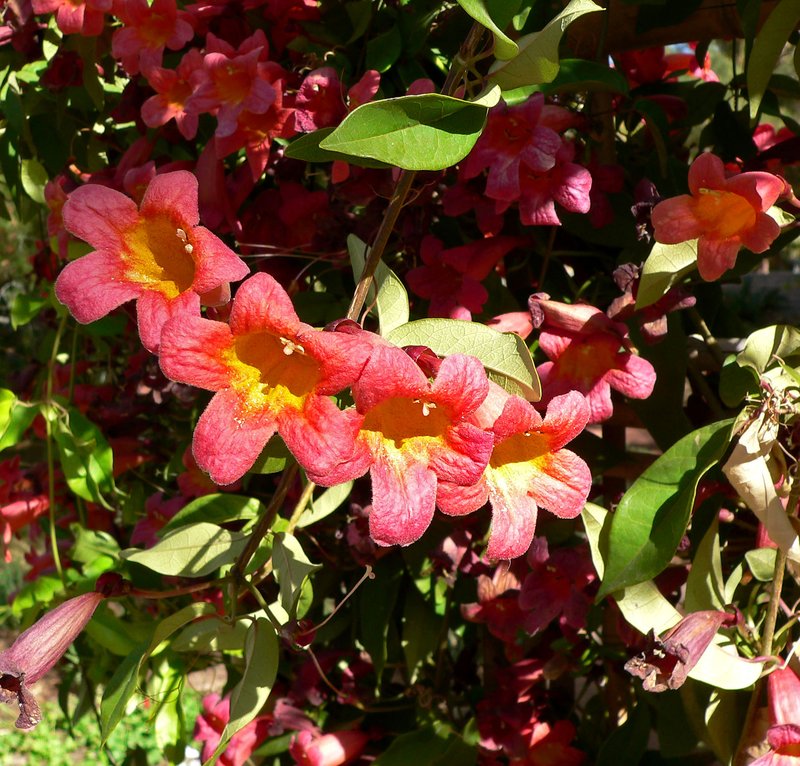
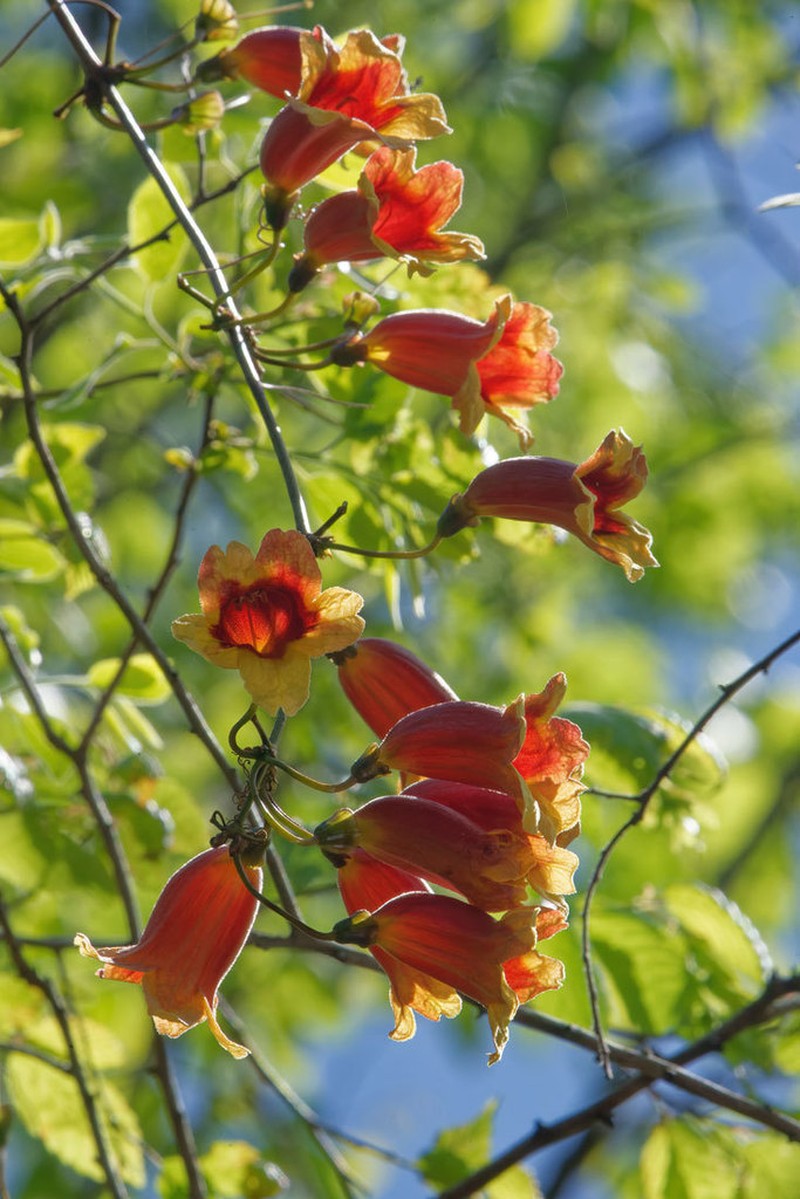
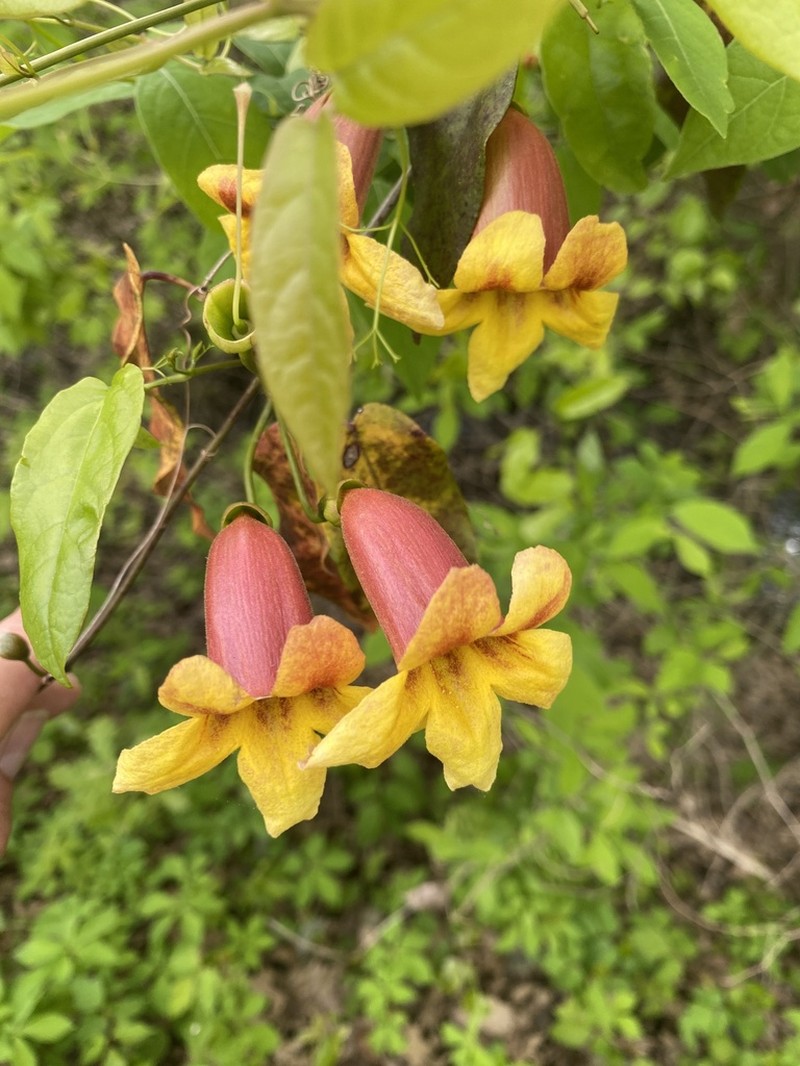
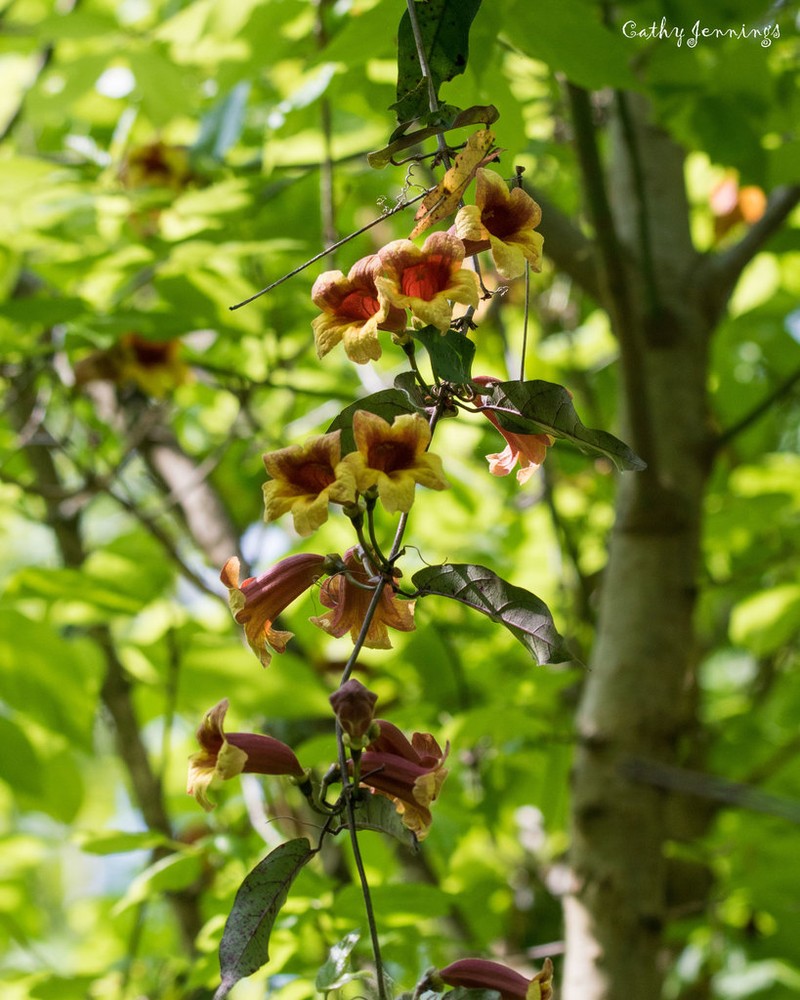
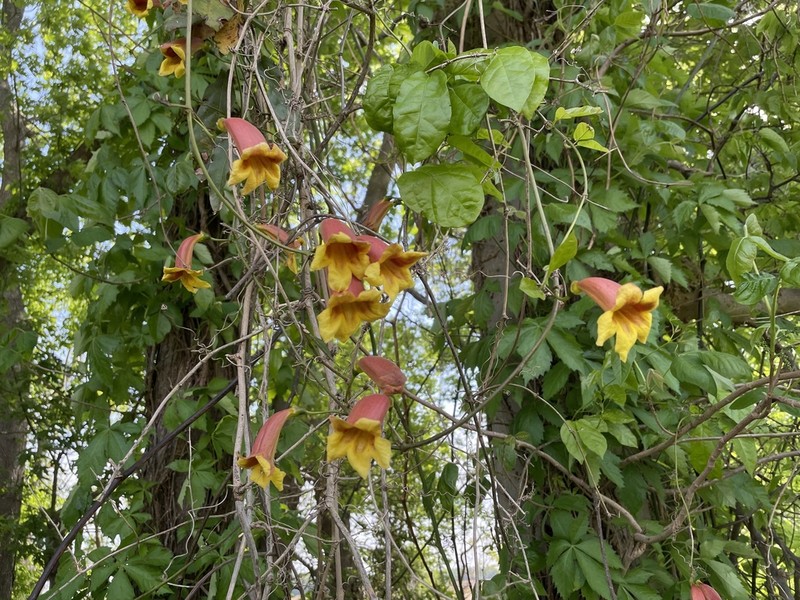
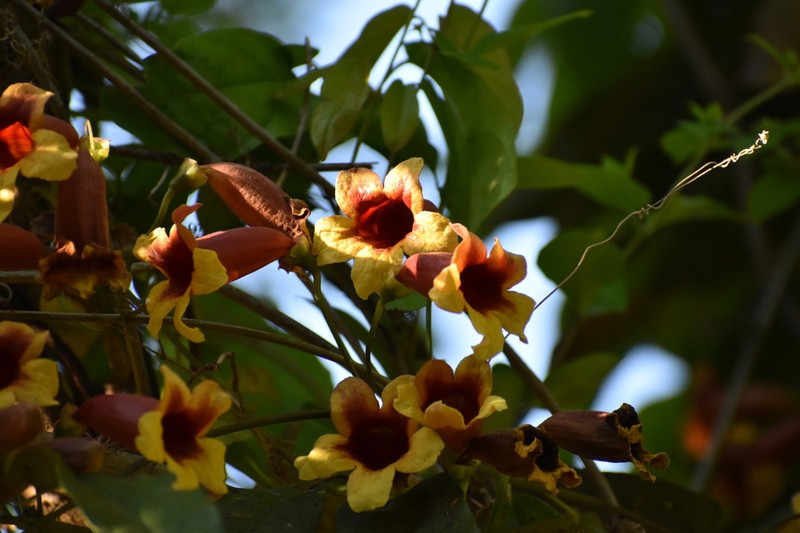
Crossvine
Bignonia capreolata
- Native to:
- United States, Virgin Islands
Stan Shebs
Taxonomy
- Division:
- Magnoliophyta | - Flowering plants
- Family:
- Bignoniaceae
- Genus:
- Bignonia
- Species:
- Bignonia capreolata
- USDA Symbol:
- BICA
Growth Characteristics
- Life Cycle:
- Perennial
- Growth Habit:
- Vine
- Height:
- 1829 cm
- Light Requirements:
- Full Sun,Part Shade
- Drought Tolerance:
- Medium
- Bloom Months:
- apr,may,jun
- Bloom Colors:
- orange, red, yellow
Wildlife Benefits
- Bees:
- ★☆☆☆☆ Documented bee visitation (GBIF)
- Butterflies & Moths:
- ★☆☆☆☆ Documented Lepidoptera association (GBIF)
- Caterpillars:
- ★☆☆☆☆ Recorded caterpillar host plant (HOSTS Database)
- Hummingbirds:
- ★☆☆☆☆ Documented hummingbird visits (GBIF)
Host Plant for Caterpillars
Plebeian Sphinx (Paratrea plebeja)
Reported Fauna Sightings
Hummingbirds: Ruby-throated Hummingbird (Archilochus colubris)
Garden & Ecology Notes
- Wildlife Value:
- hummingbirds, bees, butterflies
- Fragrant:
- Yes
Soil Requirements
- Soil Type:
- rich, well-drained loamy soil
- pH:
- 5.5 - 7.5 (slightly acidic to neutral)
- Drainage:
- excellent drainage required
- Moisture:
- consistently moist
- Notes:
- prefers fertile soil with organic matter
Propagation & Germination
- Stratification:
- Cold/moist stratification required — 60–90 days
- Germination Time:
- 30–60 days
- Notes:
- Seeds benefit from cold stratification for 60-90 days; germination occurs in 30-60 days at 70°F.
Pre-treatment: None required
Establishment: Plant is typically found in moist wooded areas. Northernmost limits are southern Maryland to southern Ohio and Missouri; plant grows south to Florida and Louisiana.
Source: npn.rngr.net
Where to Buy
Nationwide Seller
- Native Plants Nursery (nursery)