
Northern Catalpa
Catalpa speciosa
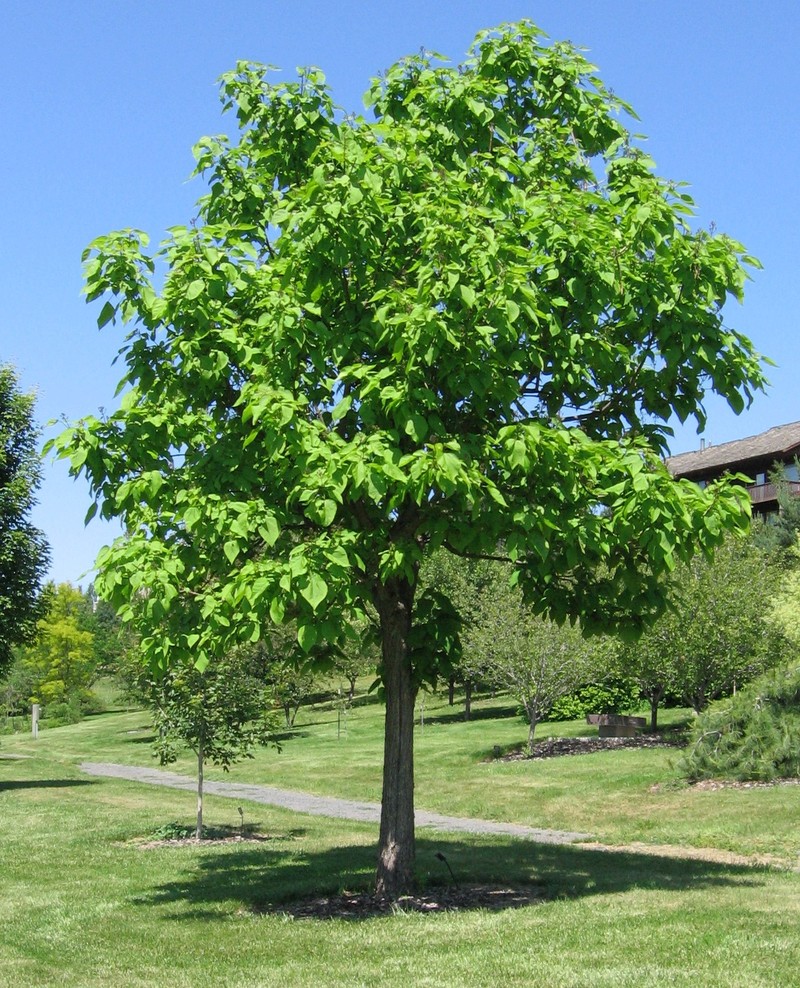
Taxonomy
- Division:
- Magnoliophyta | - Flowering plants
- Family:
- Bignoniaceae
- Genus:
- Catalpa
- Species:
- Catalpa speciosa
Growth Characteristics
- Life Cycle:
- Perennial
- Growth Habit:
- Tree
- Height:
- More than 40 ft
- Light Requirements:
- Part Shade
- Drought Tolerance:
- Medium
- Bloom Months:
- apr, may, jun
- Bloom Colors:
- White
Native Range
United States: Alabama, Arkansas, Colorado, Connecticut, District of Columbia, Georgia, Iowa, Illinois, Indiana, Kansas, Kentucky, Louisiana, Massachusetts, Maryland, Maine, Michigan, Minnesota, Missouri, Mississippi, North Carolina, North Dakota, Nebraska, New Hampshire, New Jersey, New Mexico, New York, Ohio, Oklahoma, Pennsylvania, Rhode Island, South Carolina, South Dakota, Tennessee, Texas, Utah, Virginia, Wisconsin, West Virginia, Canada: Ontario
Host Plant for Caterpillars
Catalpa Sphinx (Ceratomia catalpae), Fall webworm (Hyphantria cunea), Olceclostera seraphica, Spring cankerworm (Paleacrita vernata), White-marked Tussock Moth (Orgyia leucostigma)
Reported Fauna Sightings
Bees: Common eastern bumble bee (Bombus impatiens), Common eastern bumble bee (Bombus impatiens)
Soil Requirements
- Soil Type:
- rich, well-drained loamy soil
- pH:
- 6.0 - 8.0 (slightly acidic to neutral)
- Drainage:
- tolerates poor drainage
- Moisture:
- consistently moist
- Notes:
- Prefers riverbanks and floodplains in native range
Germination Information
Pre-treatment: Single-step cold-moist stratification for temperate woodland species. for 60–120 days
Source: OpenAI GPT-4o