
Desert Willow
Chilopsis linearis
- Native to:
- Mexico, United States
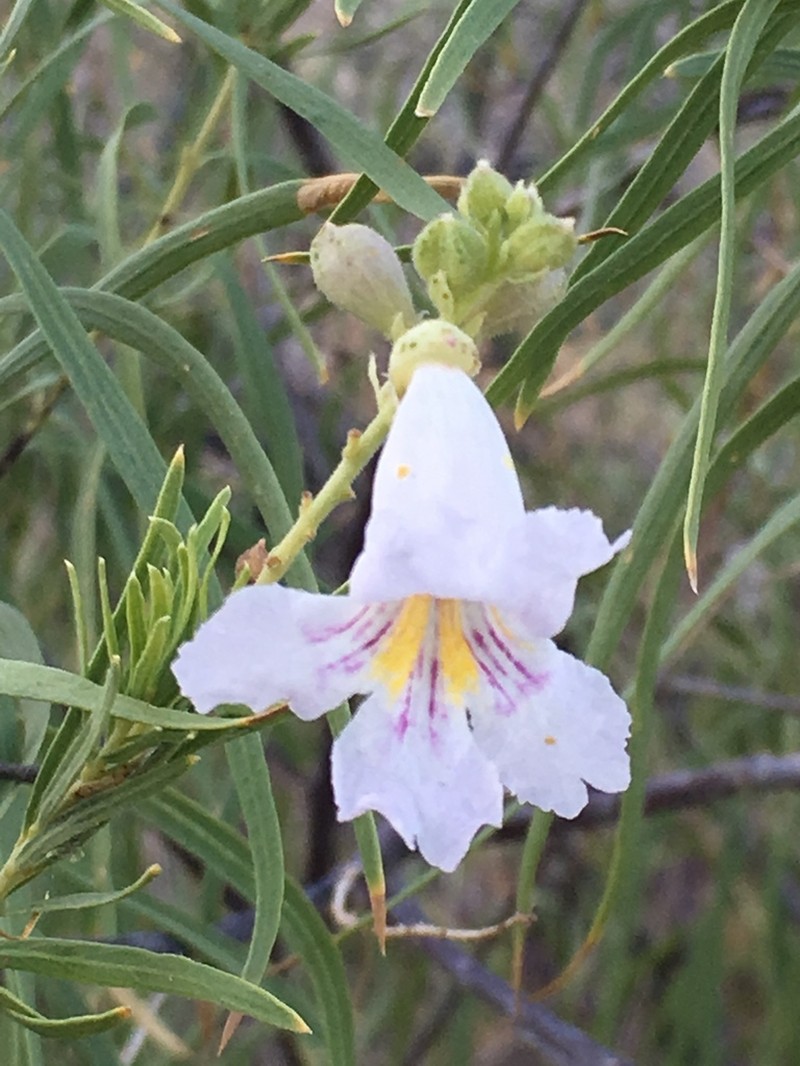
iNaturalist: © thunefeld (iNaturalist #7950415)
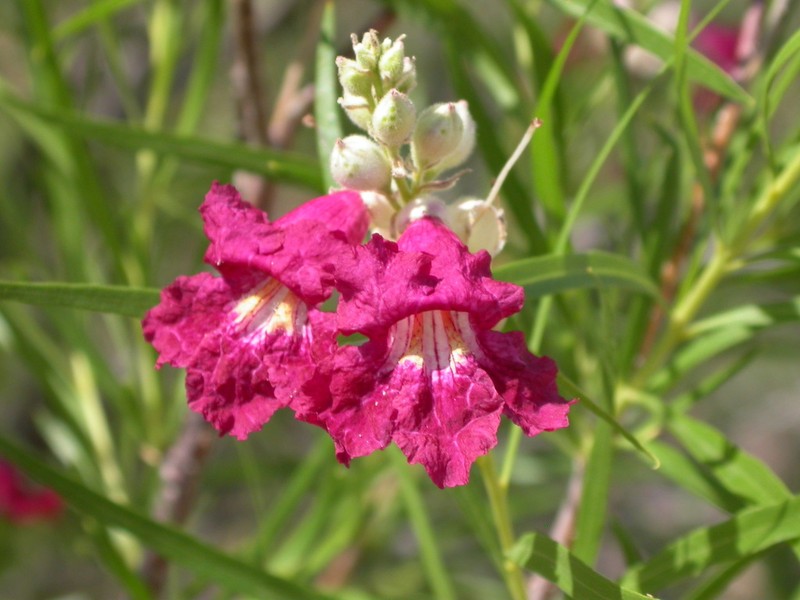
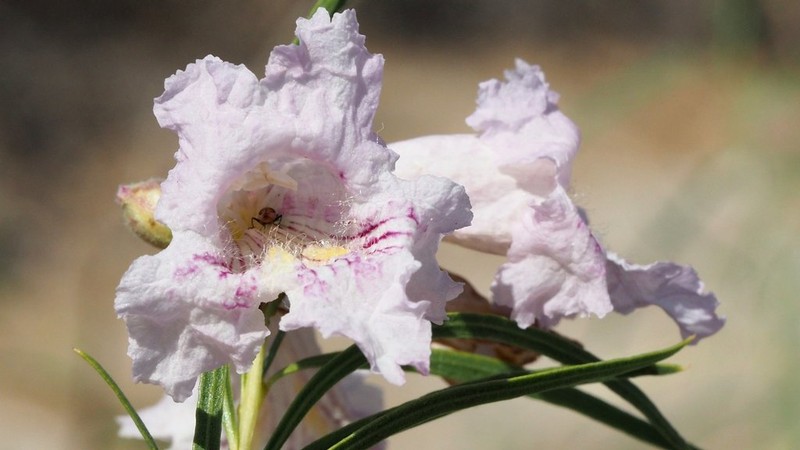
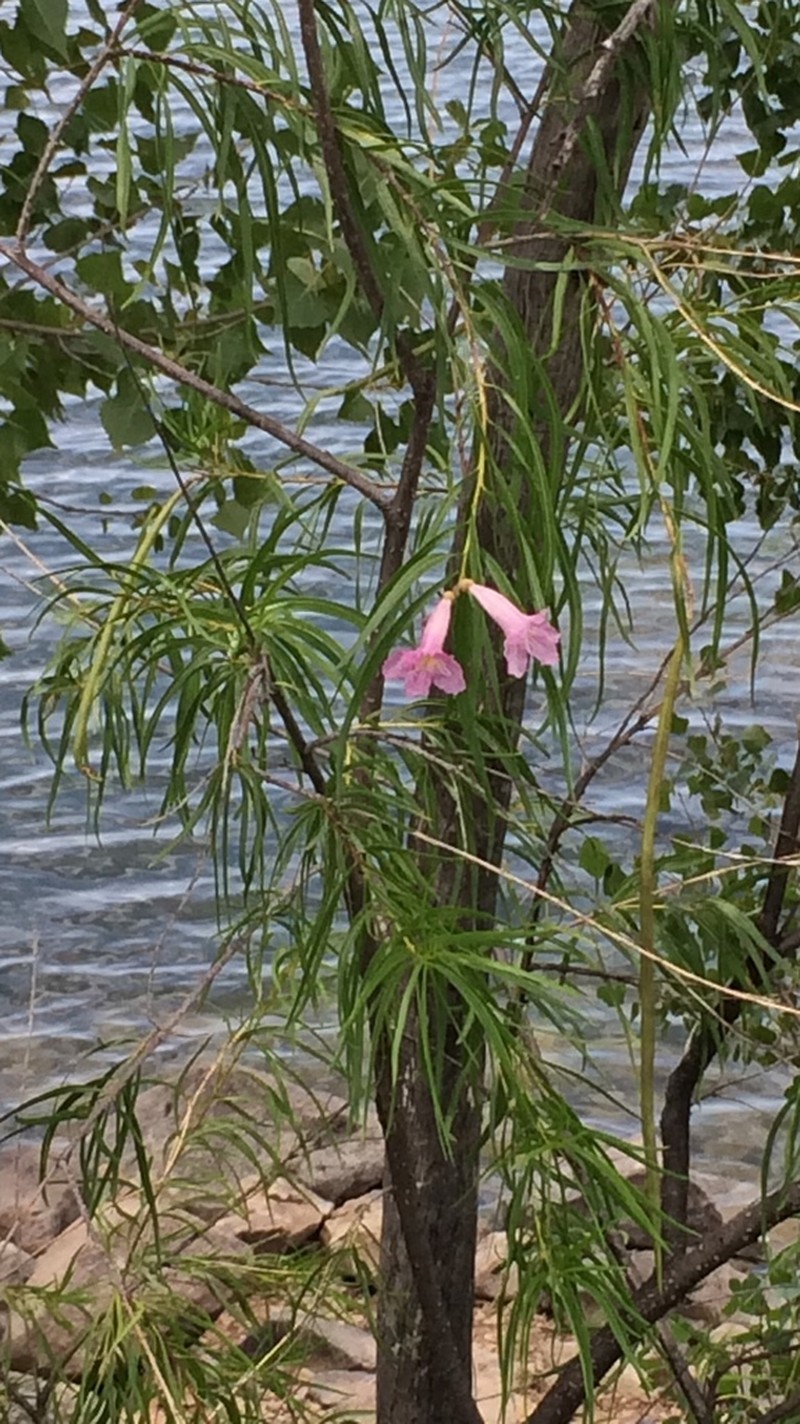
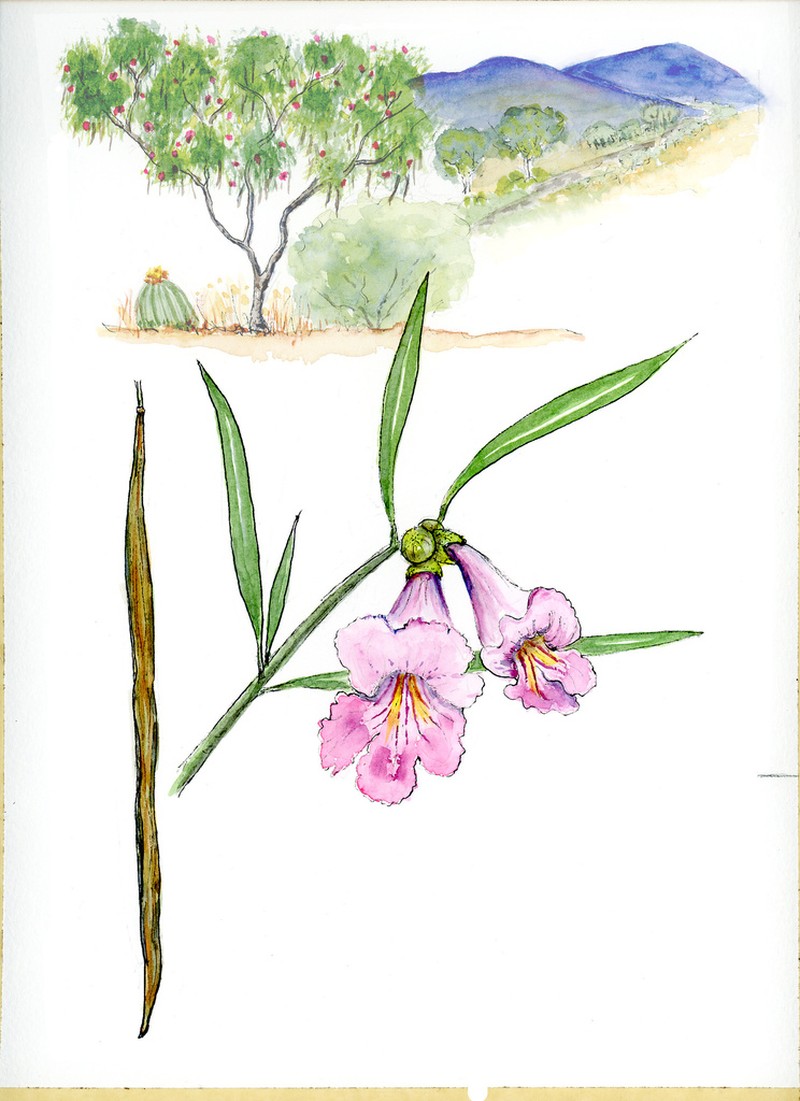
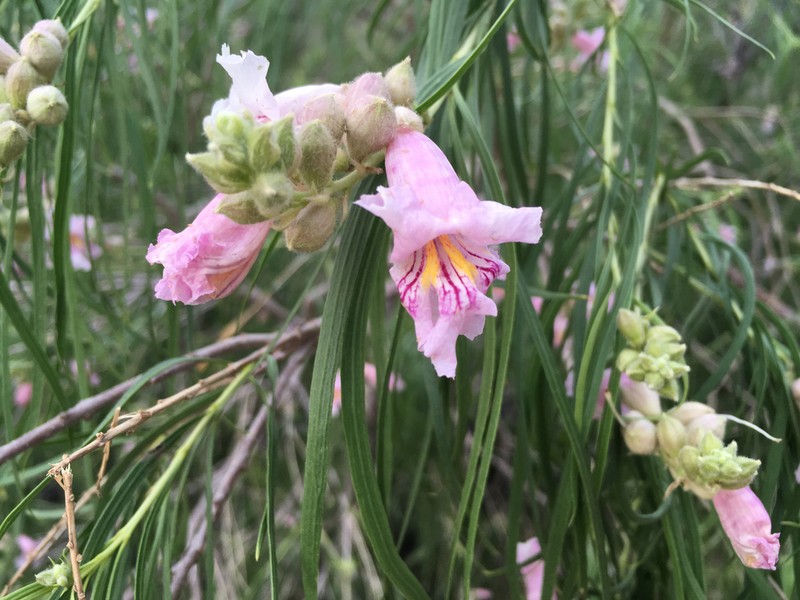
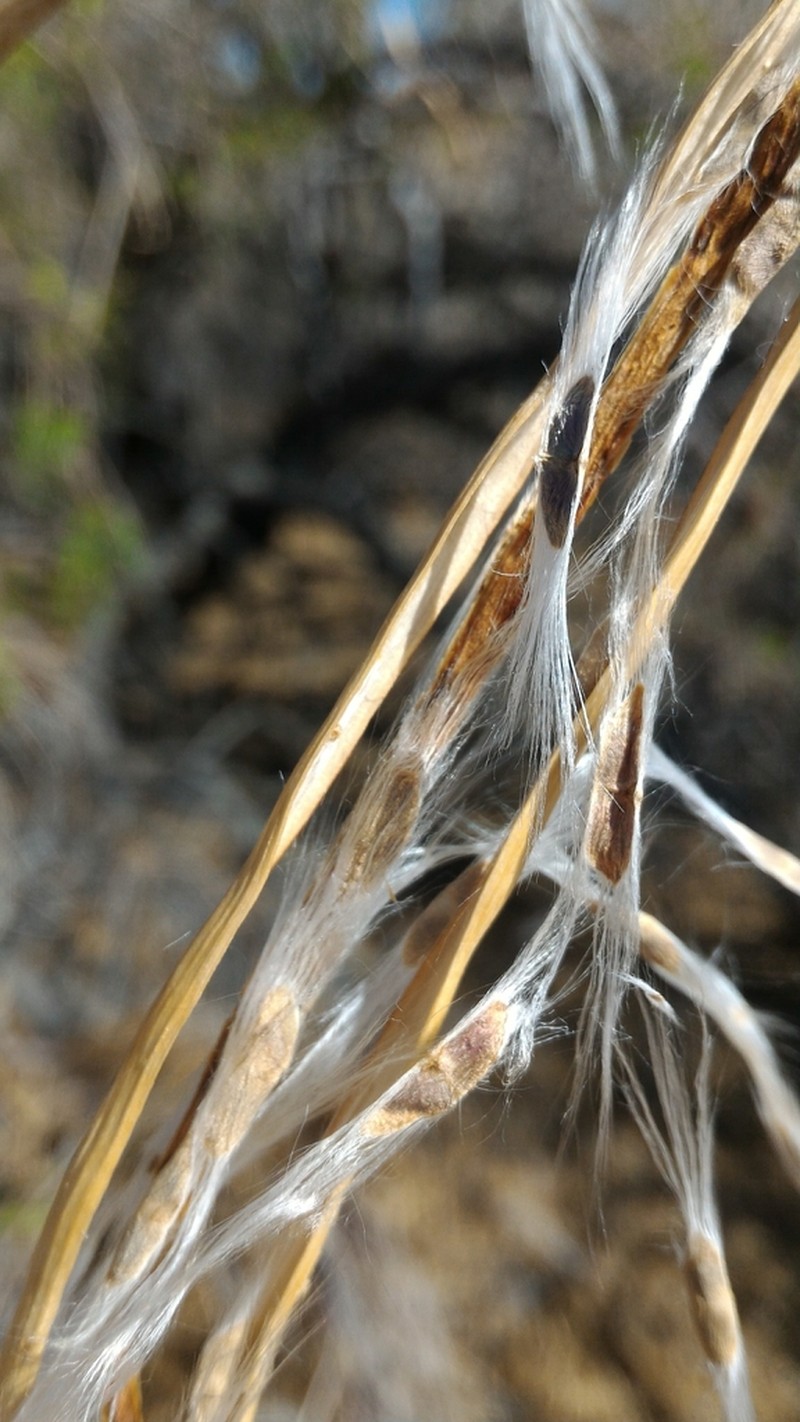
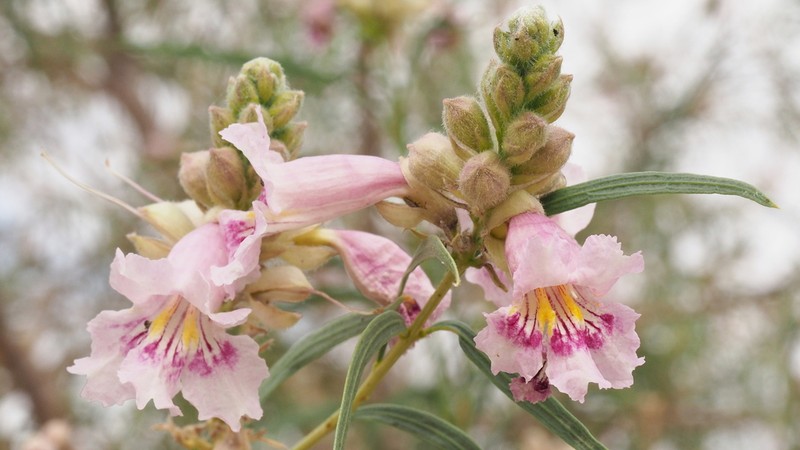
Taxonomy
- Division:
- Magnoliophyta | - Flowering plants
- Family:
- Bignoniaceae
- Genus:
- Chilopsis
- Species:
- Chilopsis linearis
- USDA Symbol:
- CHLI2
Growth Characteristics
- Life Cycle:
- Perennial
- Growth Habit:
- Shrub , Tree
- Height:
- 914 cm
- Light Requirements:
- Full Sun
- Drought Tolerance:
- High
- Bloom Months:
- may,jun,jul,aug,sep
- Bloom Colors:
- pink, purple, white
Wildlife Benefits
- Bees:
- ★☆☆☆☆ Documented bee visitation (GBIF)
- Butterflies & Moths:
- ★★★★★ Documented Lepidoptera association (GBIF)
- Caterpillars:
- ★★☆☆☆ Recorded caterpillar host plant (HOSTS Database)
- Hummingbirds:
- ★★★☆☆ Documented hummingbird visits (GBIF)
Host Plant for Caterpillars
Eucaterva variaria, Iris eyed silkmoth (Automeris iris), Olceclostera seraphica, Rustic Sphinx (Manduca rustica), Satole ligniperdalis, Wavy-lined Emerald (Synchlora aerata)
Reported Fauna Sightings
Bees: Anthophora urbana, Bombus californicus, Bombus sonorus, ⚠️Western honey bee (Apis mellifera), Xylocopa californica, Xylocopa sonorina Hummingbirds: Allen's Hummingbird (Selasphorus sasin), Anna's Hummingbird (Calypte anna), Calypte Gould, Costa's Hummingbird (Calypte costae), Lucifer Sheartail (Calothorax lucifer), Ruby-throated Hummingbird (Archilochus colubris), Rufous Hummingbird (Selasphorus rufus), Selasphorus Swainson Moths:Eucaterva variaria, Rustic Sphinx (Manduca rustica), White-lined sphinx moth (Hyles lineata)
Garden & Ecology Notes
- Wildlife Value:
- birds, butterflies, hummingbirds
- Deer Resistant:
- Yes
- Salt Tolerant:
- Yes
- Fragrant:
- Yes
- Fire Ecology:
- Fire adapted — tolerates or benefits from fire
- Fire Notes:
- Resprouts from root crown after fire; seeds germinate well on burned soil.
Soil Requirements
- Soil Type:
- sandy, well-drained, nutrient-poor soil
- pH:
- 6.0 - 8.0 (slightly acidic to neutral)
- Drainage:
- excellent drainage required
- Moisture:
- dry to moderate
- Notes:
- Thrives in arid and semi-arid regions
Propagation & Germination
- Stratification:
- Cold/moist stratification required — 30–60 days
- Germination Time:
- 14–30 days
- Notes:
- Seeds germinate readily after cold stratification; sow on surface and keep moist.
Pre-treatment: None required
Establishment: Seeds are collected when pods have matured and begin to split open. Germination rates may decrease with increasing storage times.
Source: npn.rngr.net
ORGHPS Germination Guide: Sow @ 20C. Germinates within 3 months. Requires darkness.
Where to Buy
Nationwide Seller
- Native Plants Nursery (nursery)
- Native Seed Group (seeds)
- Bamert Seed (seeds)
- Sheffield's Seed (seeds)