
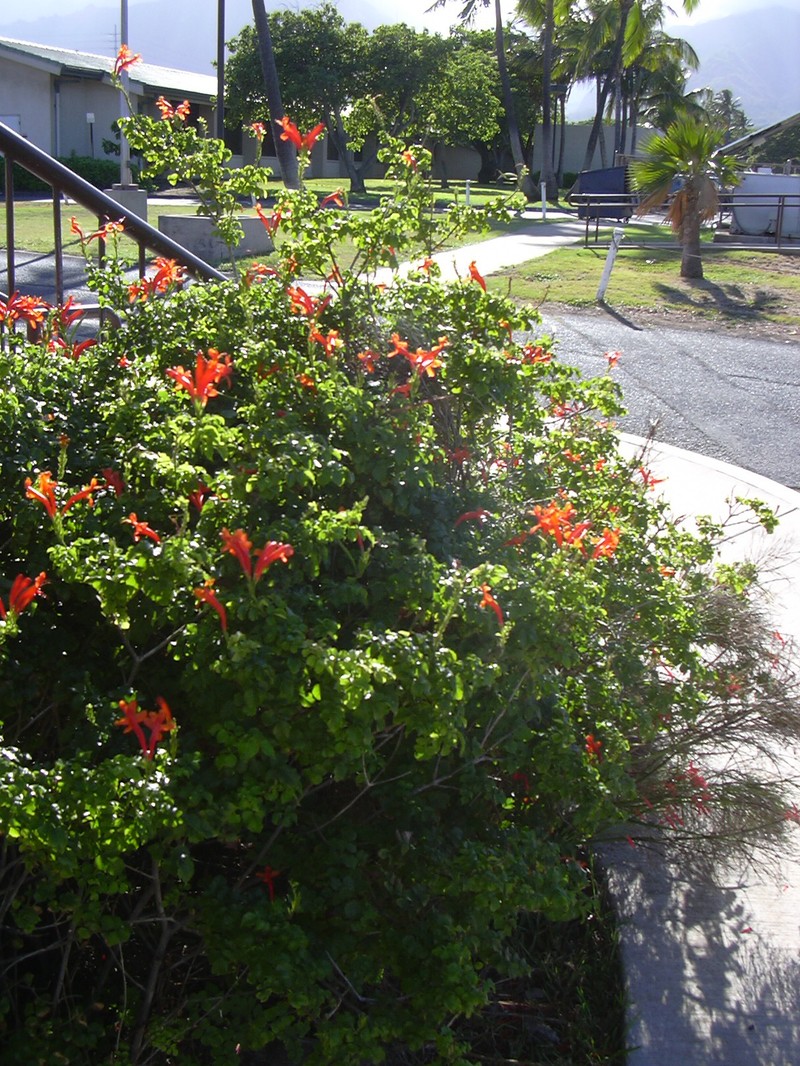
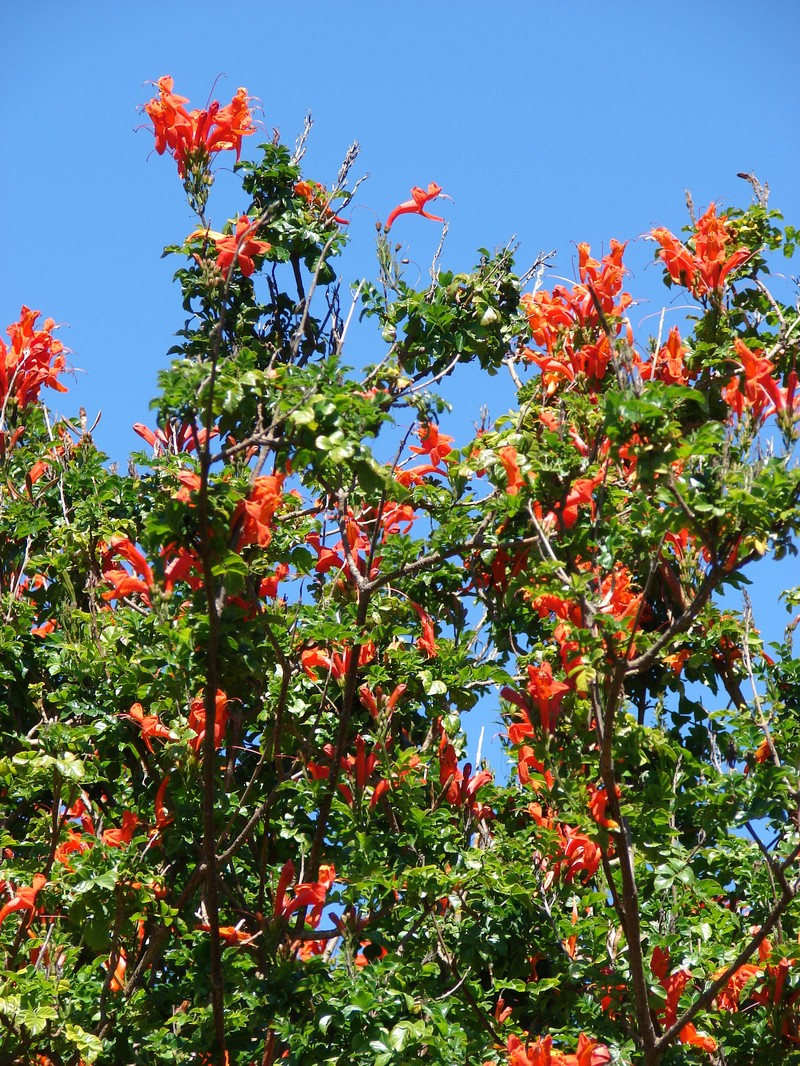
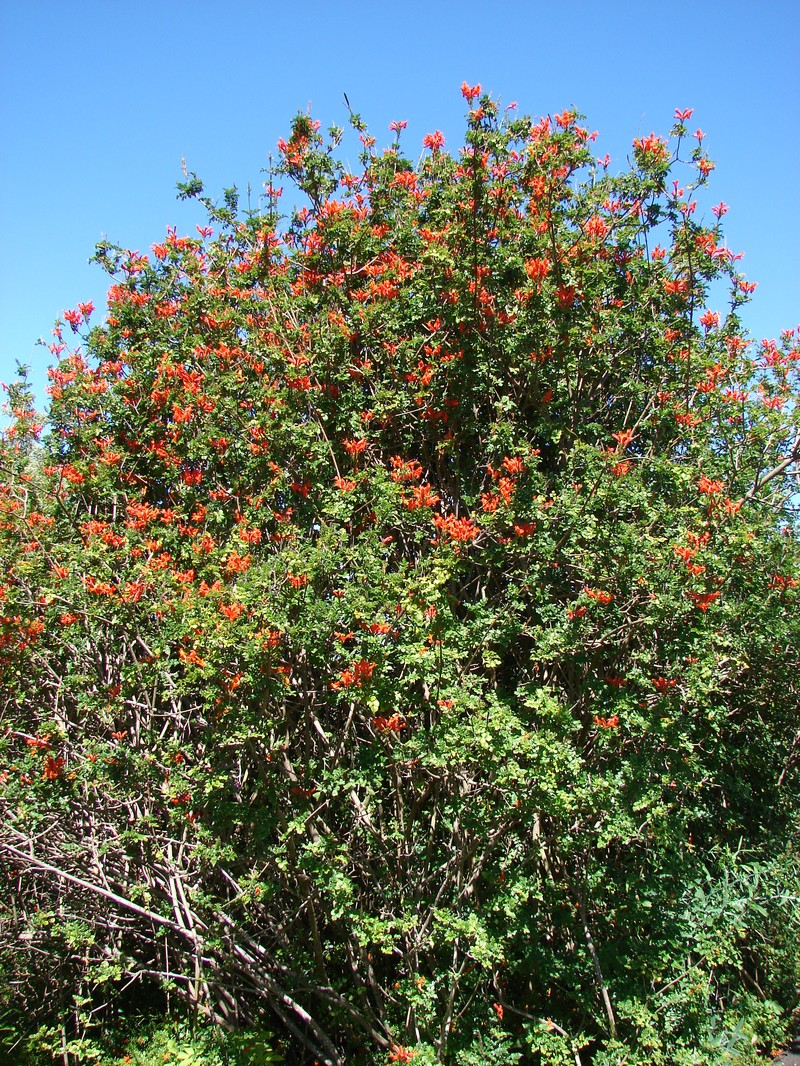
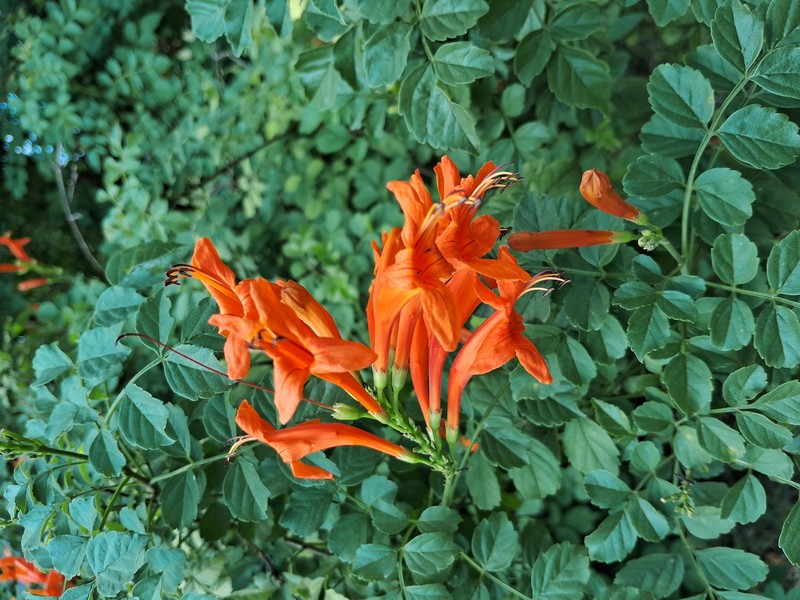
Cape Honeysuckle
Tecomaria capensis
- Native to:
- Angola, DR Congo, Eswatini, Malawi, Mozambique, South Africa, Tanzania
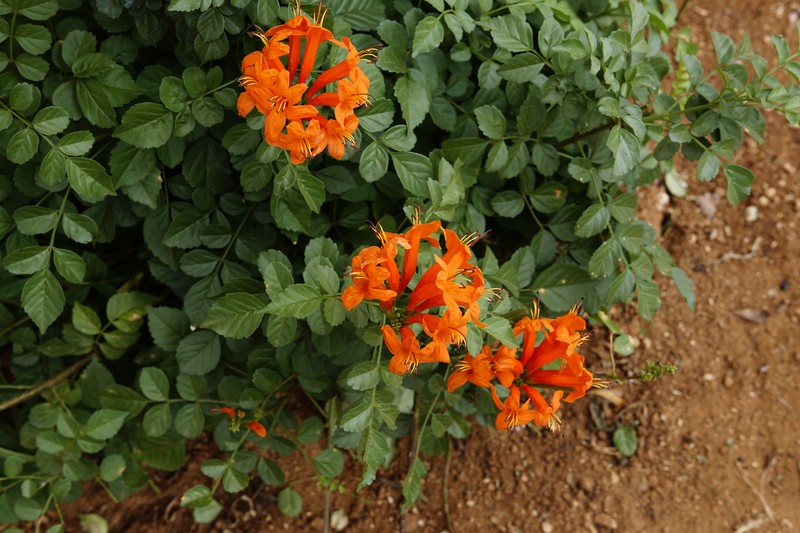
Alejandro Bayer Tamayo (www.flickr.com) from Armenia, Colombia
Taxonomy
- Division:
- Magnoliophyta | - Flowering plants
- Family:
- Bignoniaceae
- Genus:
- Tecomaria
- Species:
- Tecomaria capensis
- USDA Symbol:
- TECA8
Growth Characteristics
- Life Cycle:
- Perennial
- Growth Habit:
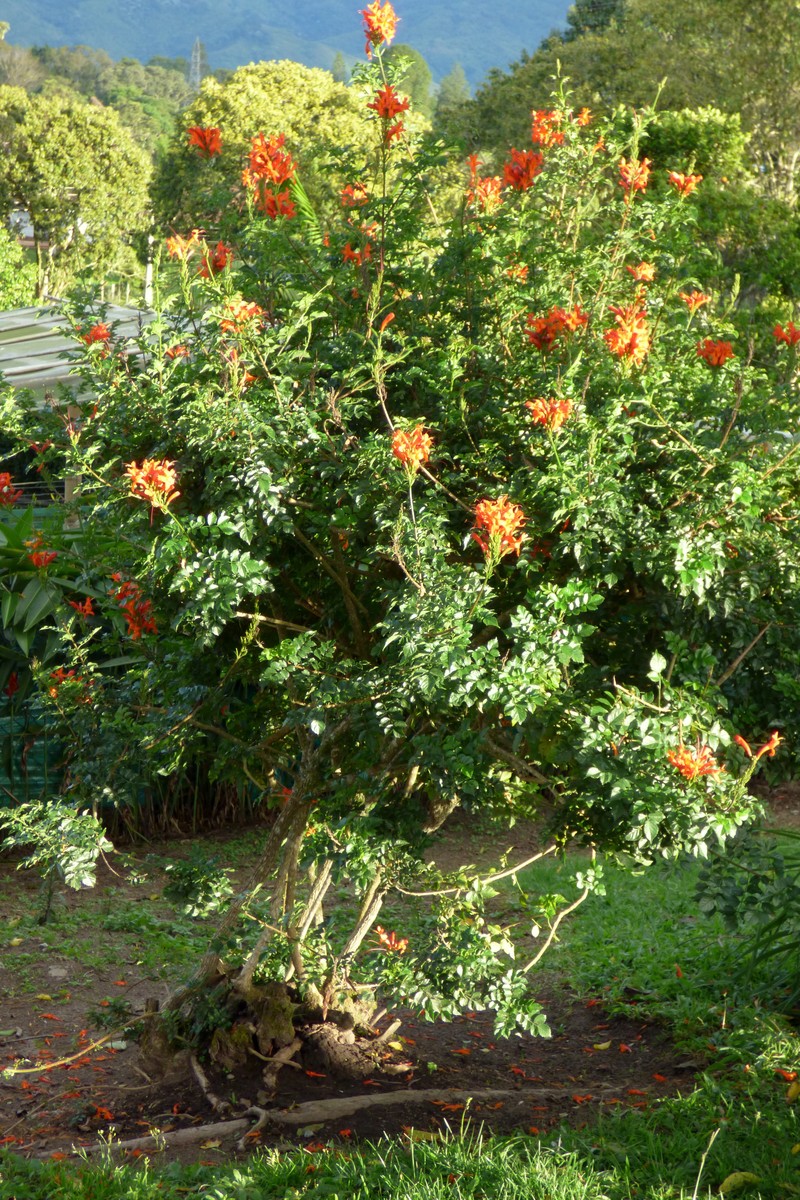
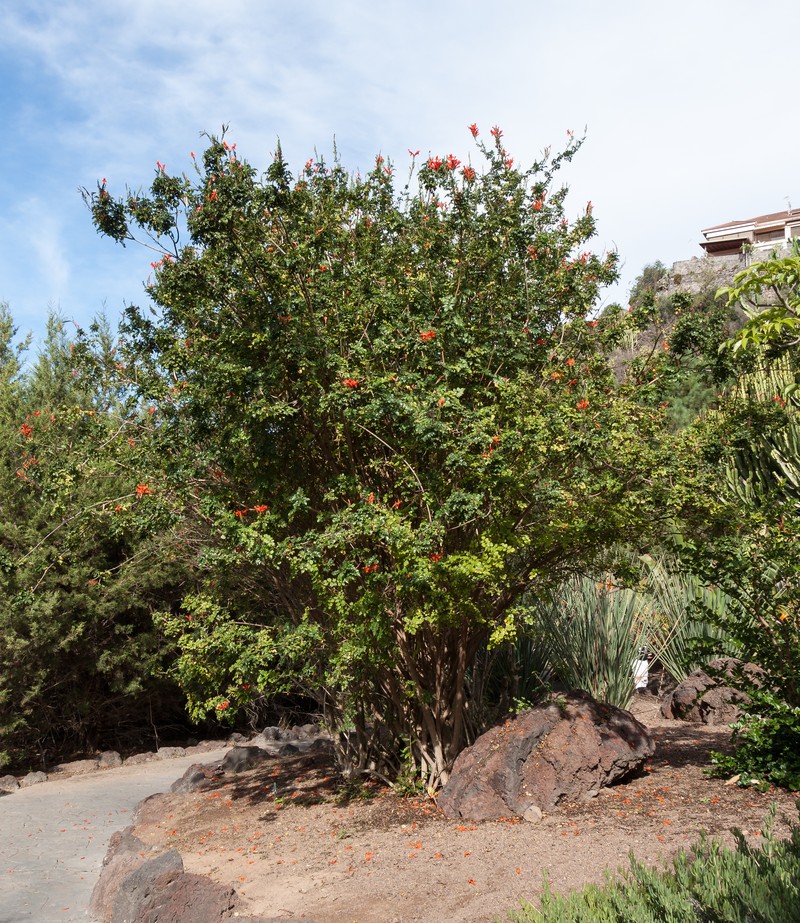
- Shrub , Vine
- Height:
- 300 cm
- Light Requirements:
- Full Sun
- Drought Tolerance:
- High
- Bloom Months:
- jan,feb,mar,apr,may,jun,jul,aug,sep,oct,nov,dec
- Bloom Colors:
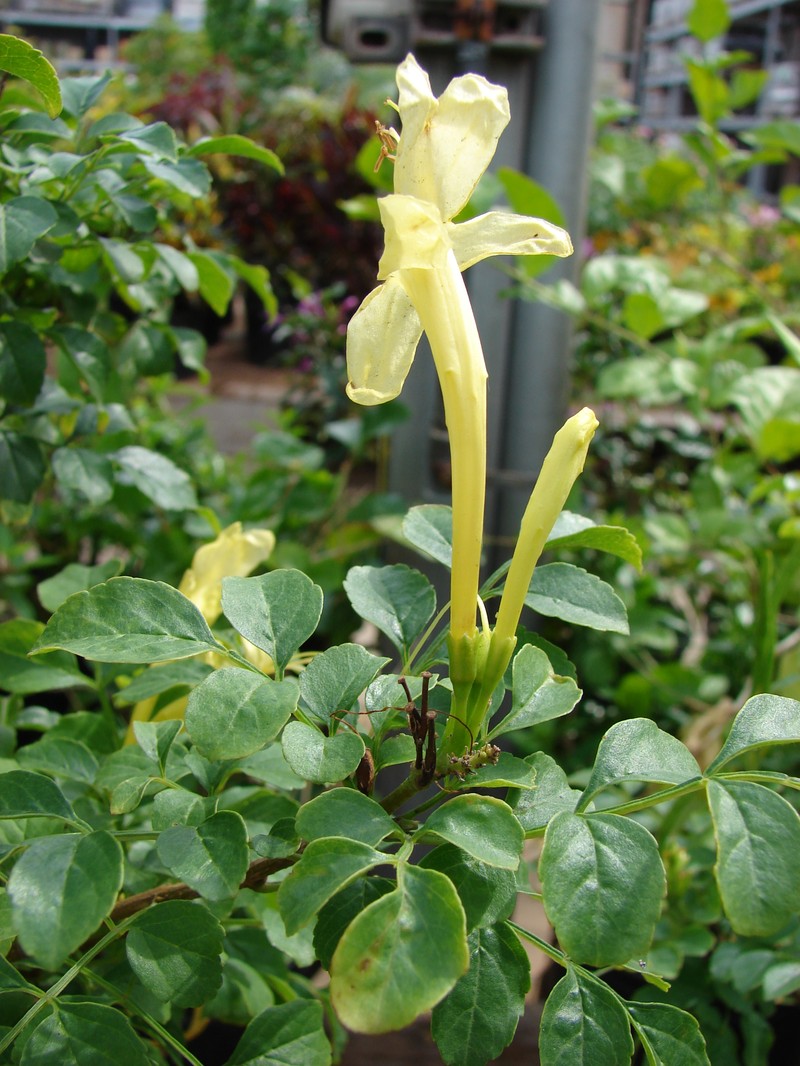
- orange, red, yellow
- Evergreen Shrub:
- Yes
- Landscaping Shrub:
- Yes
Host Plant for Caterpillars
Rustic Sphinx (Manduca rustica)
Reported Fauna Sightings
Bees: ⚠️Western honey bee (Apis mellifera) Hummingbirds: Allen's Hummingbird (Selasphorus sasin), Anna's Hummingbird (Calypte anna), Calliope Hummingbird (Selasphorus calliope), Costa's Hummingbird (Calypte costae), Ruby-throated Hummingbird (Archilochus colubris), Rufous Hummingbird (Selasphorus rufus)
Garden & Ecology Notes
- Wildlife Value:
- birds, butterflies, bees
- Deer Resistant:
- Yes
- Salt Tolerant:
- Yes
Soil Requirements
- Soil Type:
- well-drained, sandy or loamy soil
- pH:
- 5.5 - 7.5 (slightly acidic to neutral)
- Drainage:
- excellent drainage required
- Moisture:
- dry to moderate
- Notes:
- native to coastal and riverine areas
Propagation & Germination
- Germination Time:
- 21–60 days
- Notes:
- Seeds germinate readily without pretreatment; sow in warm, moist conditions.