
California Yerba Santa
Eriodictyon californicum
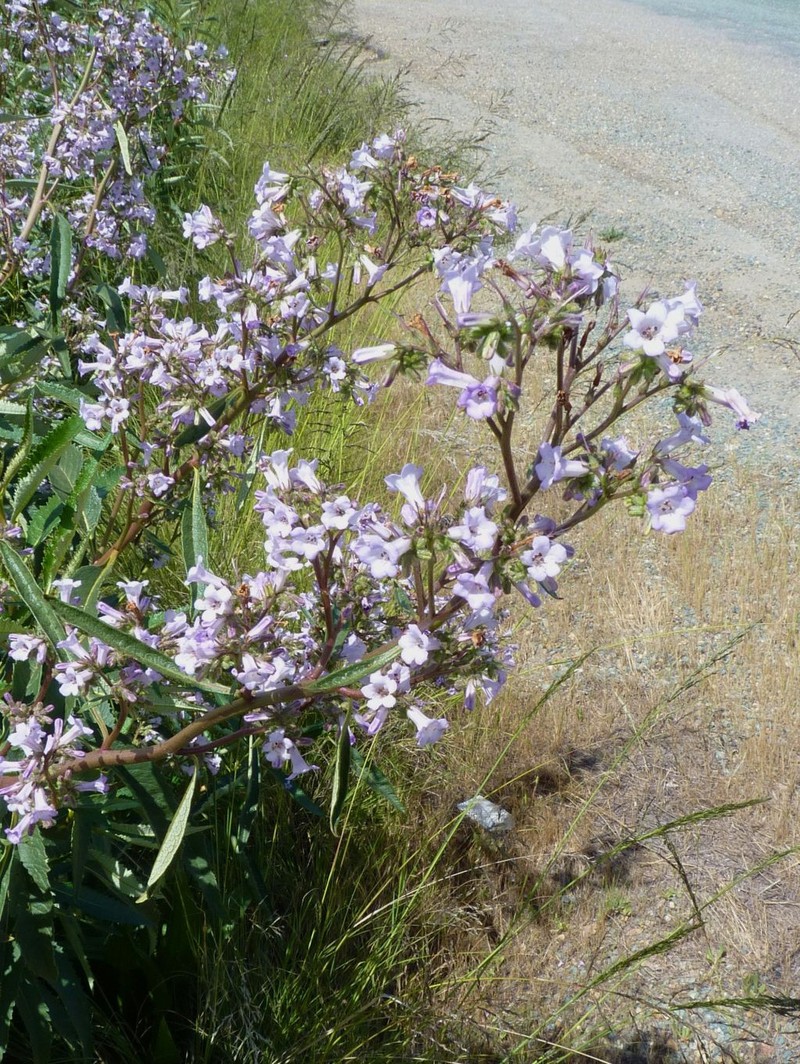
Breck Breckenridge
Taxonomy
- Division:
- Magnoliophyta | - Flowering plants
- Family:
- Boraginaceae
- Genus:
- Eriodictyon
- Species:
- Eriodictyon californicum
Growth Characteristics
- Life Cycle:
- Perennial
- Growth Habit:
- Shrub
- Height:
- 8-12 ft
- Light Requirements:
- Full Sun
- Drought Tolerance:
- High
- Bloom Months:
- mar, apr, may
- Bloom Colors:
- Purple
- Evergreen Shrub:
- Yes
- Landscaping Shrub:
- Yes
Native Range
United States: California, Oregon
Host Plant for Caterpillars
Coelopoeta glutinosi, Ethmia arctostaphylella, fruit-tree leafroller (Archips argyrospila), orange tortrix moth (Argyrotaenia citrana), Brown Elfin (Incisalia augustinus)
Reported Fauna Sightings
Bees: Black-tailed bumble bee (Bombus melanopygus), Black-tailed bumble bee (Bombus melanopygus), Brown-belted bumble bee (Bombus griseocollis), Brown-belted bumble bee (Bombus griseocollis), Crotch bumble bee (Bombus crotchii), Crotch bumble bee (Bombus crotchii), Fernald cuckoo bumble bee (Bombus flavidus), Fernald cuckoo bumble bee (Bombus flavidus), Fuzzy-horned bumble bee (Bombus mixtus), Fuzzy-horned bumble bee (Bombus mixtus), Obscure bumble bee (Bombus caliginosus), Obscure bumble bee (Bombus caliginosus), van Dyke bumble bee (Bombus vandykei), van Dyke bumble bee (Bombus vandykei), Yellow-faced bumble bee (Bombus vosnesenskii), Yellow-faced bumble bee (Bombus vosnesenskii)
Soil Requirements
- Soil Type:
- sandy, well-drained, nutrient-poor soil
- pH:
- 5.5 - 7.5 (slightly acidic to neutral)
- Drainage:
- excellent drainage required
- Moisture:
- dry to moderate
- Notes:
- Common in chaparral and coastal scrub habitats
Germination Information
Pre-treatment: Scarification of the seed coat using water heated to 85 °C poured over the seeds in trays filled with stabilized medium plugs (Q-plugs).
Establishment: Seeds are collected in September and October as the fruit capsules ripen. They can be planted in the fall or early spring and will store indefinitely if kept in a dry, cool location. The plant is native to certain regions in California and Oregon.
Source: npn.rngr.net