
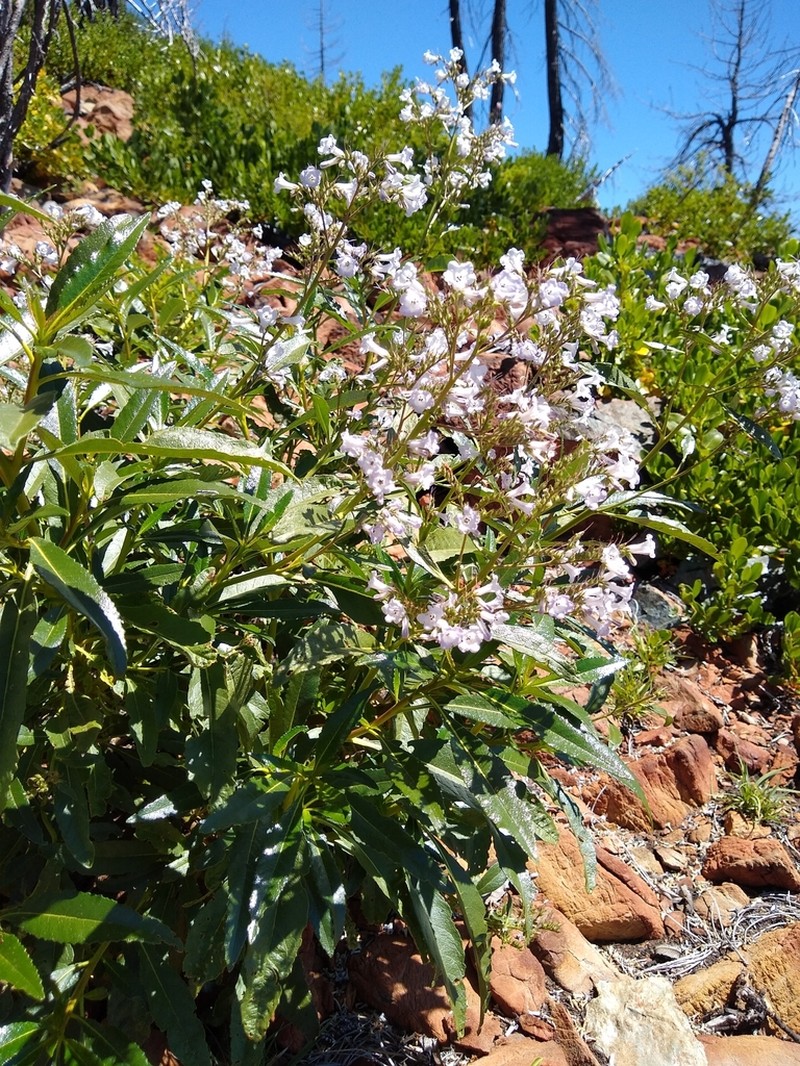
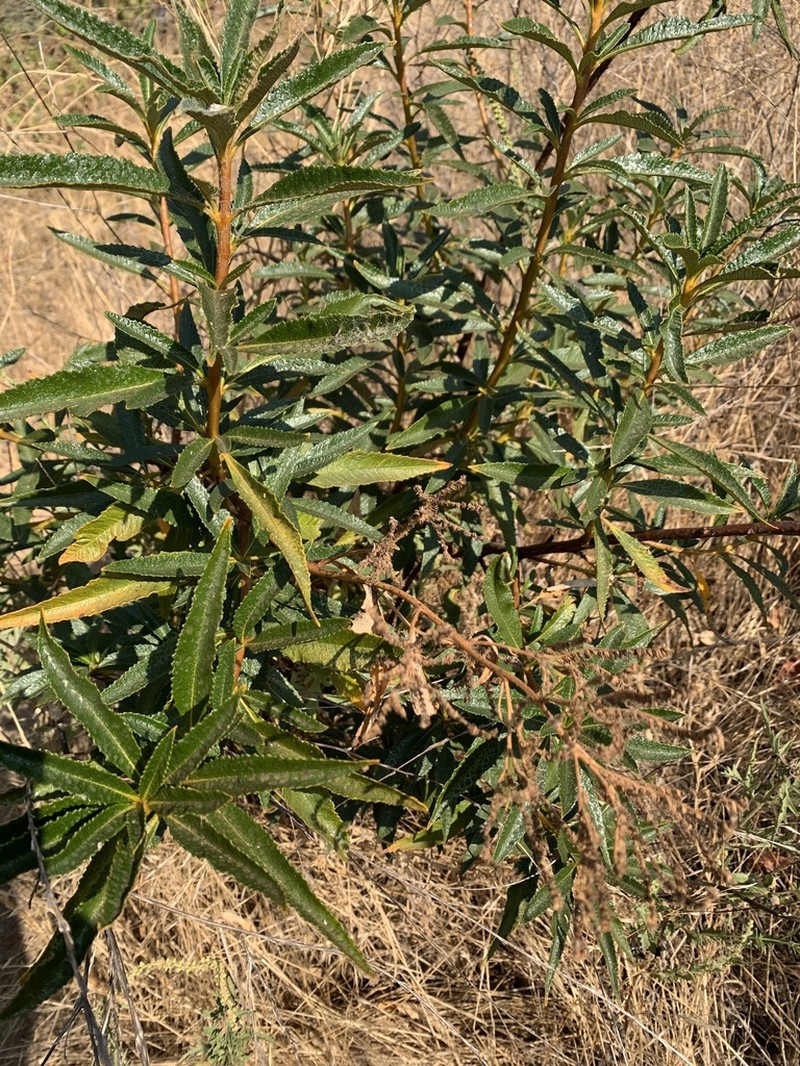
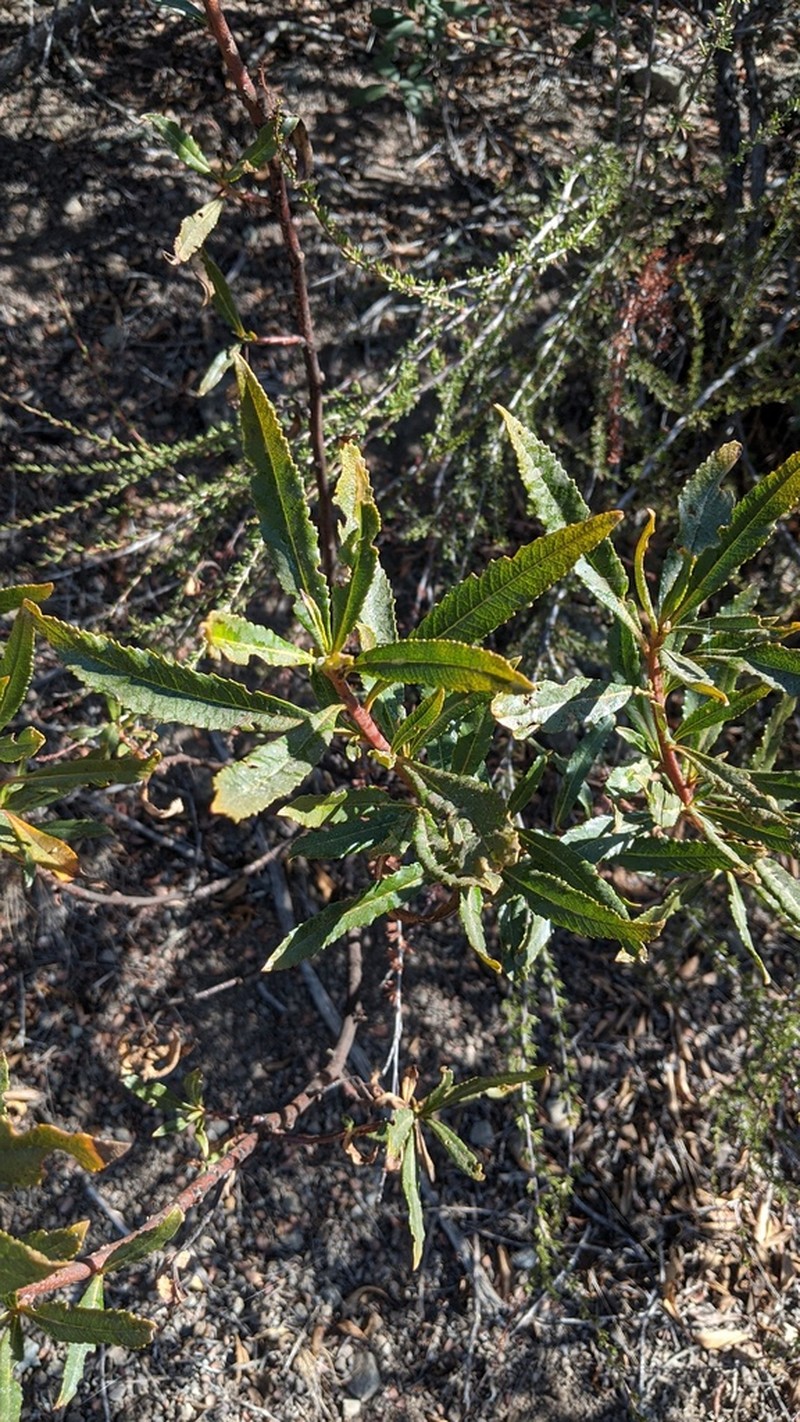
California Yerba Santa
Eriodictyon californicum
- Native to:
- United States
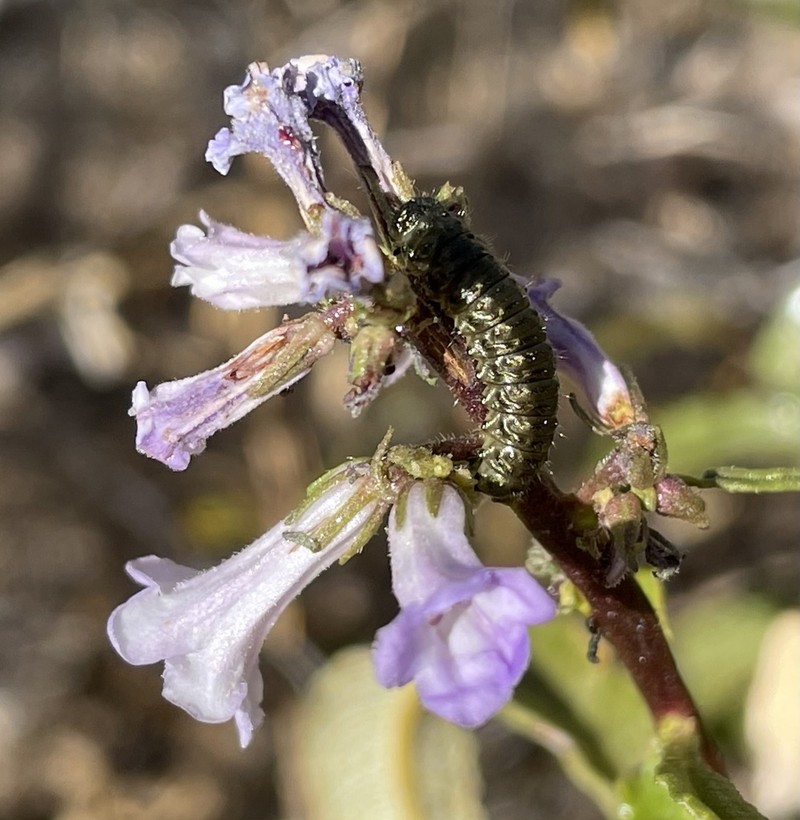
iNaturalist: © hkibak (iNaturalist #77675881)
Taxonomy
- Division:
- Magnoliophyta | - Flowering plants
- Family:
- Boraginaceae
- Genus:
- Eriodictyon
- Species:
- Eriodictyon californicum
- USDA Symbol:
- ERCA6
Growth Characteristics
- Life Cycle:
- Perennial
- Growth Habit:
- Shrub
- Height:
- 300 cm
- Light Requirements:
- Full Sun
- Drought Tolerance:
- High
- Bloom Months:
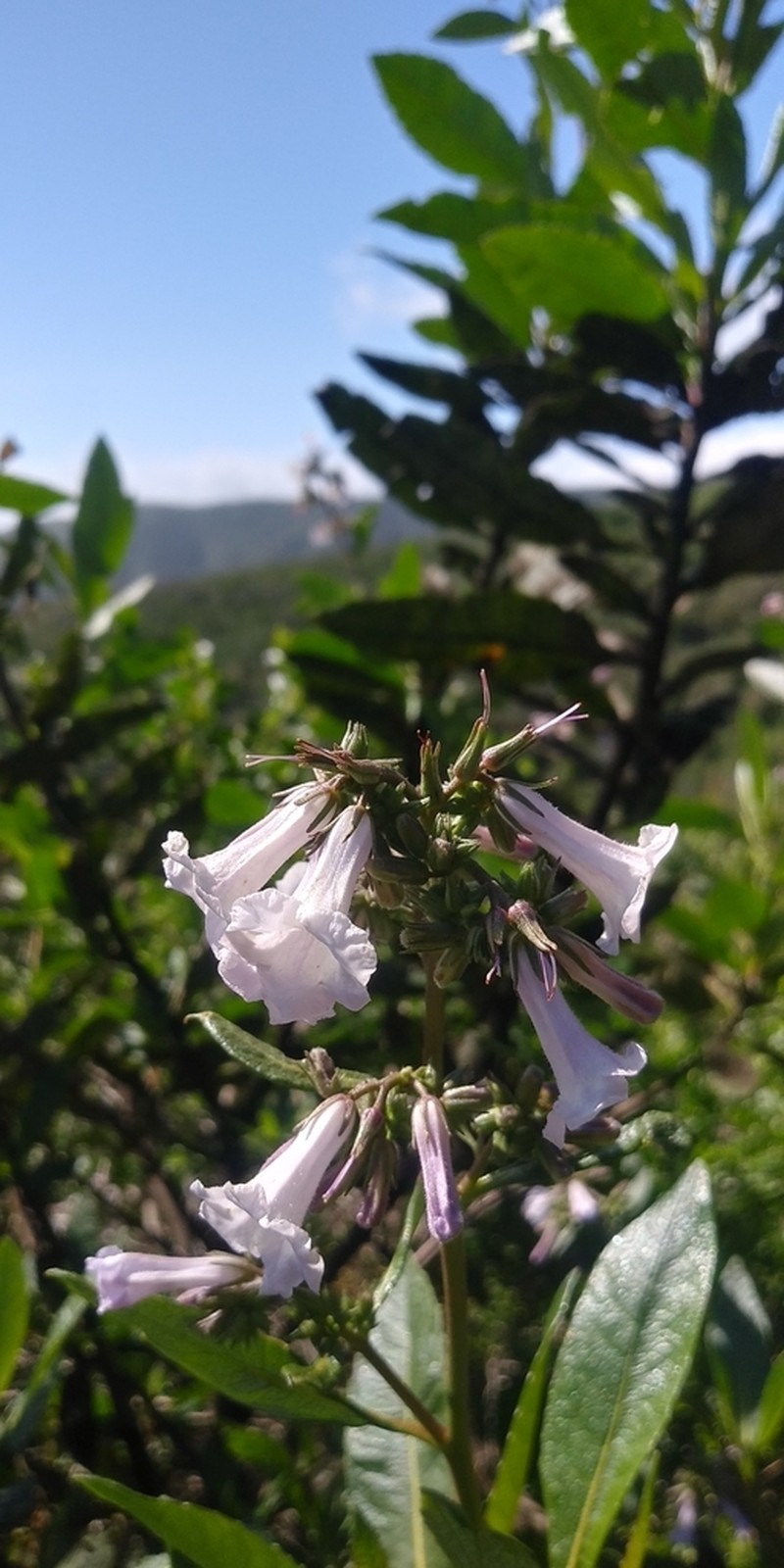
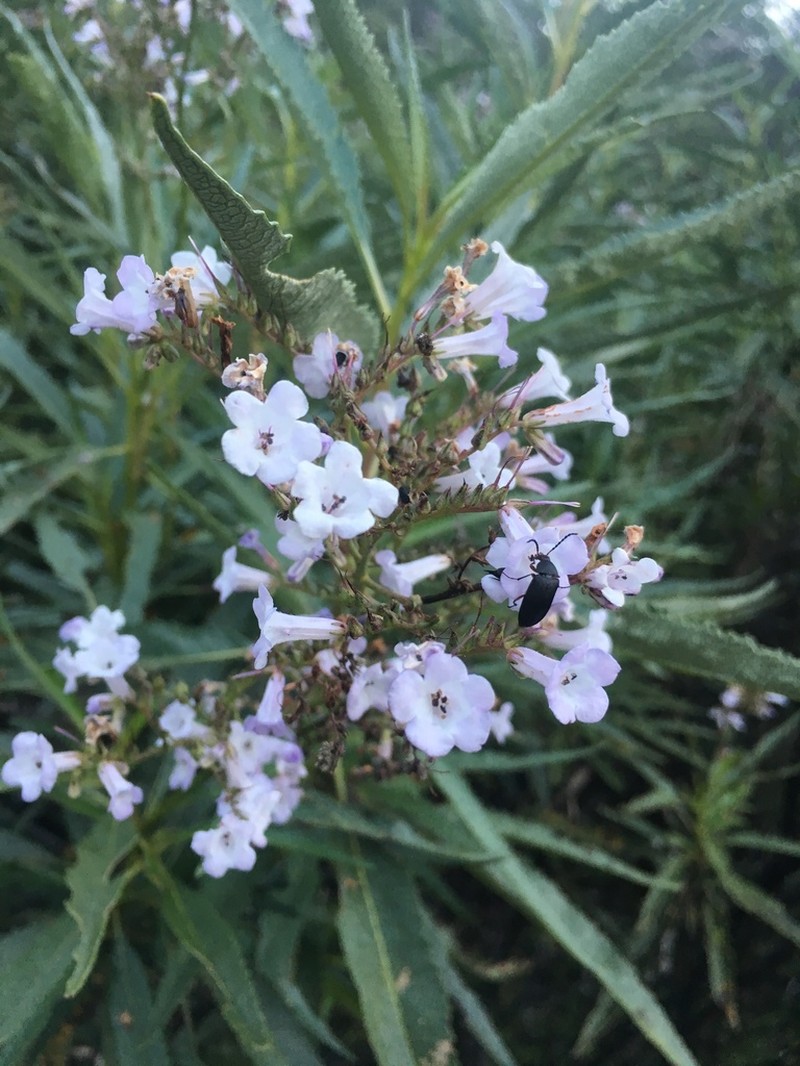
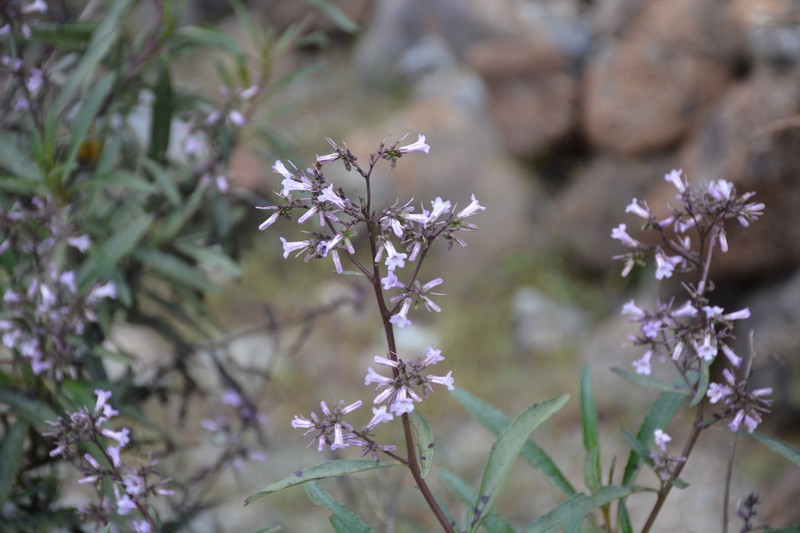
- may,jun,jul
- Bloom Colors:
- white, lavender
- Evergreen Shrub:
- Yes
- Landscaping Shrub:
- Yes
Wildlife Benefits
- Bees:
- ★☆☆☆☆ Documented bee visitation (GBIF)
- Butterflies & Moths:
- ★★☆☆☆ Documented Lepidoptera association (GBIF)
- Caterpillars:
- ★☆☆☆☆ Recorded caterpillar host plant (HOSTS Database)
- Hummingbirds:
- ★☆☆☆☆ Documented hummingbird visits (GBIF)
Host Plant for Caterpillars
Coelopoeta glutinosi, Ethmia arctostaphylella, fruit-tree leafroller (Archips argyrospila), orange tortrix moth (Argyrotaenia citrana), Brown Elfin (Incisalia augustinus)
Reported Fauna Sightings
Bees: Anthophora californica, Black-tailed bumble bee (Bombus melanopygus), Fuzzy-horned bumble bee (Bombus mixtus), van Dyke bumble bee (Bombus vandykei), Yellow-faced bumble bee (Bombus vosnesenskii) Hummingbirds: Anna's Hummingbird (Calypte anna) Butterflies:Columbia skipper (Hesperia columbia), Pipevine Swallowtail (Battus philenor), Variable checkerspot (Euphydryas chalcedona)
Garden & Ecology Notes
- Wildlife Value:
- bees, butterflies, birds
- Deer Resistant:
- Yes
- Fragrant:
- Yes
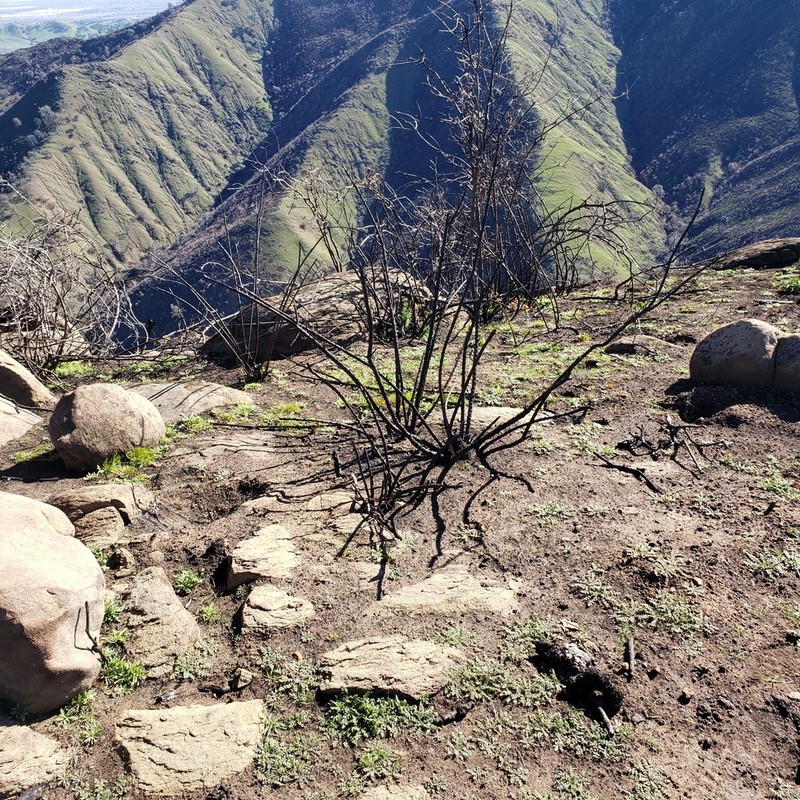
- Fire Ecology:
- Fire adapted — tolerates or benefits from fire
- Fire Notes:
- Resprouts from root crown after fire; seeds also germinate in post-fire conditions.
Soil Requirements
- Soil Type:
- sandy, well-drained, nutrient-poor soil
- pH:
- 5.5 - 7.5 (slightly acidic to neutral)
- Drainage:
- excellent drainage required
- Moisture:
- dry to moderate
- Notes:
- Common in chaparral and coastal scrub habitats
Propagation & Germination
- Stratification:
- Cold/moist stratification required — 30–60 days
- Germination Time:
- 14–30 days
- Notes:
- Seeds benefit from cold stratification; sow on surface and keep moist.
Pre-treatment: Scarification of the seed coat using water heated to 85 °C poured over the seeds in trays filled with stabilized medium plugs (Q-plugs).
Establishment: Seeds are collected in September and October as the fruit capsules ripen. They can be planted in the fall or early spring and will store indefinitely if kept in a dry, cool location. The plant is native to certain regions in California and Oregon.
Source: npn.rngr.net
Where to Buy
Nationwide Seller
- Sheffield's Seed (seeds)