
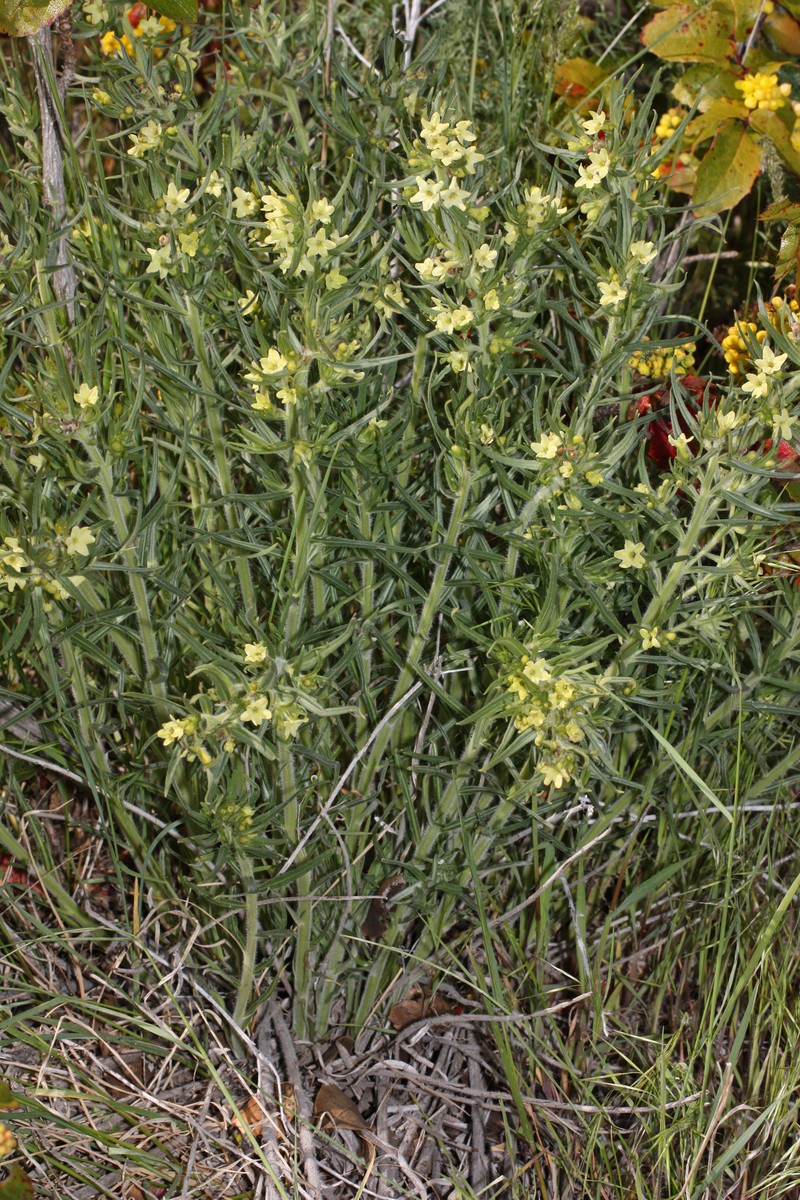
Western Stoneseed
Lithospermum ruderale
Taxonomy
- Division:
- Magnoliophyta | - Flowering plants
- Family:
- Boraginaceae
- Genus:
- Lithospermum
- Species:
- Lithospermum ruderale
Growth Characteristics
- Life Cycle:
- Perennial
- Growth Habit:
- Forb/herb
- Height:
- 1-2 ft
- Light Requirements:
- Full Sun
- Drought Tolerance:
- High
- Bloom Months:
- apr, may, jun
- Bloom Colors:
- White, Yellow
Native Range
United States: California, Colorado, Idaho, Montana, Nevada, Oregon, Utah, Washington, Wyoming, Canada: Alberta, British Columbia, Saskatchewan
Host Plant for Caterpillars
Reported Fauna Sightings
Soil Requirements
- Soil Type:
- sandy, well-drained, nutrient-poor soil
- pH:
- 6.0 - 7.5 (slightly acidic to neutral)
- Drainage:
- excellent drainage required
- Moisture:
- dry to moderate
- Notes:
- prefers open, sunny habitats
Germination Information
Pre-treatment: Seeds are soaked in water for 24 hours, placed in clear plastic germination boxes with moistened blotter paper, and stored at 4°C in the dark. After 28 days, the persistent receptacle is removed from the seeds, which are then washed with tap water and treated with Thiram, an anti-fungal seed protectant.
Establishment: Receptacle removal may be key to inducing germination but can only be accomplished following imbibition. Some seedlings may show signs of yellowing or chlorosis after developing the third or fourth set of leaves, but no mortality resulted from this condition.
Source: npn.rngr.net