
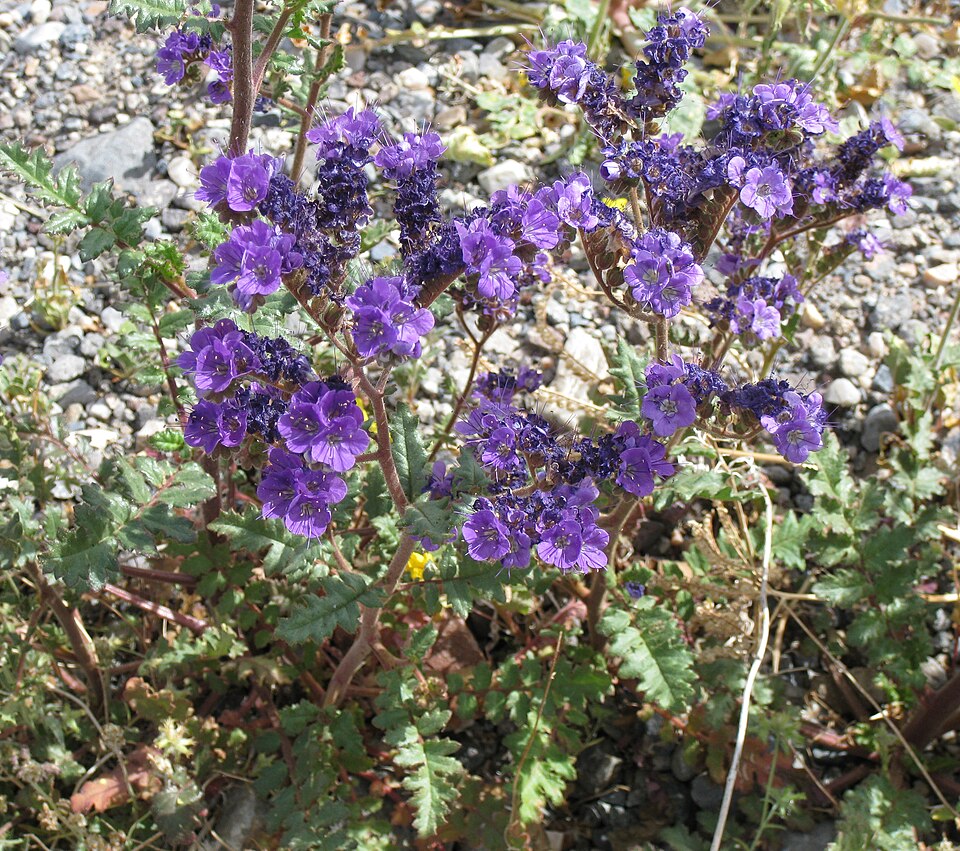
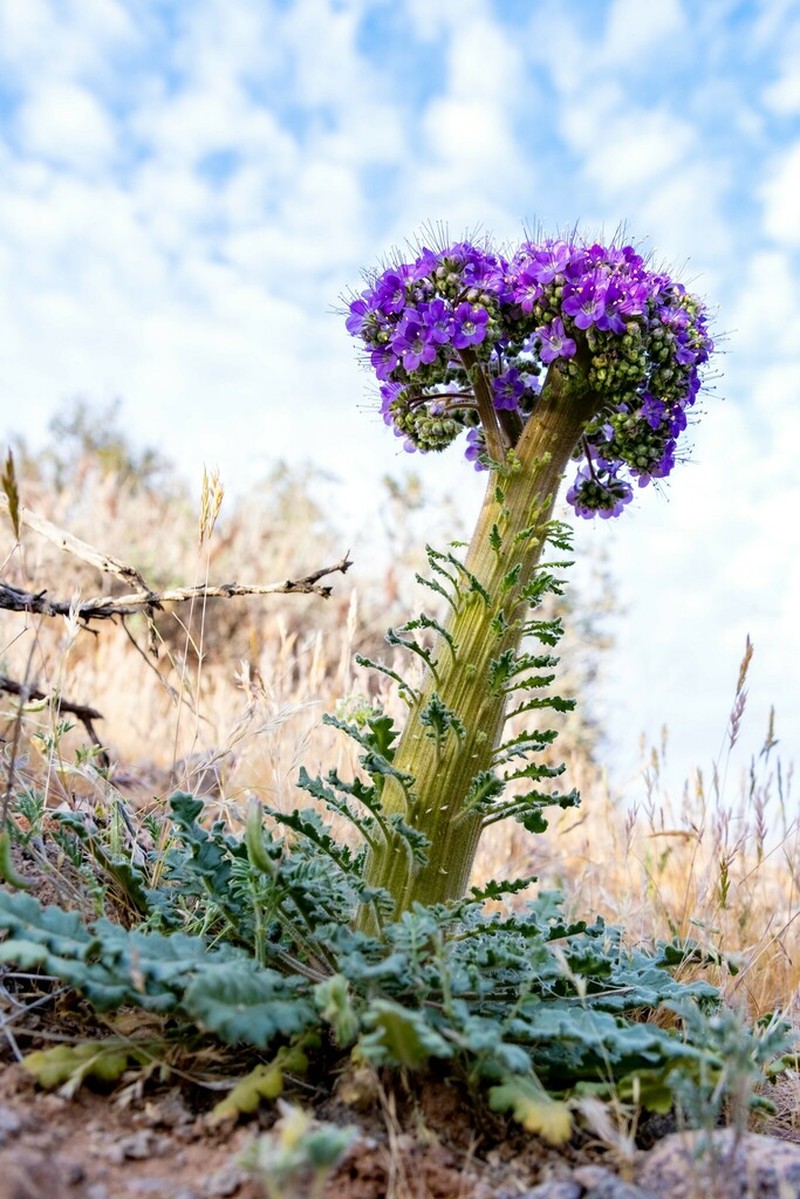
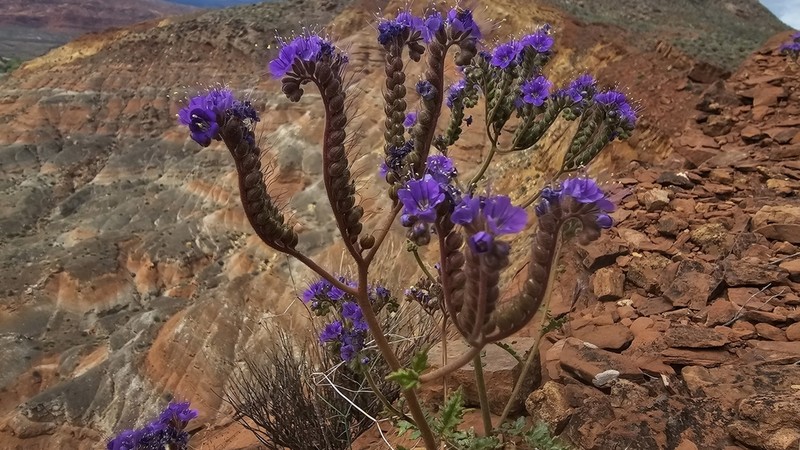
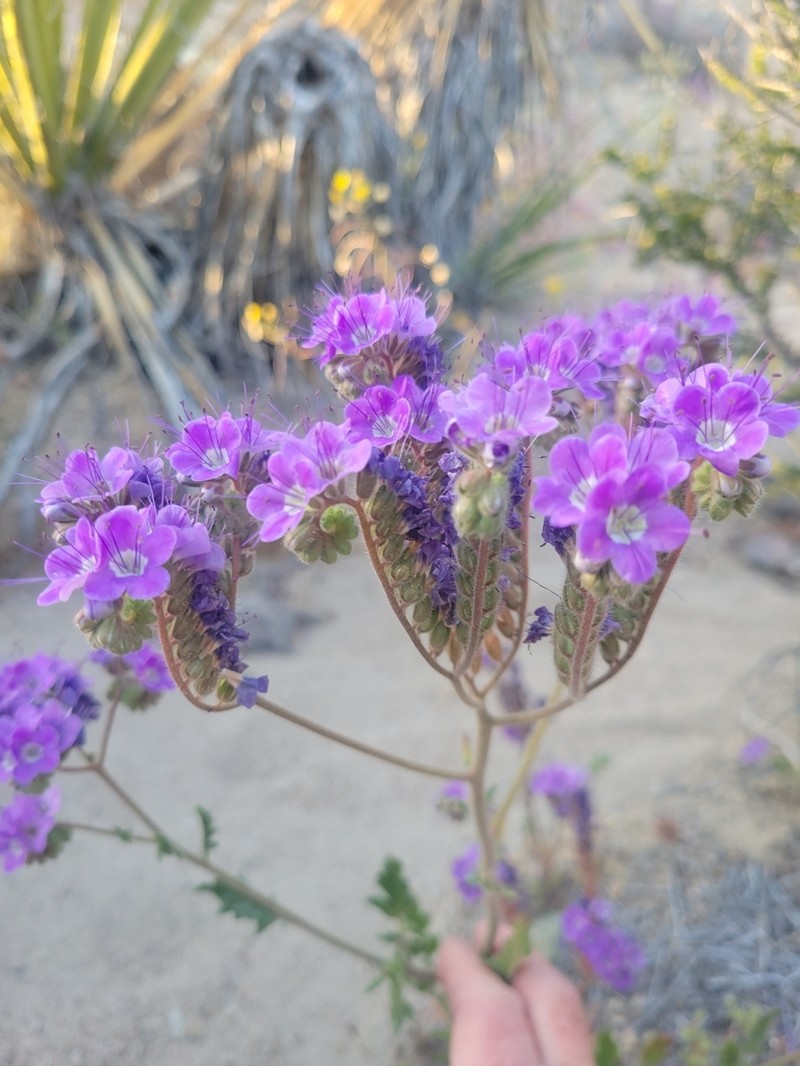
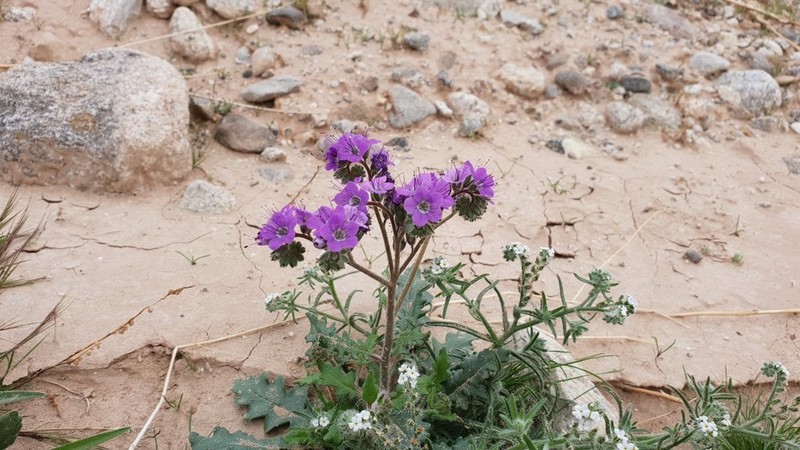
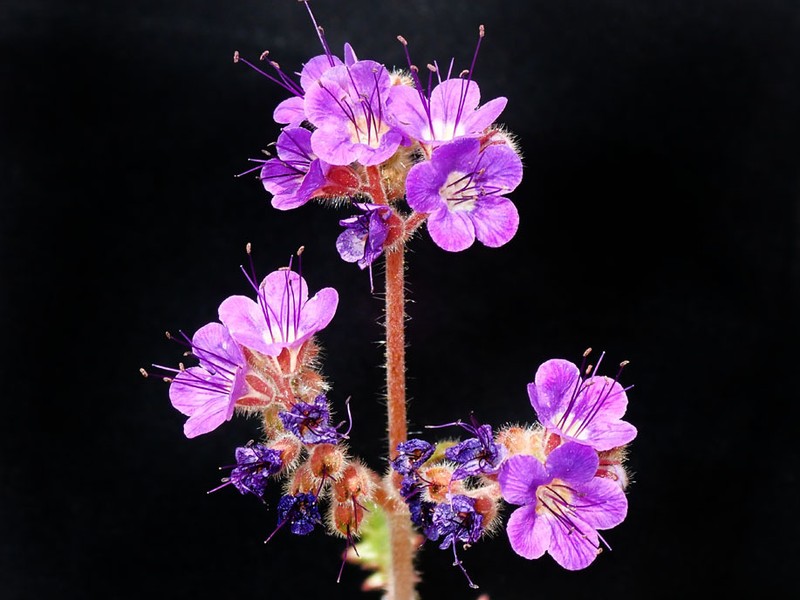
Cleftleaf Wildheliotrope
Phacelia crenulata
- Native to:
- Mexico, United States
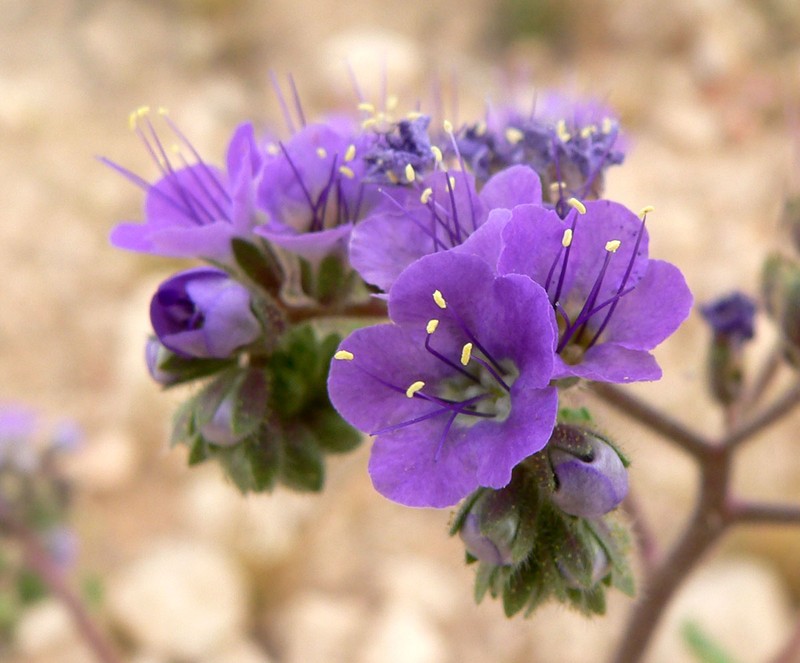
Stan Shebs
Taxonomy
- Division:
- Magnoliophyta | - Flowering plants
- Family:
- Boraginaceae
- Genus:
- Phacelia
- Species:
- Phacelia crenulata
- USDA Symbol:
- PHCR
Growth Characteristics
- Life Cycle:
- Annual
- Growth Habit:
- Forb/herb
- Height:
- 60 cm
- Light Requirements:
- Full Sun
- Drought Tolerance:
- High
- Bloom Months:
- mar,apr,may,jun
- Bloom Colors:
- purple, blue
Wildlife Benefits
- Bees:
- ★☆☆☆☆ Documented bee visitation (GBIF)
- Butterflies & Moths:
- ★★☆☆☆ Documented Lepidoptera association (GBIF)
- Caterpillars:
- ★☆☆☆☆ Recorded caterpillar host plant (HOSTS Database)
Keystone Species Ranking
- Pollen Specialist Bee Keystone:
- ★★★★☆ Native pollen specialist bee species supported by this genus (NWF)
Host Plant for Caterpillars
Baptarma felicita, Ethmia semilugens
Garden & Ecology Notes
- Wildlife Value:
- bees, butterflies
- Deer Resistant:
- Yes
Soil Requirements
- Soil Type:
- sandy, well-drained, nutrient-poor soil
- pH:
- 6.0 - 8.0 (neutral to slightly alkaline)
- Drainage:
- excellent drainage required
- Moisture:
- dry to moderate
- Notes:
- native to arid desert regions
Propagation & Germination
- Stratification:
- Cold/moist stratification required — 30–60 days
- Germination Time:
- 14–30 days
- Notes:
- Seeds benefit from cold stratification for 4-8 weeks to break dormancy; sow in fall or after cold treatment.
Pre-treatment: Seeds were plated on 1.5% agar in petri dishes and incubated in growth chambers at different temperature treatments intended to represent different seed sowing times and locations in the Colorado Plateau.
Establishment: Additional research is needed to confirm the specific length of winter conditions needed to break dormancy and allow germination, and to determine how representative these results are of the entire species.
Source: npn.rngr.net