
Milkmaids
Cardamine californica
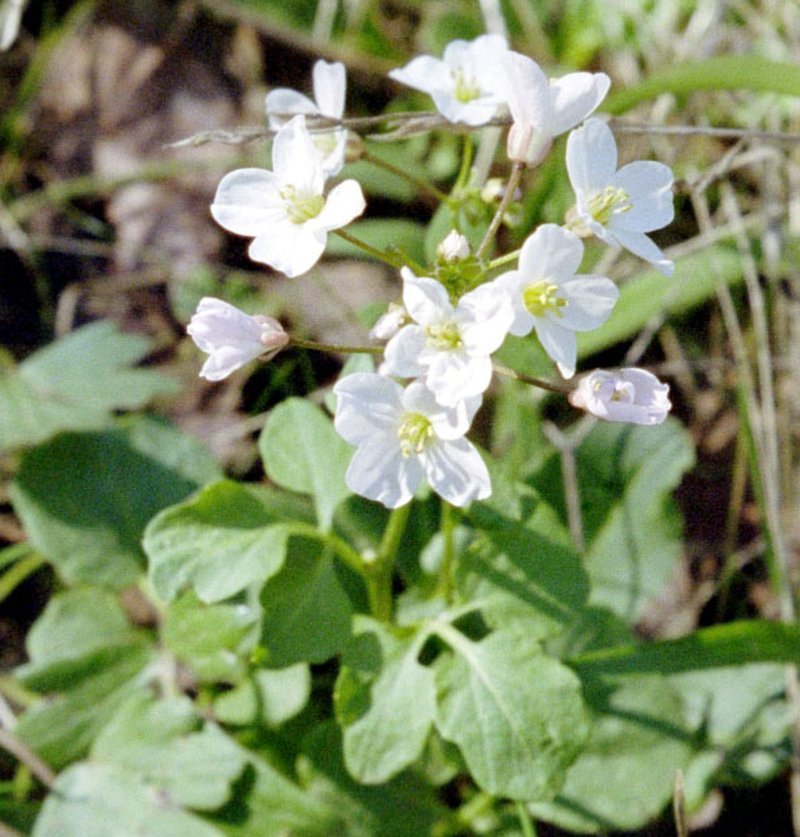
No machine-readable author provided. Elf assumed (based on copyright claims).
Taxonomy
- Division:
- Magnoliophyta | - Flowering plants
- Family:
- Brassicaceae
- Genus:
- Cardamine
- Species:
- Cardamine californica
Growth Characteristics
- Life Cycle:
- Perennial
- Growth Habit:
- Forb/herb
- Height:
- 2-3 ft
- Light Requirements:
- Part Shade
- Drought Tolerance:
- High
- Bloom Months:
- mar, apr
- Bloom Colors:
- White
Native Range
United States: California, Oregon, Washington
Keystone Species Ranking
- Caterpillar Keystone:
- ★★★★★ Based on number of butterfly and moth species using this genus as host plant (Source: National Wildlife Federation)
Host Plant for Caterpillars
Green-veined white (Pieris napi), Sara Orangetip (Anthocharis sara)
Reported Fauna Sightings
Butterflies:Anise Swallowtail (Papilio zelicaon), Anise Swallowtail (Papilio zelicaon), California Tortoiseshell (Nymphalis californica), California Tortoiseshell (Nymphalis californica), Common Buckeye (Junonia coenia), Common Buckeye (Junonia coenia), Echo Azure (Celastrina echo), Echo Azure (Celastrina echo), Margined White (Pieris marginalis), Margined White (Pieris marginalis), Mourning Cloak (Nymphalis antiopa), Satyr Comma (Polygonia satyrus), Satyr Comma (Polygonia satyrus)
Soil Requirements
- Soil Type:
- rich, well-drained loamy soil
- pH:
- 5.5 - 7.0 (slightly acidic to neutral)
- Drainage:
- good drainage required
- Moisture:
- consistently moist
- Notes:
- prefers shaded or semi-shaded areas
Germination Information
Pre-treatment: Seeds are stratified for 1 month
Establishment: Seeds are collected between May 4th and May 25th. Mature fruits begin to turn yellowish-brown and become stiff; eventually fruits split from the top. C. californica is found in shady banks and slopes, mostly below 2500 feet; from southwest Oregon to Lower California.
Source: npn.rngr.net