
Pili Nut
Canarium ovatum
- Native to:
- Philippines
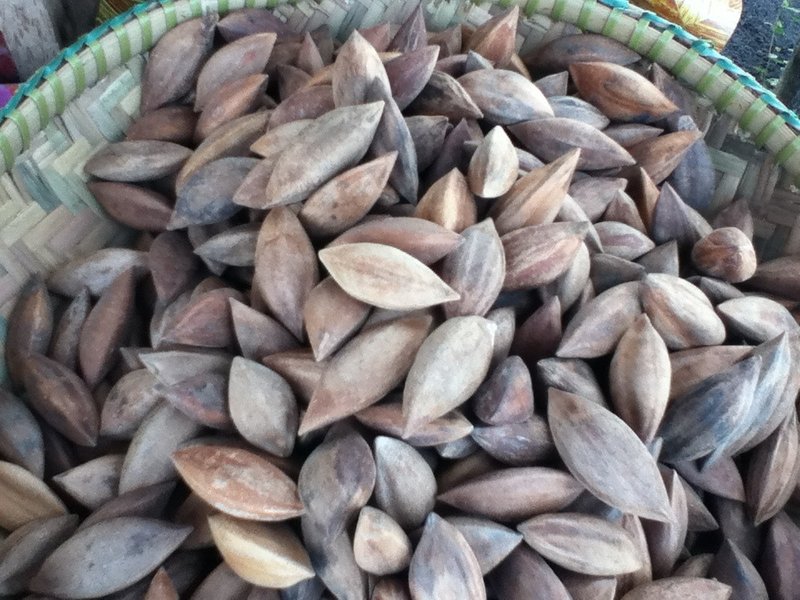
Lance Catedral (www.flickr.com) from Quezon City, Metro Manila, Philippines,Forest and Kim Starr (www.flickr.com),Forest and Kim Starr (www.flickr.com),Forest and Kim Starr (www.flickr.com),Forest and Kim Starr (www.flickr.com),Forest and Kim Starr (www.flickr.com),Forest and Kim Starr (www.flickr.com),Forest and Kim Starr (www.flickr.com),Forest and Kim Starr (www.flickr.com),Forest and Kim Starr (www.flickr.com),Forest and Kim Starr (www.flickr.com),Forest and Kim Starr (www.flickr.com)

Taxonomy
- Division:
- Magnoliophyta | - Flowering plants
- Family:
- Burseraceae
- Genus:
- Canarium
- Species:
- Canarium ovatum
- USDA Symbol:
- CAOV7
Growth Characteristics
- Height:
- 2000 cm
- Light Requirements:
- Full Sun
- Drought Tolerance:
- Medium
- Bloom Months:
- mar,apr,may
- Bloom Colors:
- white
- Food Forest:
- Contains edible parts
Garden & Ecology Notes
- Wildlife Value:
- birds, mammals
Soil Requirements
- Soil Type:
- rich, well-drained loamy soil
- pH:
- 5.5 - 6.5 (slightly acidic to neutral)
- Drainage:
- excellent drainage required
- Moisture:
- consistently moist
- Notes:
- native to tropical climates with high humidity