
Great Blue Lobelia
Lobelia siphilitica
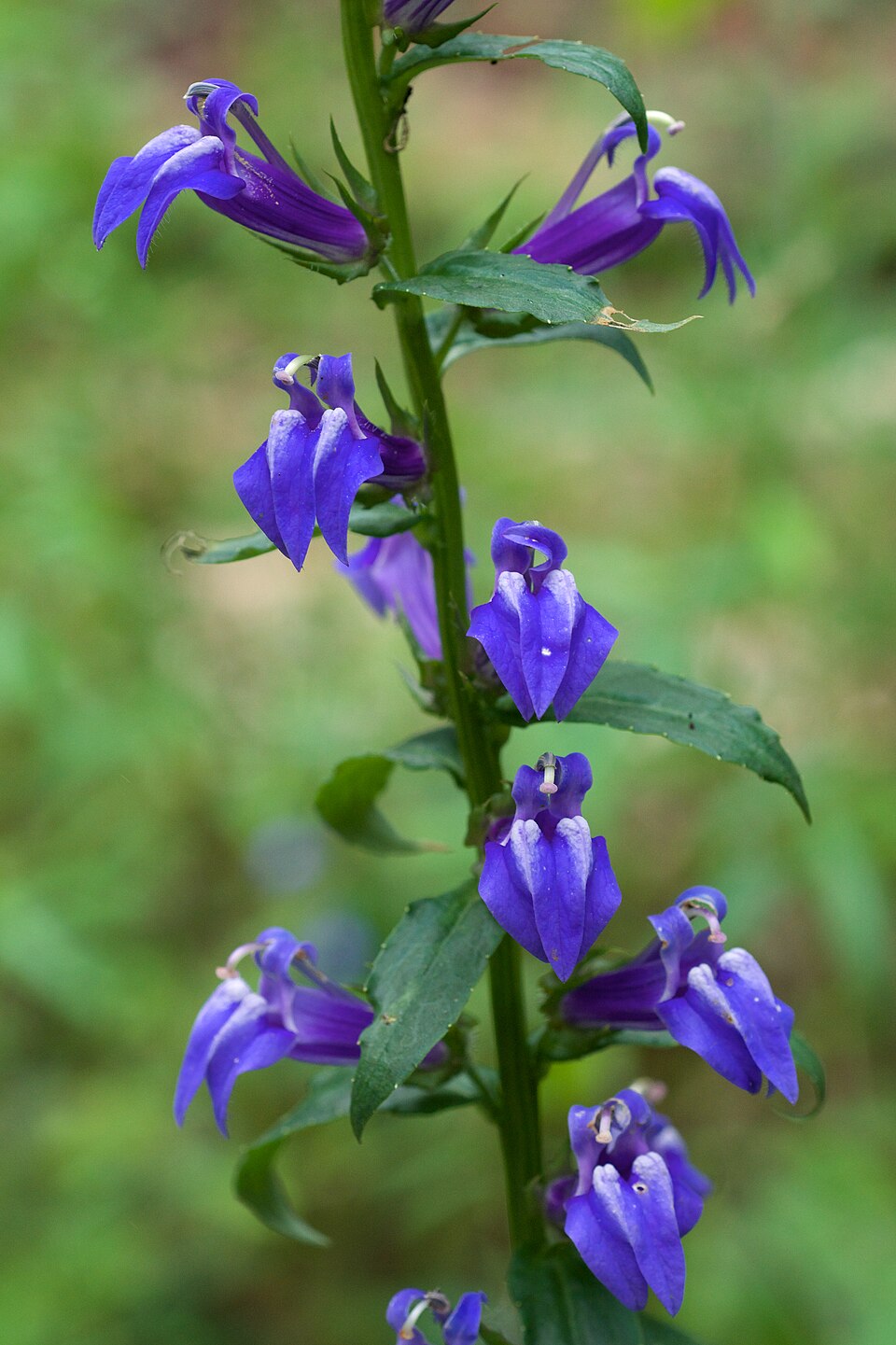
Taxonomy
- Division:
- Magnoliophyta | - Flowering plants
- Family:
- Campanulaceae
- Genus:
- Lobelia
- Species:
- Lobelia siphilitica
Growth Characteristics
- Life Cycle:
- Perennial
- Growth Habit:
- Forb/herb
- Height:
- 4-6 ft
- Light Requirements:
- Full Sun, Part Shade, Shade
- Drought Tolerance:
- Low
- Bloom Months:
- jul, aug, sep, oct
- Bloom Colors:
- Blue, Purple
Native Range
United States: Alabama, Arkansas, Colorado, Connecticut, District of Columbia, Delaware, Georgia, Iowa, Illinois, Indiana, Kansas, Kentucky, Louisiana, Massachusetts, Maryland, Maine, Michigan, Minnesota, Missouri, Mississippi, North Carolina, North Dakota, Nebraska, New Hampshire, New Jersey, New York, Ohio, Oklahoma, Pennsylvania, South Carolina, South Dakota, Tennessee, Texas, Virginia, Vermont, Wisconsin, West Virginia, Wyoming, Canada: Manitoba, Ontario
Keystone Species Ranking
- Caterpillar Keystone:
- ★★★★★ Based on number of butterfly and moth species using this genus as host plant (Source: National Wildlife Federation)
Host Plant for Caterpillars
Dark-spotted Palthis (Palthis angulalis)
Reported Fauna Sightings
Bees: American bumble bee (Bombus pensylvanicus), American bumble bee (Bombus pensylvanicus), Brown-belted bumble bee (Bombus griseocollis), Brown-belted bumble bee (Bombus griseocollis), Common eastern bumble bee (Bombus impatiens), Common eastern bumble bee (Bombus impatiens), Half-black bumble bee (Bombus vagans), Half-black bumble bee (Bombus vagans), Northern amber bumble bee (Bombus borealis), Northern amber bumble bee (Bombus borealis), 🛑Rusty-patched bumble bee (Bombus affinis), 🛑Rusty-patched bumble bee (Bombus affinis), Yellow bumble bee (Bombus fervidus), Yellow bumble bee (Bombus fervidus)
Soil Requirements
- Soil Type:
- rich, moist, well-drained loamy soil
- pH:
- 5.5 - 7.0 (slightly acidic to neutral)
- Drainage:
- tolerates poor drainage
- Moisture:
- consistently moist
- Notes:
- prefers wetland areas and stream banks
Germination Information
Pre-treatment: Stratification: mixed with damp sand and stored at 38 F for 12 weeks in a sealed plastic bag
Source: npn.rngr.net