
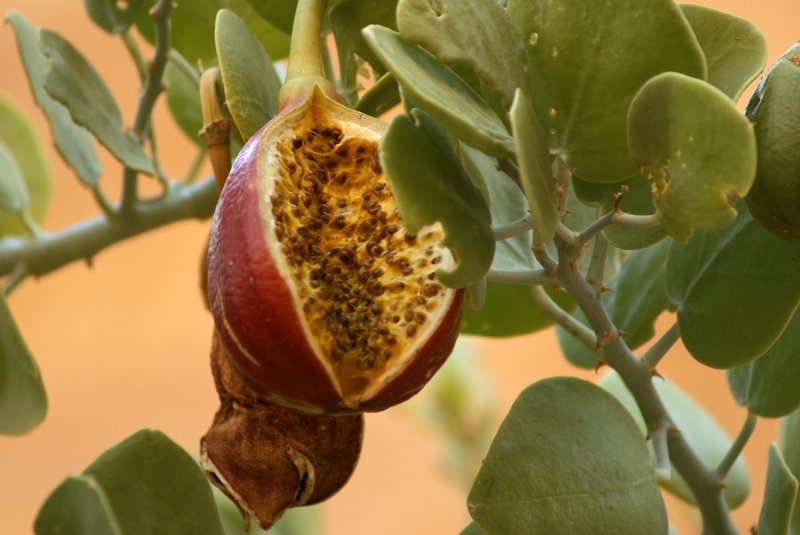
Capparis cartilaginea
Capparis cartilaginea
- Native to:
- Afghanistan, Aldabra, Chad, Djibouti, Egypt, Eritrea, Ethiopia, Gulf States, India, Iran, Iraq, Kenya, Kuwait, Libya, Madagascar, Mauritius, Oman, Pakistan, Palestine, Saudi Arabia, Sinai, Socotra, Somalia, Sudan-South Sudan, Tanzania, Yemen
Plantsman,Krzysztof Ziarnek, Kenraiz,Florian Prischl,Albarubescens,Abdel-Dayem MS, Elgharbawy AA, Rasool I, Nagel P, Aldhafer HM (2019) The Carabidae (Coleoptera) of Shada Al-A’Ala Nature Reserve, Southwestern Saudi Arabia, with description of a new species of Paussinae. ZooKeys 812: 93-131. https://doi.org/10.3897/zooke,Deflers, A. (Albert),Szathmari, Paulus,Rodrigues, J. Barbosa (João Barbosa), 1842-1909 Museu Botanico do Amazonas,Lindley, John, Ridgway, James,Gessner, Johannes, 1709-1790,Grateloup, Jean-Pierre Silvestre de, 1782-1862,Linné, Carl von, 1707-1778

Taxonomy
- Division:
- Magnoliophyta | - Flowering plants
- Family:
- Capparaceae
- Genus:
- Capparis
- Species:
- Capparis cartilaginea
- USDA Symbol:
- CACA99
Growth Characteristics
- Height:
- 300 cm
- Light Requirements:
- Full Sun
- Drought Tolerance:
- High
- Bloom Months:
- mar,apr,may,jun,jul,aug,sep
- Bloom Colors:
- white, pink
- Evergreen Shrub:
- Yes
- Landscaping Shrub:
- Yes
Garden & Ecology Notes
- Wildlife Value:
- bees, butterflies
- Deer Resistant:
- Yes
- Salt Tolerant:
- Yes
- Fragrant:
- Yes
Soil Requirements
- Soil Type:
- sandy, well-drained, nutrient-poor soil
- pH:
- 6.0 - 8.0 (neutral to slightly alkaline)
- Drainage:
- excellent drainage required
- Moisture:
- dry to moderate
- Notes:
- commonly found in arid and semi-arid regions
Propagation & Germination
- Scarification:
- Seed coat scarification required before sowing
- Notes:
- Seeds benefit from scarification to break physical dormancy; germination may be erratic.