
Caper
Capparis spinosa
- Native to:
- Afghanistan, Albania, Algeria, American Samoa, Baleares, Caroline Is., Chad, China, Cook Is., Corse, Cyprus, East Aegean Is., Egypt, Federated States of Micronesia, Fiji, France, Greece, Gulf States, India, Iran, Iraq, Italy, Kazakhstan, Kirgizstan, Kriti, Krym, Lebanon-Syria, Lesser Sunda Is., Libya, Marianas, Marshall Is., Marshall Islands, Morocco, Nauru, Nepal, New Caledonia, New Guinea, Niue, North Caucasus, Northern Mariana Islands, NW. Balkan Pen., Oman, Pakistan, Palestine, Philippines, Pitcairn Is., Portugal, Samoa, Sardegna, Saudi Arabia, Sicilia, Sinai, Society Is., Solomon Is., Spain, Tadzhikistan, Tonga, Transcaucasus, Tuamotu, Tubuai Is., Tunisia, Türkiye, Turkmenistan, Uzbekistan, Vanuatu, Wallis-Futuna Is., Yemen
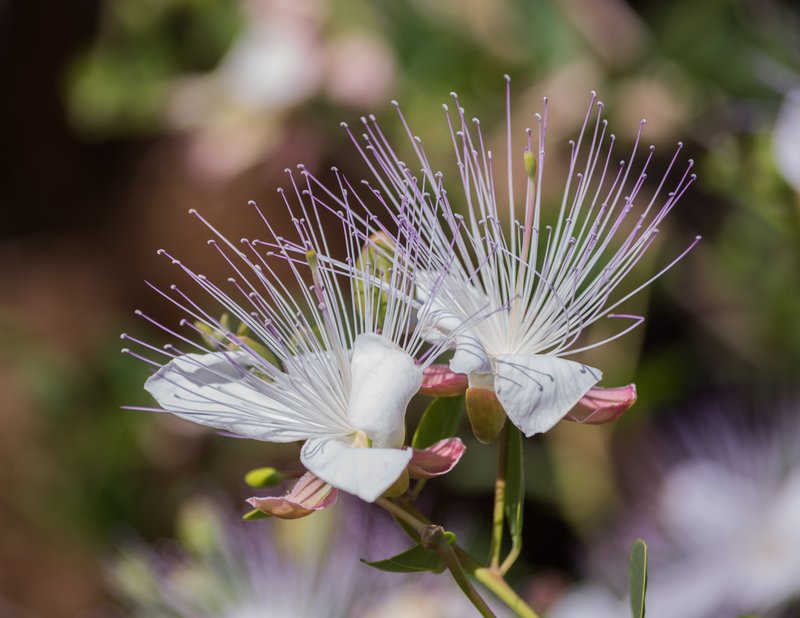
RuthP,Florian Prischl,C T Johansson,Meshari Alawfi,IssamBarhoumi,Amirh. absnd,Halenhardy,Halenhardy,Otto Wilhelm Thomé (1840-1925),Halenhardy,,Amirh. absnd

Taxonomy
- Division:
- Magnoliophyta | - Flowering plants
- Family:
- Capparaceae
- Genus:
- Capparis
- Species:
- Capparis spinosa
- USDA Symbol:
- CASP28
Growth Characteristics
- Height:
- 100 cm
- Light Requirements:
- Full Sun
- Drought Tolerance:
- High
- Bloom Months:
- may,jun,jul,aug
- Bloom Colors:
- white, pink
- Evergreen Shrub:
- Yes
- Landscaping Shrub:
- Yes
Garden & Ecology Notes
- Wildlife Value:
- bees, butterflies
- Deer Resistant:
- Yes
- Salt Tolerant:
- Yes
- Fragrant:
- Yes
Soil Requirements
- Soil Type:
- rocky, well-drained, nutrient-poor soil
- pH:
- 6.0 - 8.5 (neutral to slightly alkaline)
- Drainage:
- excellent drainage required
- Moisture:
- dry to moderate
- Notes:
- thrives in arid, coastal regions
Propagation & Germination
- Stratification:
- Warm stratification required — 30–60 days
- Scarification:
- Seed coat scarification required before sowing
- Germination Time:
- 14–30 days
- Notes:
- Seeds benefit from scarification (nicking or hot water treatment) followed by warm stratification.