
African Caper
Capparis tomentosa
- Native to:
- Angola, Benin, Botswana, Burkina, Burundi, Cameroon, Caprivi Strip, Central African Republic, Chad, DR Congo, Eritrea, Eswatini, Ethiopia, Gabon, Gambia, Ghana, Guinea, Gulf of Guinea Is., Ivory Coast, Kenya, Malawi, Mali, Mauritania, Mauritius, Mozambique, Namibia, Niger, Nigeria, Rwanda, Saudi Arabia, Senegal, Somalia, South Africa, Sudan-South Sudan, Tanzania, Uganda, Yemen, Zambia, Zimbabwe
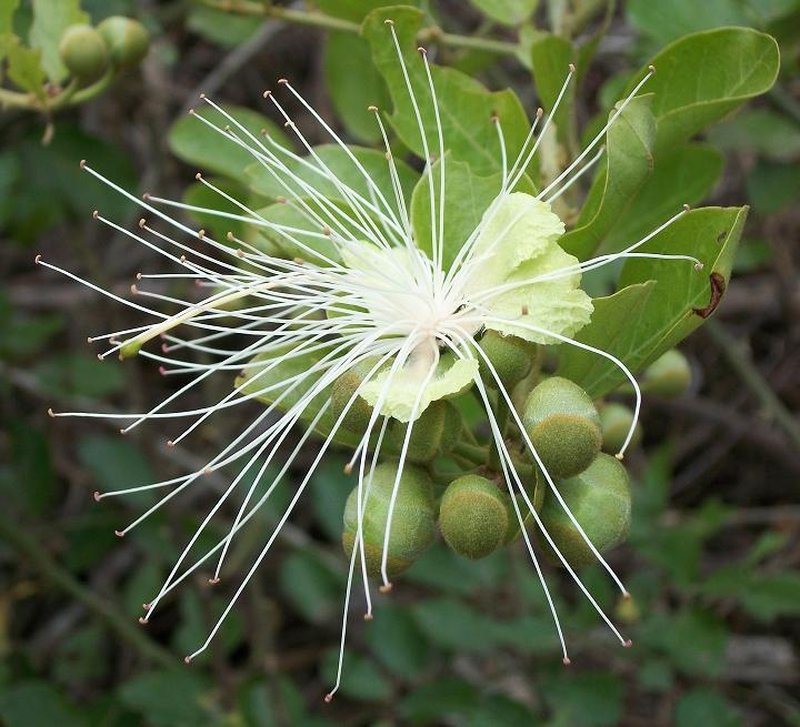
Franz Xaver,Purves, M. (en.wikipedia.org),Purves, M.,TifNefertari,TifNefertari,TifNefertari,TifNefertari,TifNefertari,TifNefertari,Purves, M. (Transferred by rohith_goura /Originally uploaded by Michaelwild (en.wikipedia.org) ),Franz Xaver,Franz Xaver

Taxonomy
- Division:
- Magnoliophyta | - Flowering plants
- Family:
- Capparaceae
- Genus:
- Capparis
- Species:
- Capparis tomentosa
- USDA Symbol:
- CATO23
Growth Characteristics
- Height:
- 600 cm
- Light Requirements:
- Full Sun,Part Shade
- Drought Tolerance:
- High
- Bloom Months:
- jan,feb,mar,apr,may,jun,jul,aug,sep,oct,nov,dec
- Bloom Colors:
- white
Garden & Ecology Notes
- Wildlife Value:
- birds, butterflies
- Deer Resistant:
- Yes
- Salt Tolerant:
- Yes
- Fragrant:
- Yes
Soil Requirements
- Soil Type:
- well-drained, sandy or loamy soil
- pH:
- 6.0 - 7.5 (slightly acidic to neutral)
- Drainage:
- excellent drainage required
- Moisture:
- dry to moderate
- Notes:
- native to savanna and woodland areas
Propagation & Germination
- Scarification:
- Seed coat scarification required before sowing
- Germination Time:
- 14–60 days
- Notes:
- Seeds require scarification (nicking or hot water treatment) to break physical dormancy; germination occurs in warm conditions.