
Limber Honeysuckle
Lonicera dioica
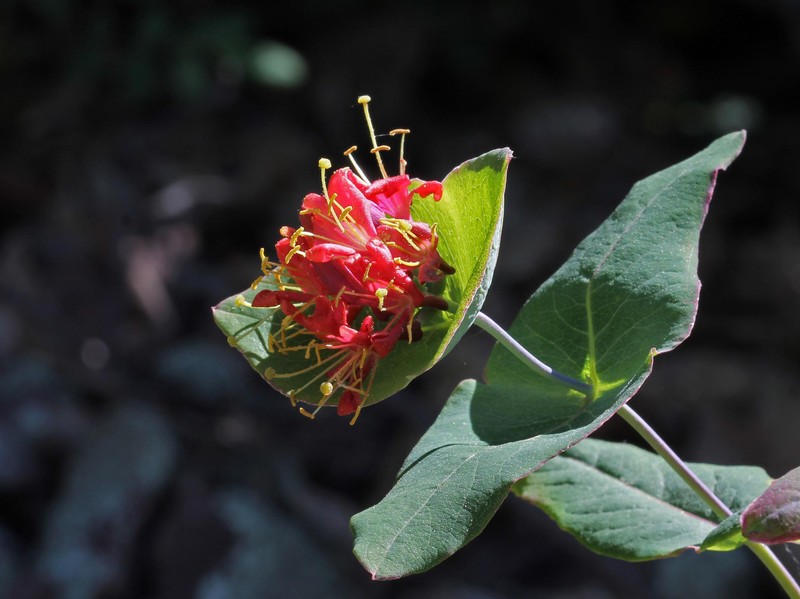
Rob Routledge, Sault College, Bugwood.org
Taxonomy
- Division:
- Magnoliophyta | - Flowering plants
- Family:
- Caprifoliaceae
- Genus:
- Lonicera
- Species:
- Lonicera dioica
Growth Characteristics
- Life Cycle:
- Perennial
- Growth Habit:
- Vine
- Height:
- 8-12 ft
- Light Requirements:
- Full Sun, Part Shade, Shade
- Drought Tolerance:
- High
- Bloom Months:
- may, jun
- Bloom Colors:
- Red, Orange, Yellow, Purple
Native Range
United States: Arkansas, Connecticut, Georgia, Iowa, Illinois, Indiana, Kansas, Kentucky, Massachusetts, Maryland, Maine, Michigan, Minnesota, Missouri, North Carolina, North Dakota, Nebraska, New Hampshire, New Jersey, New York, Ohio, Oklahoma, Pennsylvania, Rhode Island, South Dakota, Tennessee, Virginia, Vermont, Wisconsin, West Virginia, Wyoming, Canada: Alberta, British Columbia, Manitoba, Northwest Territories, Ontario, Quebec, Saskatchewan, Yukon
Keystone Species Ranking
- Caterpillar Keystone:
- ★★★☆☆ Based on number of butterfly and moth species using this genus as host plant (Source: National Wildlife Federation)
Host Plant for Caterpillars
gray scoopwing moth (Callizzia amorata), Homohadena badistriga
Reported Fauna Sightings
Bees: Two-spotted bumble bee (Bombus bimaculatus), Two-spotted bumble bee (Bombus bimaculatus)
Soil Requirements
- Soil Type:
- rich, well-drained loamy soil
- pH:
- 5.5 - 7.5 (slightly acidic to neutral)
- Drainage:
- good drainage required
- Moisture:
- consistently moist
- Notes:
- prefers forest edges and open woods
Germination Information
Pre-treatment: Cold-moist stratification for 30 days at 1–5°C (34–41°F).
Source: OpenAI GPT-4o