
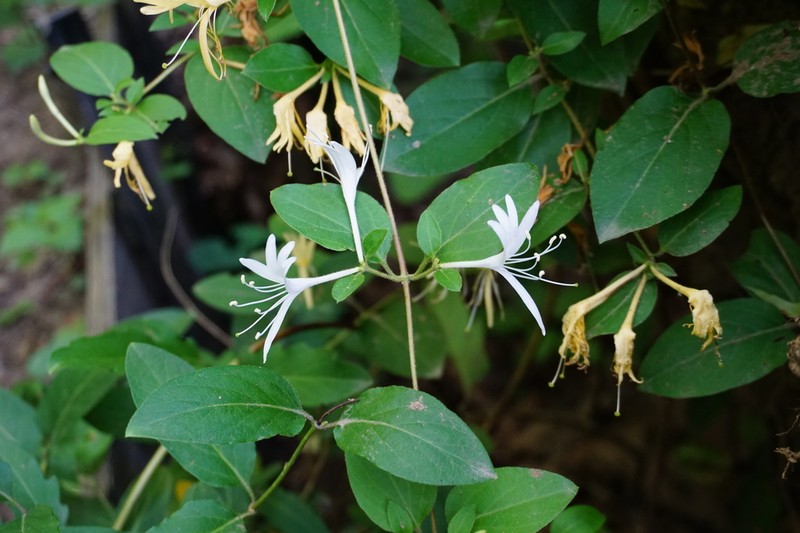
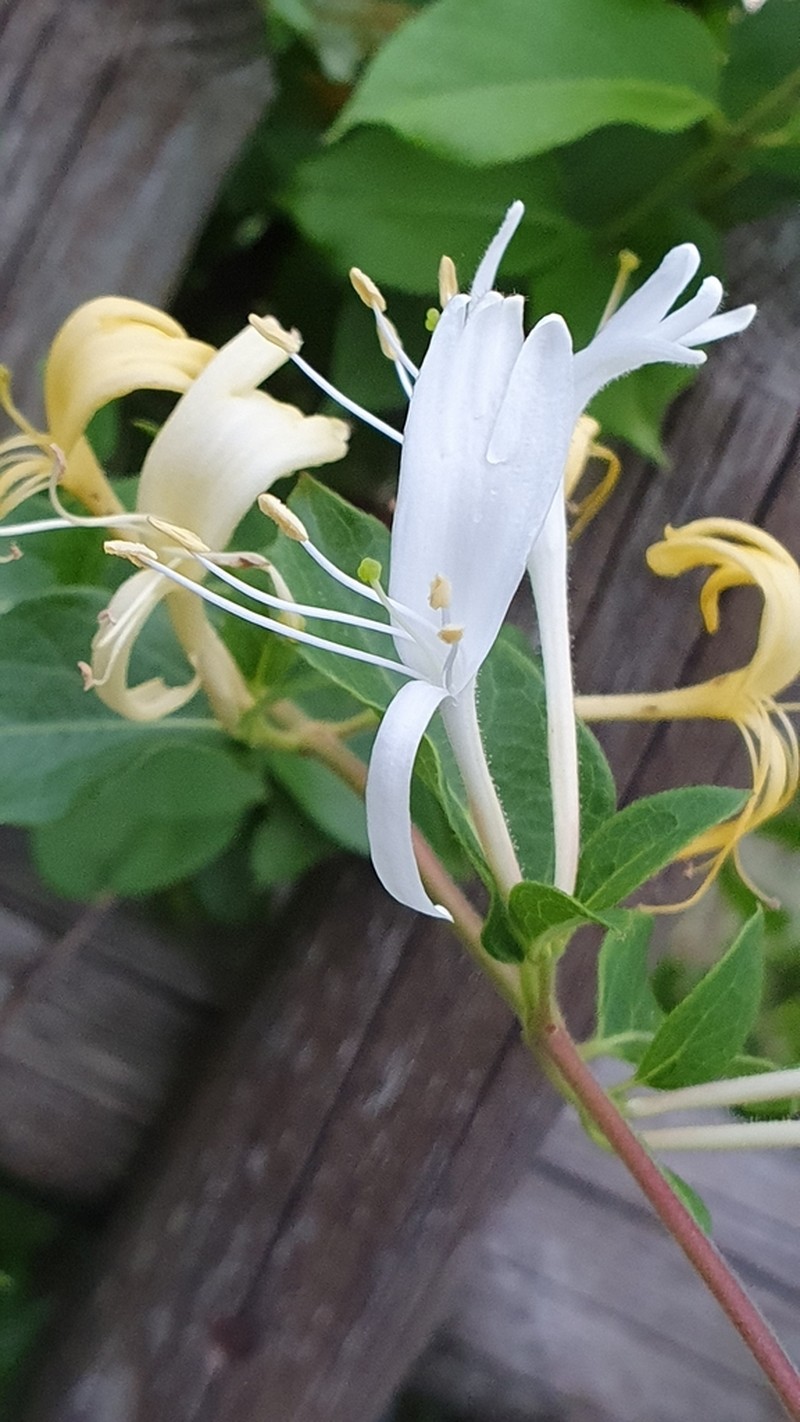
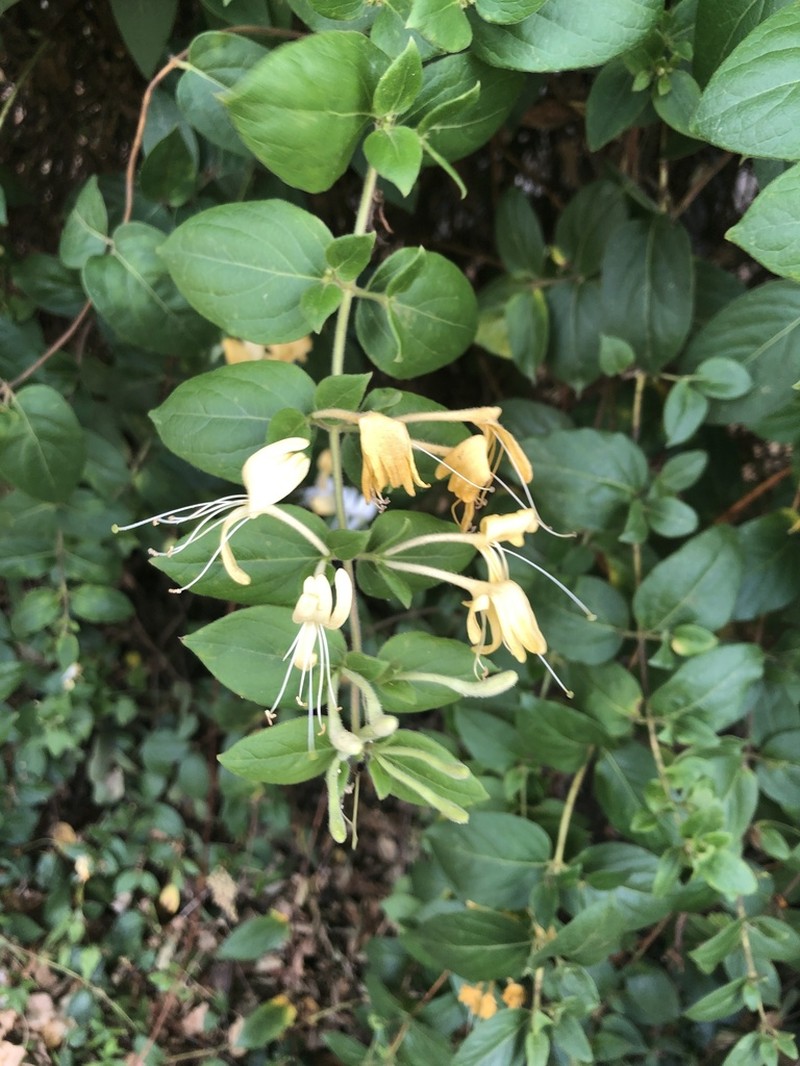
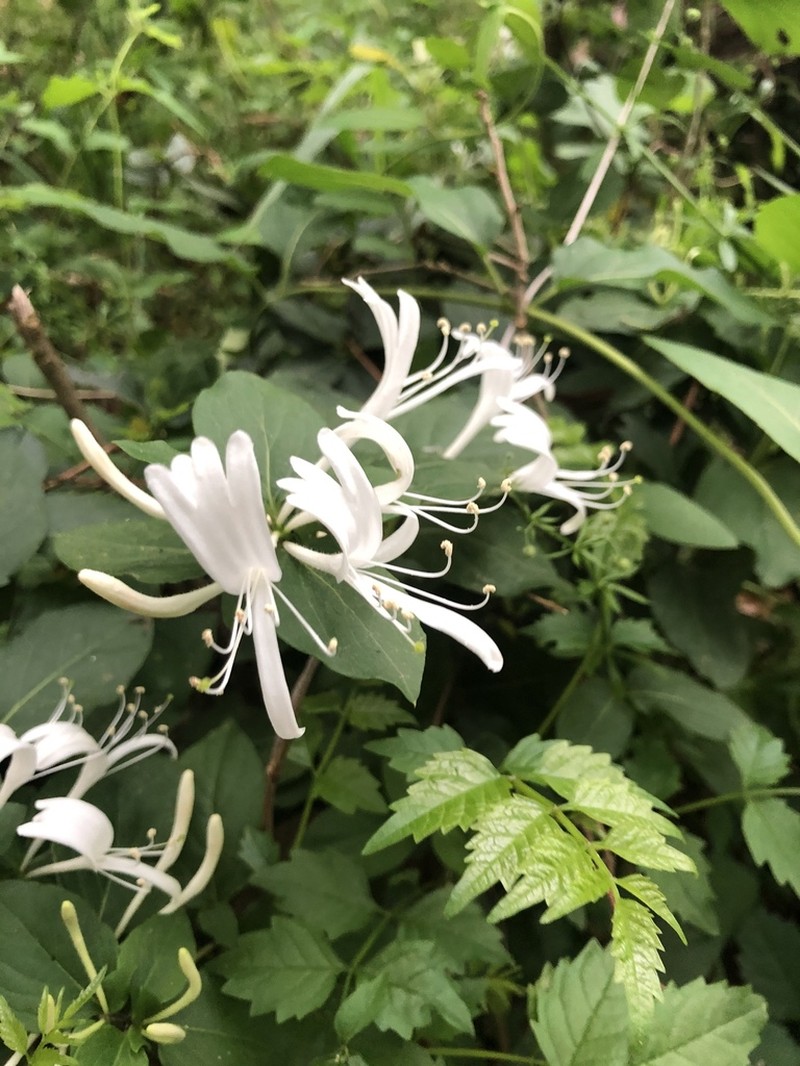
Japanese Honeysuckle
Lonicera japonica
- Native to:
- China, Japan, Korea, Taiwan
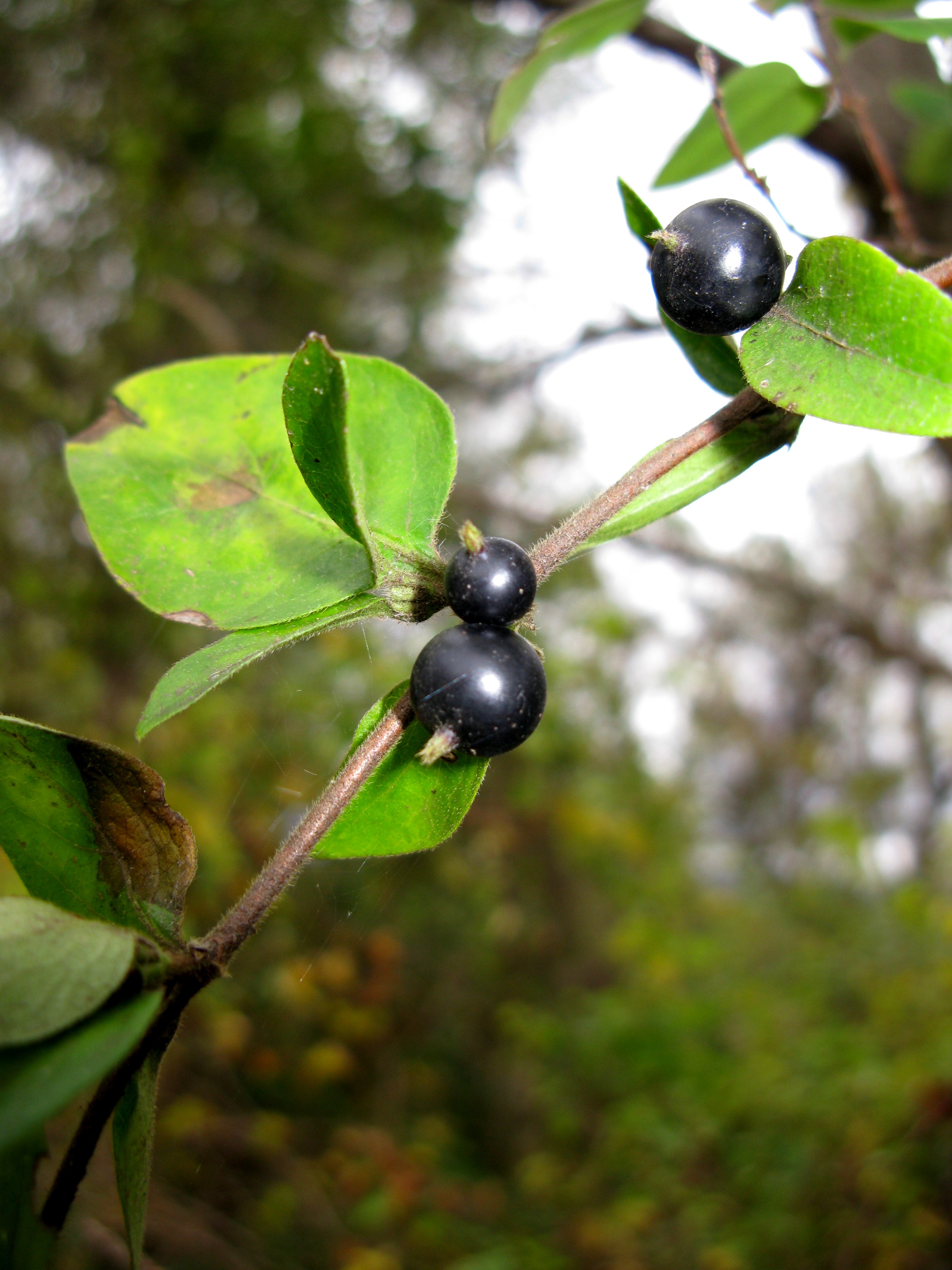
Qwert1234
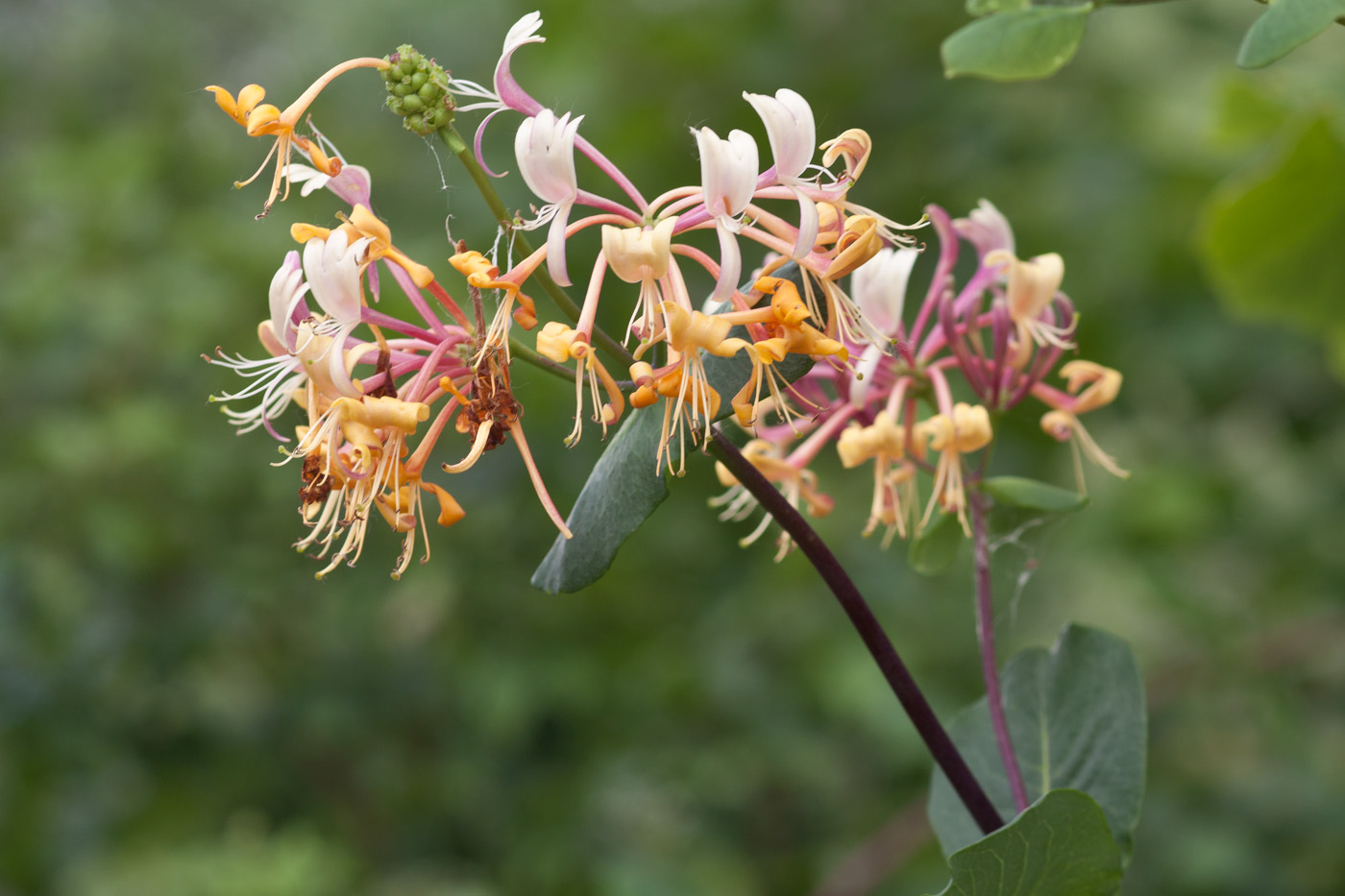
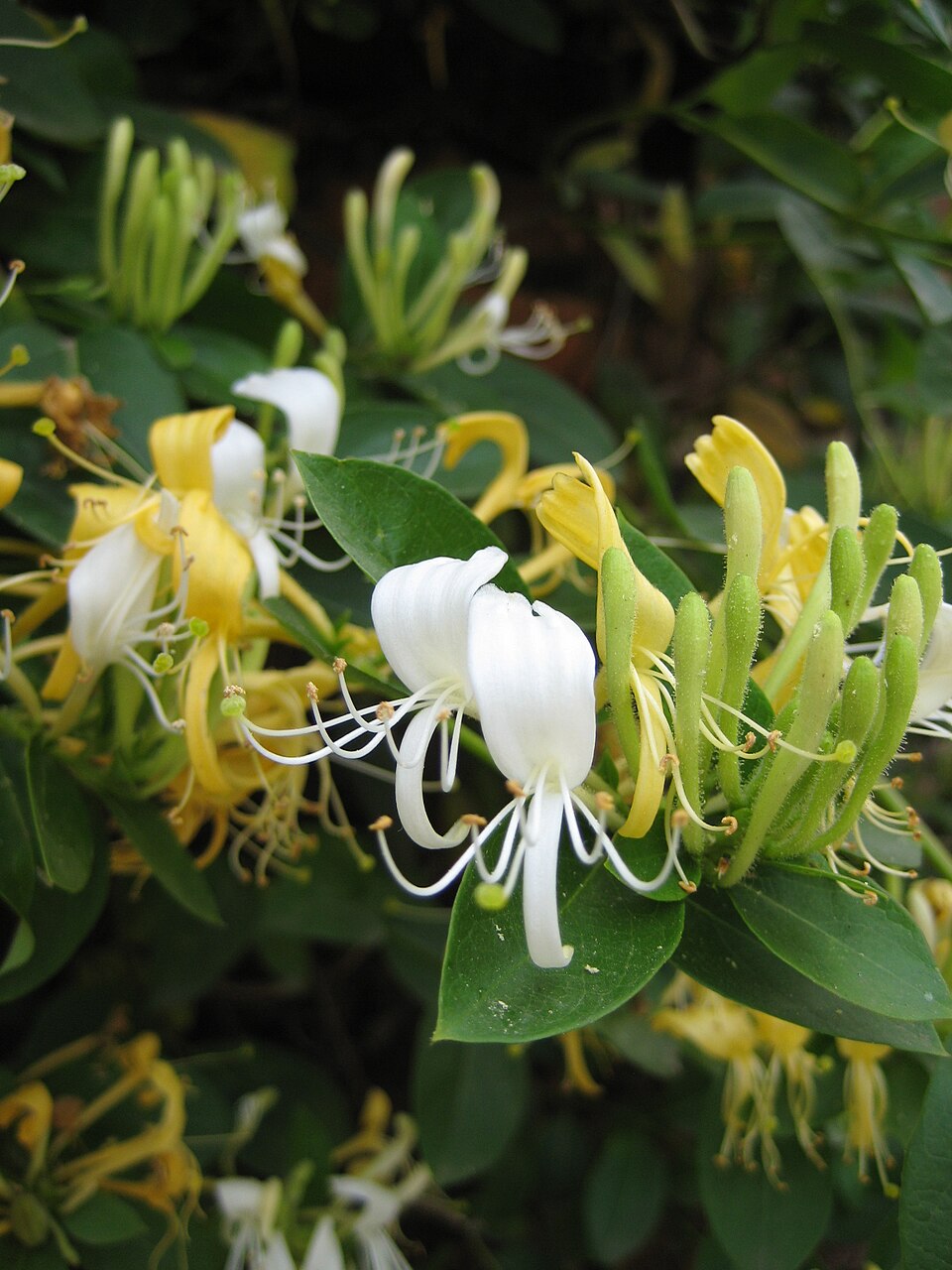
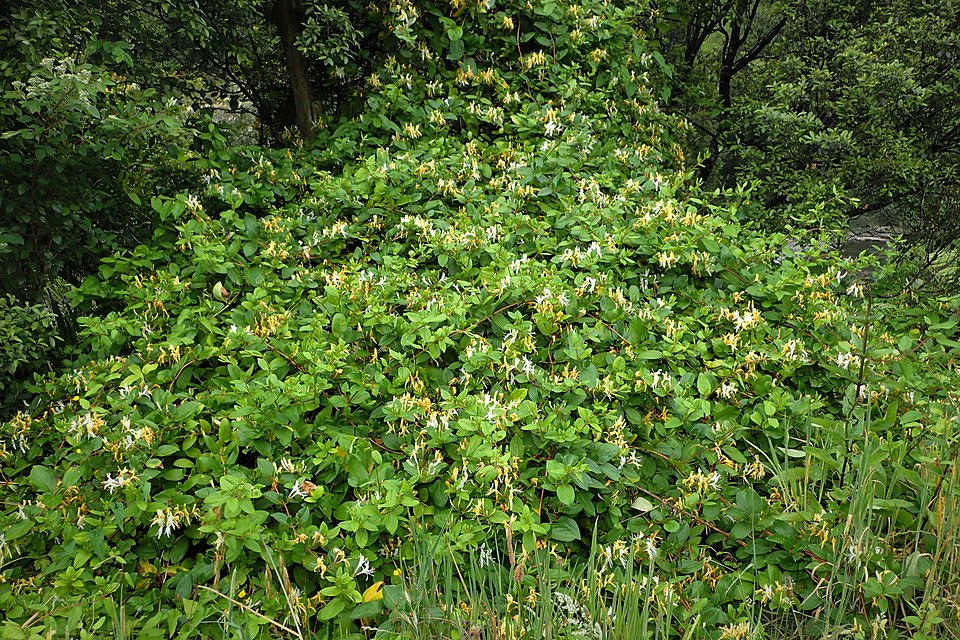
Taxonomy
- Division:
- Magnoliophyta | - Flowering plants
- Family:
- Caprifoliaceae
- Genus:
- Lonicera
- Species:
- Lonicera japonica
- USDA Symbol:
- LOJA
Growth Characteristics
- Life Cycle:
- Perennial
- Growth Habit:
- Vine
- Height:
- 1000 cm
- Light Requirements:
- Full Sun
- Drought Tolerance:
- Medium
- Bloom Months:
- apr,may,jun,jul,aug
- Bloom Colors:
- white, yellow
Keystone Species Ranking
- Caterpillar Keystone:
- ★★★☆☆ Butterfly & moth species supported by this genus (NWF)
Host Plant for Caterpillars
Cecropia moth (Hyalophora cecropia), Phyllonorycter emberizaepenella, Puss caterpillar (Megalopyge opercularis), Snowberry Clearwing (Hemaris diffinis), Baltimore checkerspot (Euphydryas phaeton)
Reported Fauna Sightings
Bees: American bumble (Bombus pensylvanicus), Common eastern (Bombus impatiens), Eastern Carpenter Bee (Xylocopa virginica) Hummingbirds: Ruby-throated Hummingbird (Archilochus colubris) Moths:Fall webworm (Hyphantria cunea), Snowberry Clearwing (Hemaris diffinis) Butterflies:Cloudless Sulphur (Phoebis sennae), ⚠️Monarch butterfly (Danaus plexippus), Spicebush Swallowtail (Papilio troilus)
Garden & Ecology Notes
- Wildlife Value:
- birds, butterflies, bees
- Salt Tolerant:
- Yes
- Fragrant:
- Yes
Soil Requirements
- Soil Type:
- fertile, well-drained loamy soil
- pH:
- 5.5 - 8.0 (slightly acidic to neutral)
- Drainage:
- tolerates poor drainage
- Moisture:
- consistently moist
- Notes:
- Prefers rich soils but can adapt to various conditions
Propagation & Germination
- Stratification:
- Cold/moist stratification required — 30–90 days
- Germination Time:
- 14–60 days
- Notes:
- Seeds benefit from cold stratification for 1-3 months to break dormancy.