
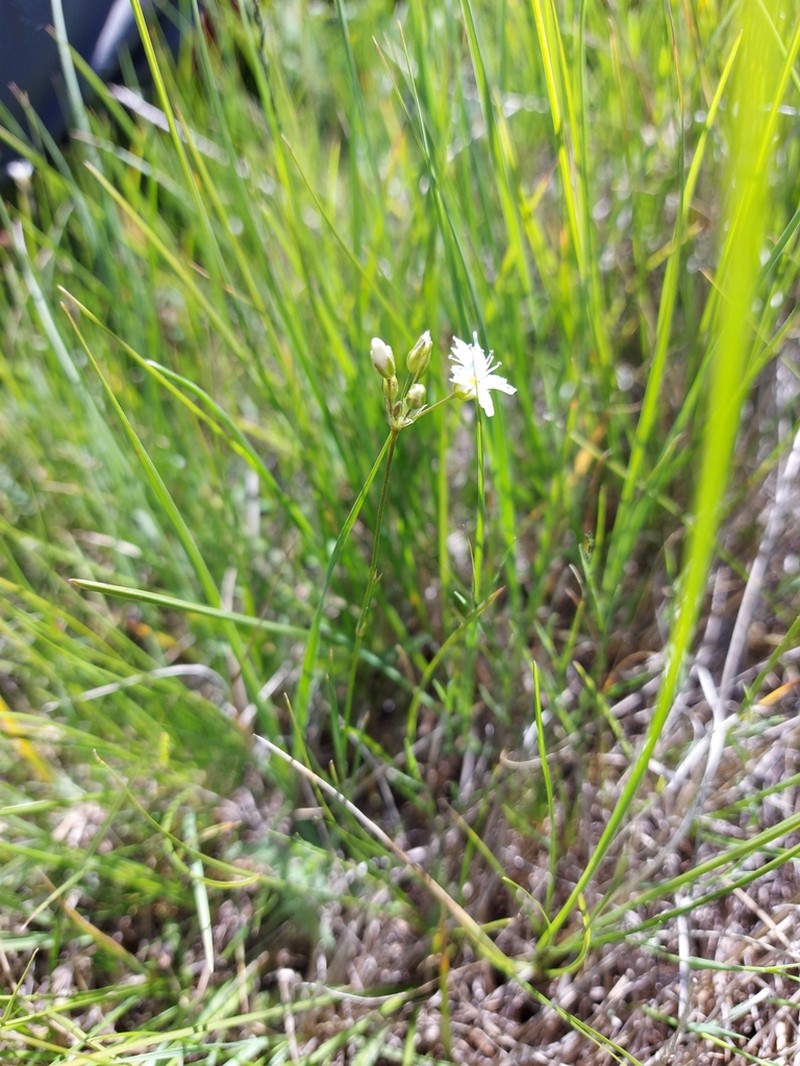
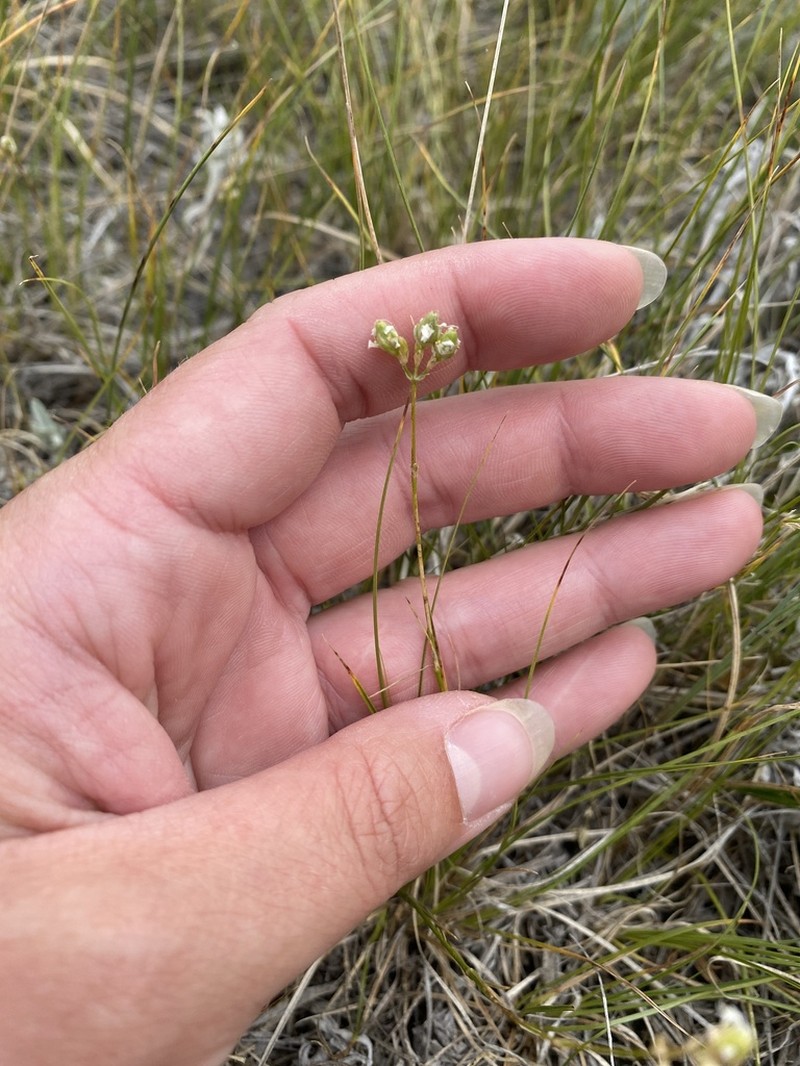
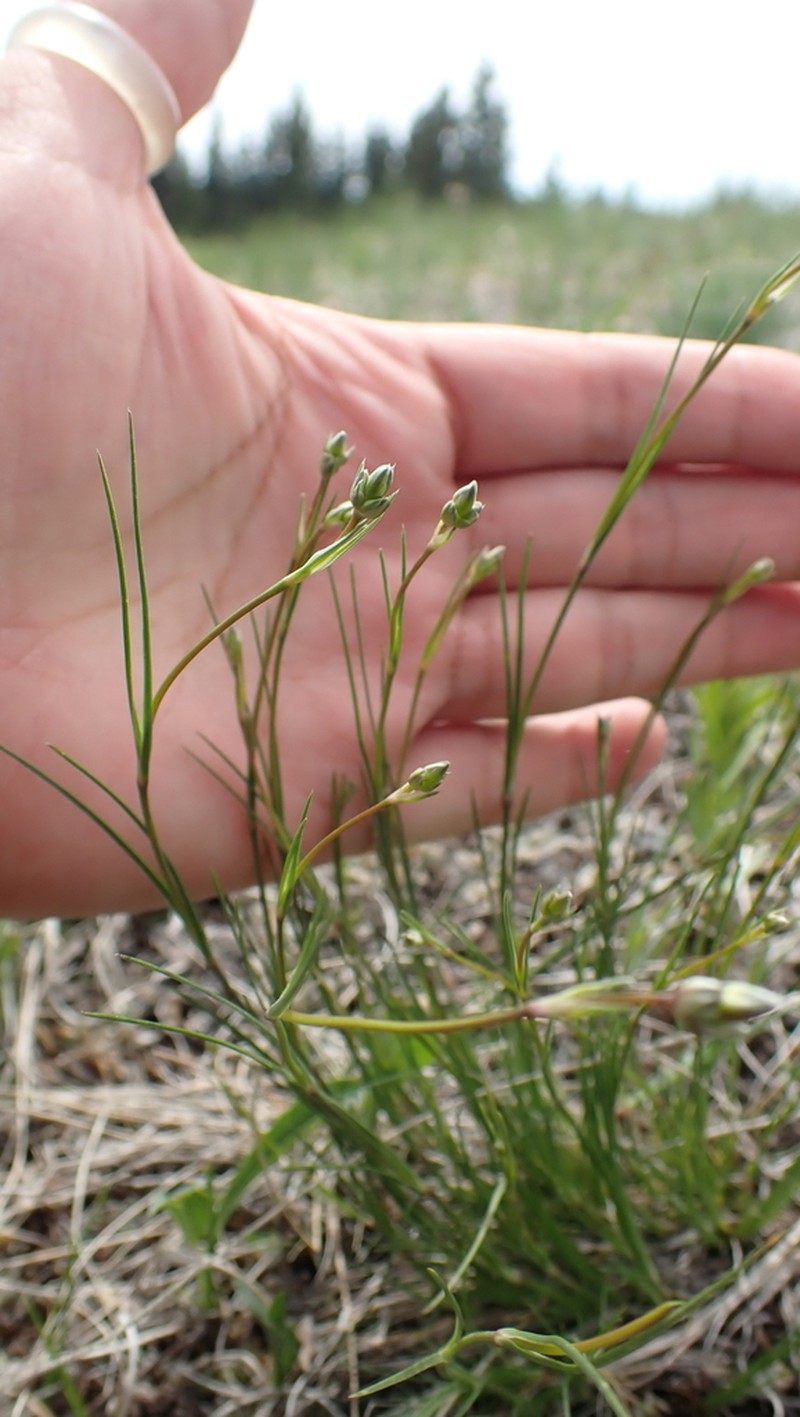
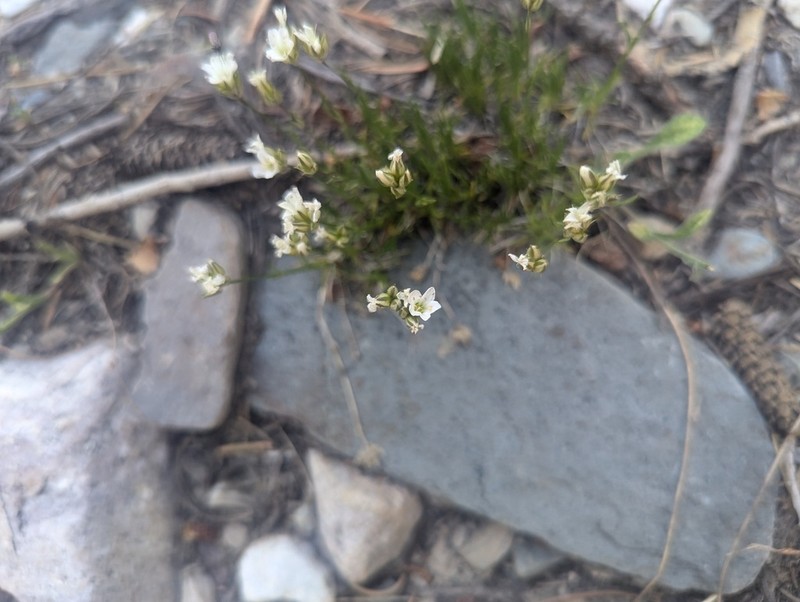
ballhead sandwort
Eremogone congesta
Also known as: Wheeler's sandwort, ballhead sandwort, gland sandwort, loosehead sandwort, rock-loving sandwort, sharptip sandwort, suffrutescent sandwort
- Native to:
- Canada, United States
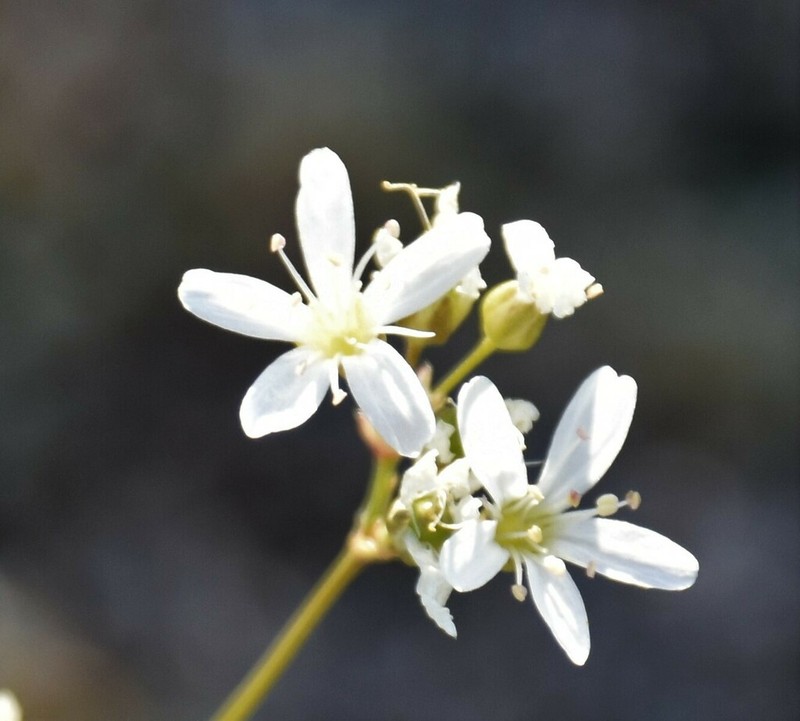
iNaturalist: © eric_lamb (iNaturalist #147432168)
Taxonomy
- Division:
- Magnoliophyta | - Flowering plants
- Family:
- Caryophyllaceae
- Genus:
- Eremogone
- Species:
- Eremogone congesta
- USDA Symbol:
- ARCO5
Growth Characteristics
- Life Cycle:
- Perennial
- Growth Habit:
- Forb/herb , Subshrub
- Height:
- 40 cm
- Light Requirements:
- Full Sun
- Drought Tolerance:
- High
- Bloom Months:
- may,jun,jul,aug
- Bloom Colors:
- white
Wildlife Benefits
- Bees:
- ★☆☆☆☆ Documented bee visitation (GBIF)
- Butterflies & Moths:
- ★☆☆☆☆ Documented Lepidoptera association (GBIF)
Garden & Ecology Notes
- Wildlife Value:
- bees, butterflies
- Deer Resistant:
- Yes
Soil Requirements
- Soil Type:
- sandy, well-drained, nutrient-poor soil
- pH:
- 6.0 - 7.5 (slightly acidic to neutral)
- Drainage:
- excellent drainage required
- Moisture:
- dry to moderate
- Notes:
- Commonly found in rocky or gravelly areas.
Propagation & Germination
- Stratification:
- Cold/moist stratification required — 30–60 days
- Germination Time:
- 14–30 days
- Notes:
- Seeds germinate readily after cold stratification; surface sow on well-drained medium.
Pre-treatment: Extended cold, moist stratification increases germination. Seed sown in containers in November and left outdoors under cool, fluctuating spring temperatures began emerging in mid-March.
Establishment: Seedlings which germinated in the greenhouse thrived in the constant warmth, so it is likely the longer stratification time and not the cool, fluctuating temperature was the factor in the increased germination. Seed is collected when the capsules begin to split in late July or early August and is stored in paper bags or envelopes at room temperature until cleaned.
Source: npn.rngr.net