
American Bittersweet
Celastrus scandens
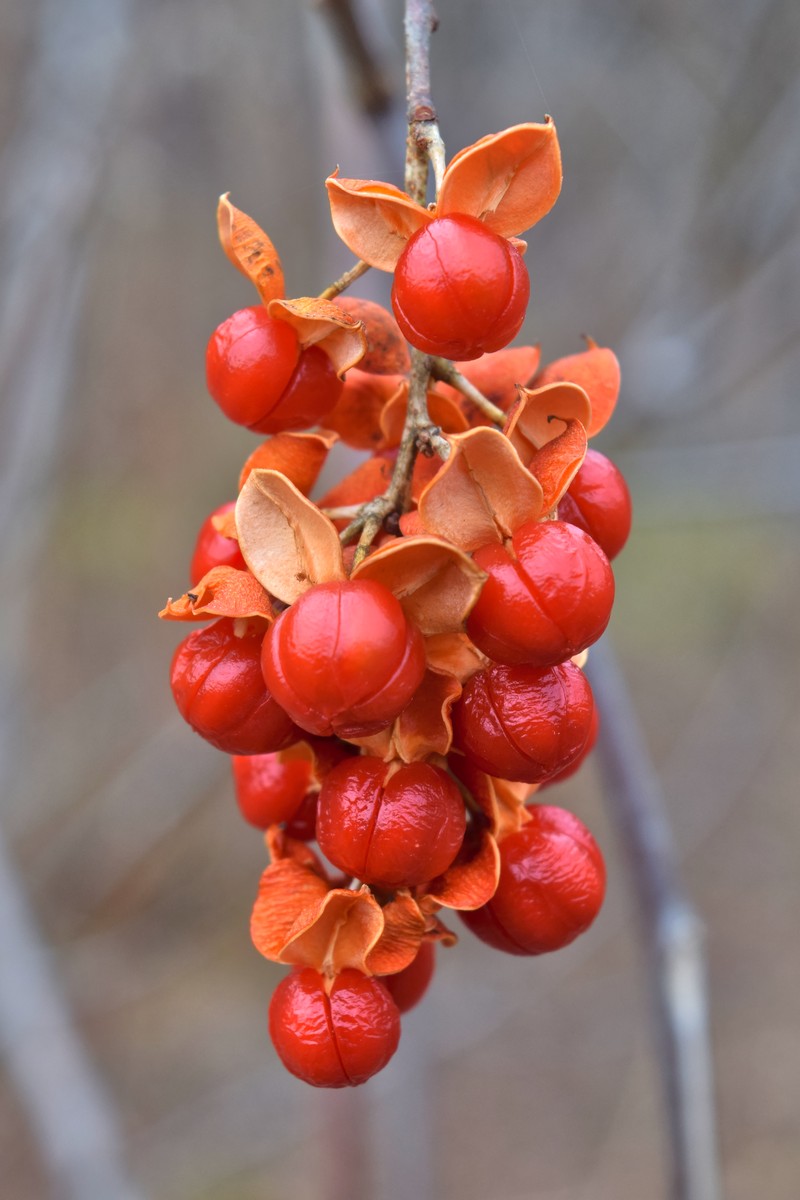
Taxonomy
- Division:
- Magnoliophyta | - Flowering plants
- Family:
- Celastraceae
- Genus:
- Celastrus
- Species:
- Celastrus scandens
Growth Characteristics
- Life Cycle:
- Perennial
- Growth Habit:
- Vine
- Height:
- More than 40 ft
- Light Requirements:
- Full Sun, Part Shade, Shade
- Drought Tolerance:
- High
- Bloom Months:
- may, jun
- Bloom Colors:
- Yellow, Green, Brown
Native Range
United States: Alabama, Arkansas, Connecticut, District of Columbia, Delaware, Georgia, Iowa, Illinois, Indiana, Kansas, Kentucky, Louisiana, Massachusetts, Maryland, Maine, Michigan, Minnesota, Missouri, Mississippi, Montana, North Carolina, North Dakota, Nebraska, New Hampshire, New Jersey, New York, Ohio, Oklahoma, Pennsylvania, Rhode Island, South Carolina, South Dakota, Tennessee, Texas, Virginia, Vermont, Wisconsin, West Virginia, Wyoming, Canada: Manitoba, New Brunswick, Ontario, Quebec, Saskatchewan
Host Plant for Caterpillars
Ailanthus silkmoth (Samia cynthia), common tan wave (Pleuroprucha insulsaria), Curve-toothed geometer (Eutrapela clemataria), Walker’s Atlas Moth (Samia walkeri), Zelleria celastrusella
Soil Requirements
- Soil Type:
- fertile, well-drained loamy soil
- pH:
- 5.5 - 7.5 (slightly acidic to neutral)
- Drainage:
- excellent drainage required
- Moisture:
- dry to moderate
- Notes:
- prefers open woodlands and thickets
Germination Information
Pre-treatment: Cold-moist stratification for 30 days at 1–5°C (34–41°F).; then Cold-moist stratification for 60 days.
Notes: Seeds may require light for germination.
Source: OpenAI GPT-4o