
Bayhops
Ipomoea pes-caprae
- Native to:
- Aldabra, American Samoa, Andaman Is., Angola, Aruba, Australia, Bahamas, Bangladesh, Belize, Benin, Bermuda, Borneo, Brazil, Burundi, Cambodia, Cameroon, Canary Is., Cape Verde, Caroline Is., Cayman Is., Central American Pacific Is., China, Christmas I., Cocos (Keeling) Is., Colombia, Comoros, Congo, Cook Is., Costa Rica, Cuba, Djibouti, Dominican Republic, DR Congo, Easter Is., Ecuador, Egypt, El Salvador, Equatorial Guinea, Eritrea, Federated States of Micronesia, Fiji, French Guiana, Gabon, Galápagos, Ghana, Gilbert Is., Guam, Guatemala, Guinea, Gulf of Guinea Is., Gulf States, Guyana, Hainan, Haiti, Hawaii, Honduras, India, Iran, Ivory Coast, Jamaica, Japan, Jawa, Kazan-retto, Kenya, Kermadec Is., Kuwait, Leeward Is., Lesser Sunda Is., Liberia, Line Is., Madagascar, Madeira, Malawi, Malaya, Maluku, Marcus I., Marianas, Marquesas, Marshall Is., Marshall Islands, Mauritania, Mauritius, Mexico, Mozambique, Myanmar, Nansei-shoto, Nauru, Navassa Island, Netherlands Antilles, New Caledonia, New Guinea, New Zea
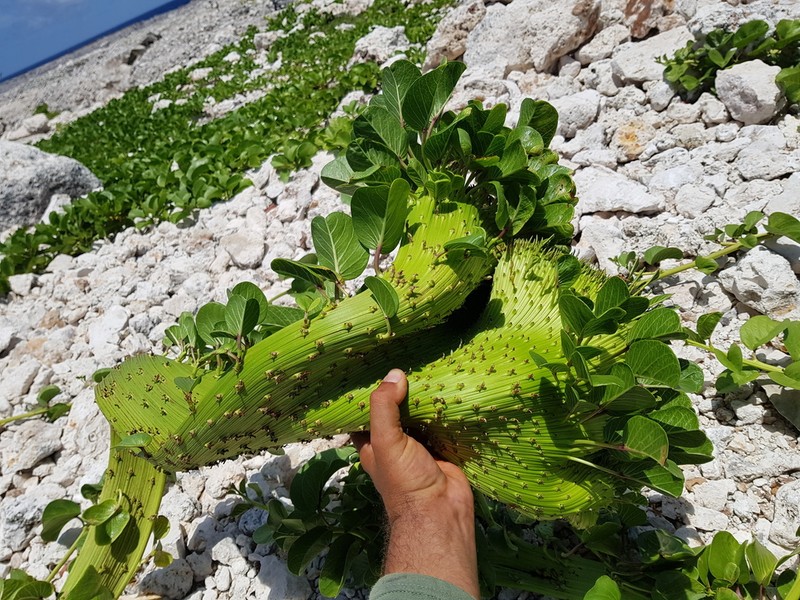
iNaturalist: © karl_questel (iNaturalist #103527367)
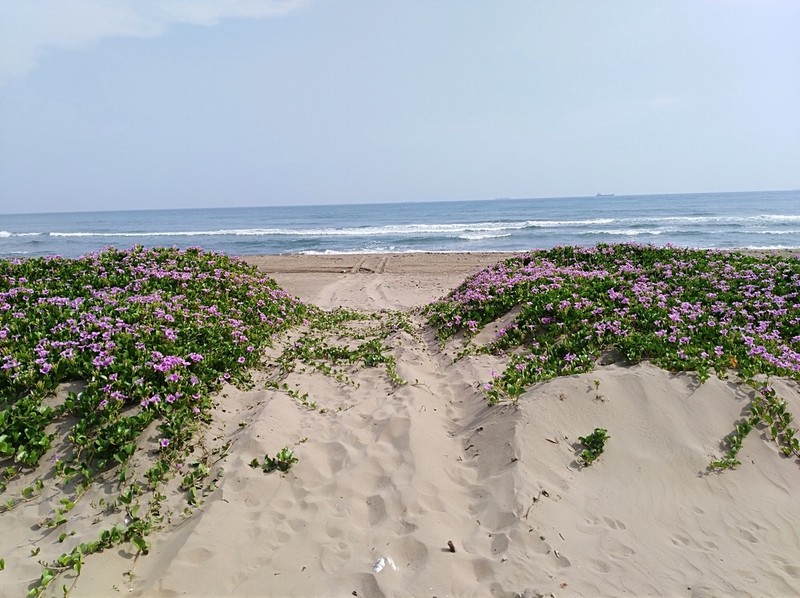
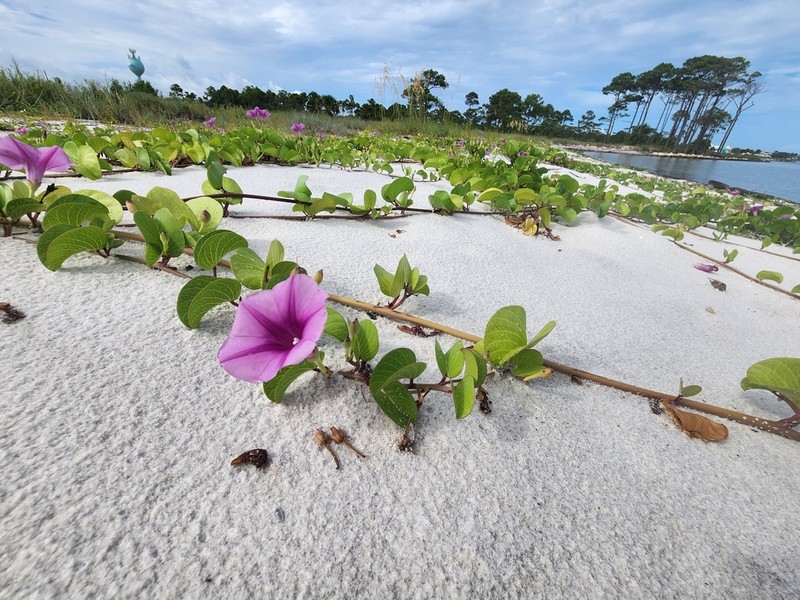
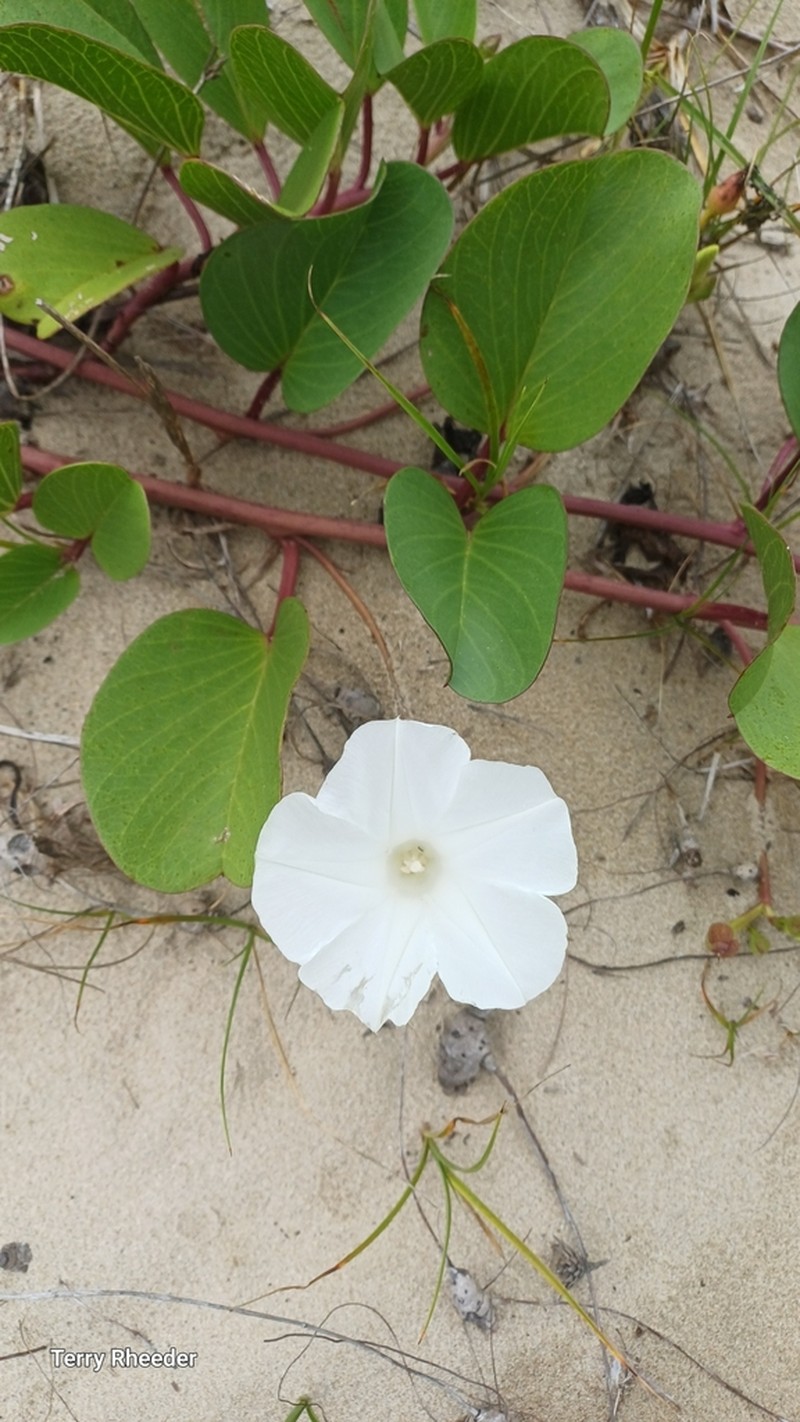
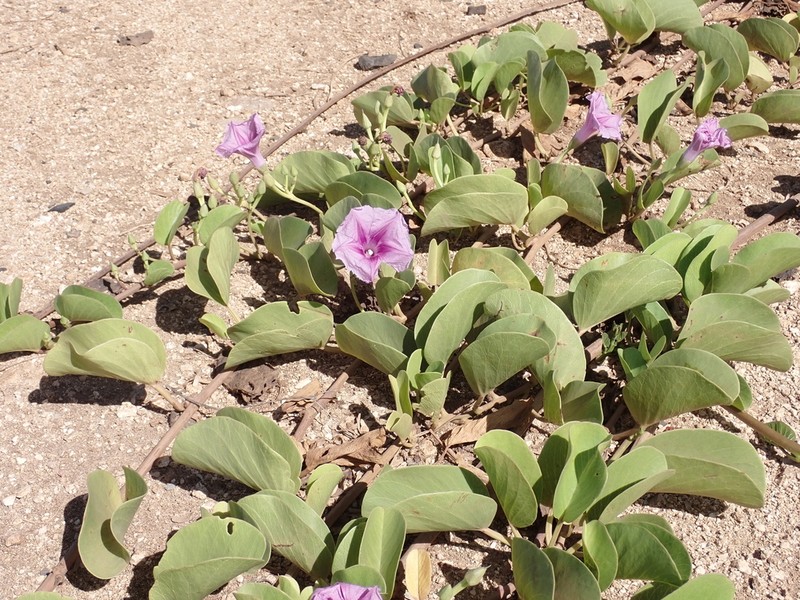
Taxonomy
- Division:
- Magnoliophyta | - Flowering plants
- Family:
- Convolvulaceae
- Genus:
- Ipomoea
- Species:
- Ipomoea pes-caprae
- USDA Symbol:
- IPPE
Growth Characteristics
- Life Cycle:
- Perennial
- Growth Habit:
- Forb/herb , Vine
- Height:
- 30 cm
- Light Requirements:
- Part Shade
- Drought Tolerance:
- High
- Bloom Months:
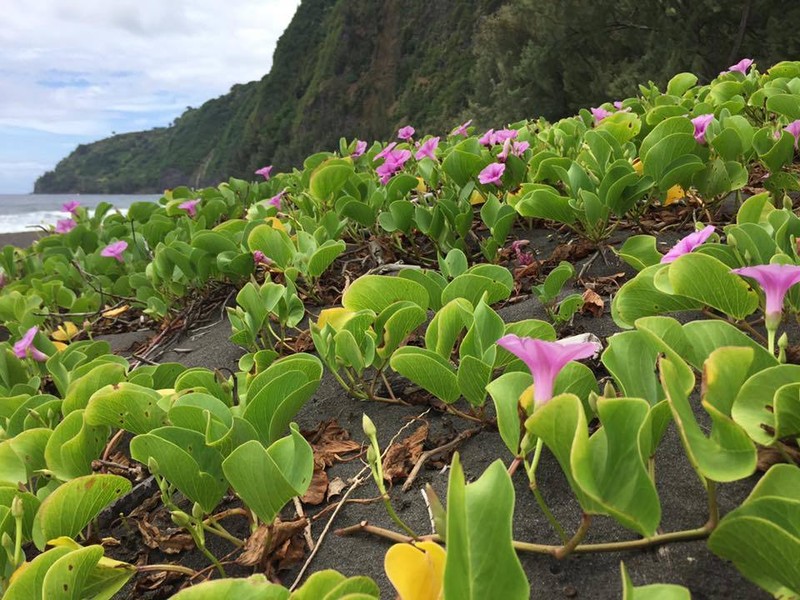
- mar,apr,may,jun,jul,aug,sep,oct
- Bloom Colors:
- pink, purple
- Ground Cover:
- Yes
Wildlife Benefits
- Bees:
- ★★★★★ Documented bee visitation (GBIF)
- Butterflies & Moths:
- ★★★☆☆ Documented Lepidoptera association (GBIF)
Garden & Ecology Notes
- Wildlife Value:
- bees, butterflies
- Deer Resistant:
- Yes
- Salt Tolerant:
- Yes
Soil Requirements
- Soil Type:
- sandy, nutrient-poor, well-drained soil
- pH:
- 6.0 - 7.5 (slightly acidic to neutral)
- Drainage:
- excellent drainage required
- Moisture:
- dry to moderate
- Notes:
- commonly found in coastal dunes
Propagation & Germination
- Scarification:
- Seed coat scarification required before sowing
- Germination Time:
- 7–30 days
- Notes:
- Seeds require scarification (nicking or sanding) to break physical dormancy; germination occurs in warm conditions.
Pre-treatment: For seeds, soak for 1 to 3 days in water before sowing. For cuttings, cut plants into desired lengths, at least 3 nodes per strand (6-8 inches in length). Place about 3 strands in each pot.
Establishment: Seedlings will be ready to up-pot from trays when they have at least 2 sets of mature leaves. For cuttings, roots will begin to develop as early as a couple weeks. The success rate for cuttings is usually not 100% but more like 75-80% and so using a few strands per pot increases the likelihood that at least 1 strand per pot will be successful.
Source: npn.rngr.net