
Silky Dogwood
Cornus amomum
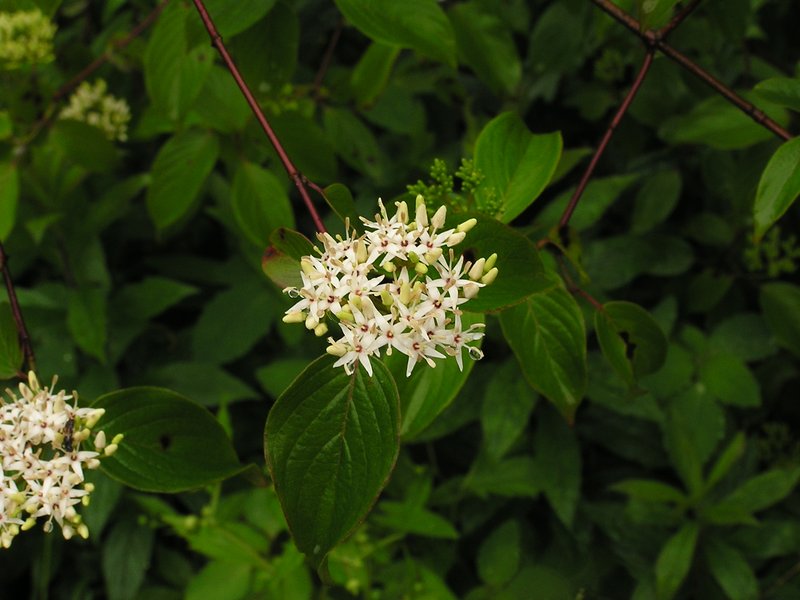
Taxonomy
- Division:
- Magnoliophyta | - Flowering plants
- Family:
- Cornaceae
- Genus:
- Cornus
- Species:
- Cornus amomum
Growth Characteristics
- Life Cycle:
- Perennial
- Growth Habit:
- Shrub
- Height:
- 12-20 ft
- Light Requirements:
- Part Shade, Shade
- Drought Tolerance:
- High
- Bloom Months:
- mar, apr
- Bloom Colors:
- White
- Landscaping Shrub:
- Yes
Native Range
United States: Alabama, Connecticut, District of Columbia, Delaware, Florida, Georgia, Iowa, Illinois, Indiana, Kentucky, Massachusetts, Maryland, Maine, Michigan, Missouri, Mississippi, North Carolina, New Hampshire, New Jersey, New York, Ohio, Pennsylvania, Rhode Island, South Carolina, Tennessee, Virginia, Vermont, West Virginia
Keystone Species Ranking
- Caterpillar Keystone:
- ★★☆☆☆ Based on number of butterfly and moth species using this genus as host plant (Source: National Wildlife Federation)
- Bee Keystone:
- ★★★★★ Based on number of native bee species using this genus for pollen and nectar (Source: National Wildlife Federation)
Host Plant for Caterpillars
Reported Fauna Sightings
Soil Requirements
- Soil Type:
- rich, moist, well-drained loam
- pH:
- 5.5 - 7.0 (slightly acidic to neutral)
- Drainage:
- tolerates poor drainage
- Moisture:
- consistently moist
- Notes:
- Commonly found in wetlands and along streams.
Germination Information
Pre-treatment: Seeds are treated and sown in early October with a Love seeder set at 3rd gear at 9 setting into prepared field beds.
Establishment: Seeds are purchased from local people who collect within a 50 mile radius of the nursery. Fruits are one seeded drupes that are white to blue at maturity. Fruits are typically 4 to 7 mm (0.15 to 0.27 in) in diameter, white or bluish tinged, and mature from August to October. Each fruit contains a single bony stone that contains 1 or 2 seeds. Mature seeds are round, grey to light brown in color. Silky dogwood is found from The Upper Midwestern and New England states south to Mississippi to Florida and west to Iowa and Missouri. Seed sources are from south central Missouri.
Source: npn.rngr.net