
Pacific Dogwood
Cornus nuttallii
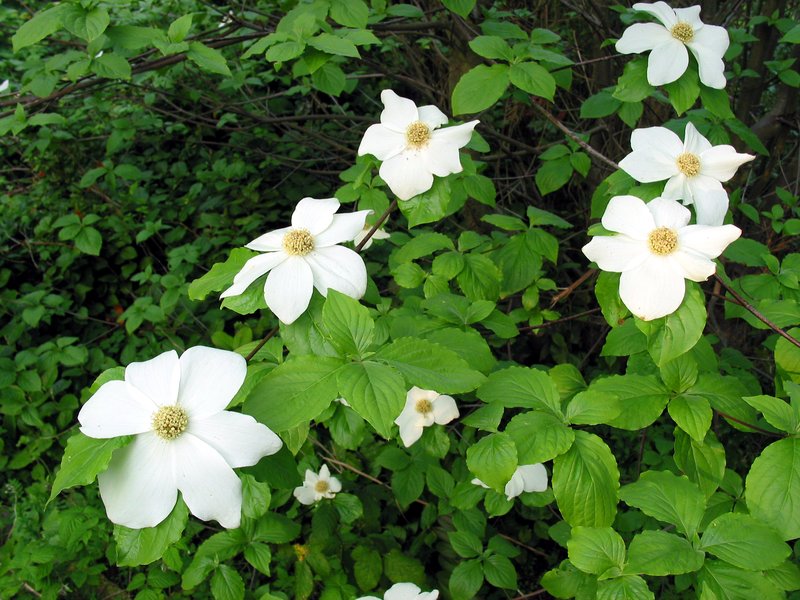
Paul Schultz from Kenmore, USA
Taxonomy
- Division:
- Magnoliophyta | - Flowering plants
- Family:
- Cornaceae
- Genus:
- Cornus
- Species:
- Cornus nuttallii
Growth Characteristics
- Life Cycle:
- Perennial
- Growth Habit:
- Tree
- Height:
- More than 40 ft
- Light Requirements:
- Full Sun, Part Shade, Shade
- Drought Tolerance:
- High
- Bloom Months:
- apr, may, jun, jul
- Bloom Colors:
- White, Pink, Yellow, Green
Native Range
United States: California, Idaho, Oregon, Washington, Canada: British Columbia
Keystone Species Ranking
- Caterpillar Keystone:
- ★★☆☆☆ Based on number of butterfly and moth species using this genus as host plant (Source: National Wildlife Federation)
- Bee Keystone:
- ★★★★★ Based on number of native bee species using this genus for pollen and nectar (Source: National Wildlife Federation)
Host Plant for Caterpillars
Soil Requirements
- Soil Type:
- rich, well-drained loamy soil
- pH:
- 5.5 - 7.0 (slightly acidic to neutral)
- Drainage:
- excellent drainage required
- Moisture:
- consistently moist
- Notes:
- Prefers forested areas with organic matter
Germination Information
Pre-treatment: Two treatments can be used. 1) Seeds are soaked in a 1% hydrogen peroxide solution for 24 hours, rinsed, and placed in water for an additional 24 hours. They are then placed in fine mesh bags, layered in peat in a covered container, and refrigerated at 1 to 3 °C for 100 days. 2) Seeds are soaked in a 1% hydrogen peroxide solution for 24 hours, rinsed, and placed in water for an additional 48 hours. They are then placed in a sealed container and subjected to warm stratification at 10 °C for 10 days, followed by cold stratification at 1 to 3 °C for 90 days. Weekly checks for mold are recommended during stratification.
Establishment: Grows in full sun to part shade in average-deep, medium moisture, well-drained soils but prefers moist, rich, acidic soils in part shade. Soil texture can range from clay to sand loam. Mature plants have some drought tolerance. It has low frost tolerance but high flood tolerance. Found in western North America.
Source: npn.rngr.net