
Lakeshore Sedge
Carex lenticularis
- Native to:
- Canada, Labrador, Prince Edward I., United States
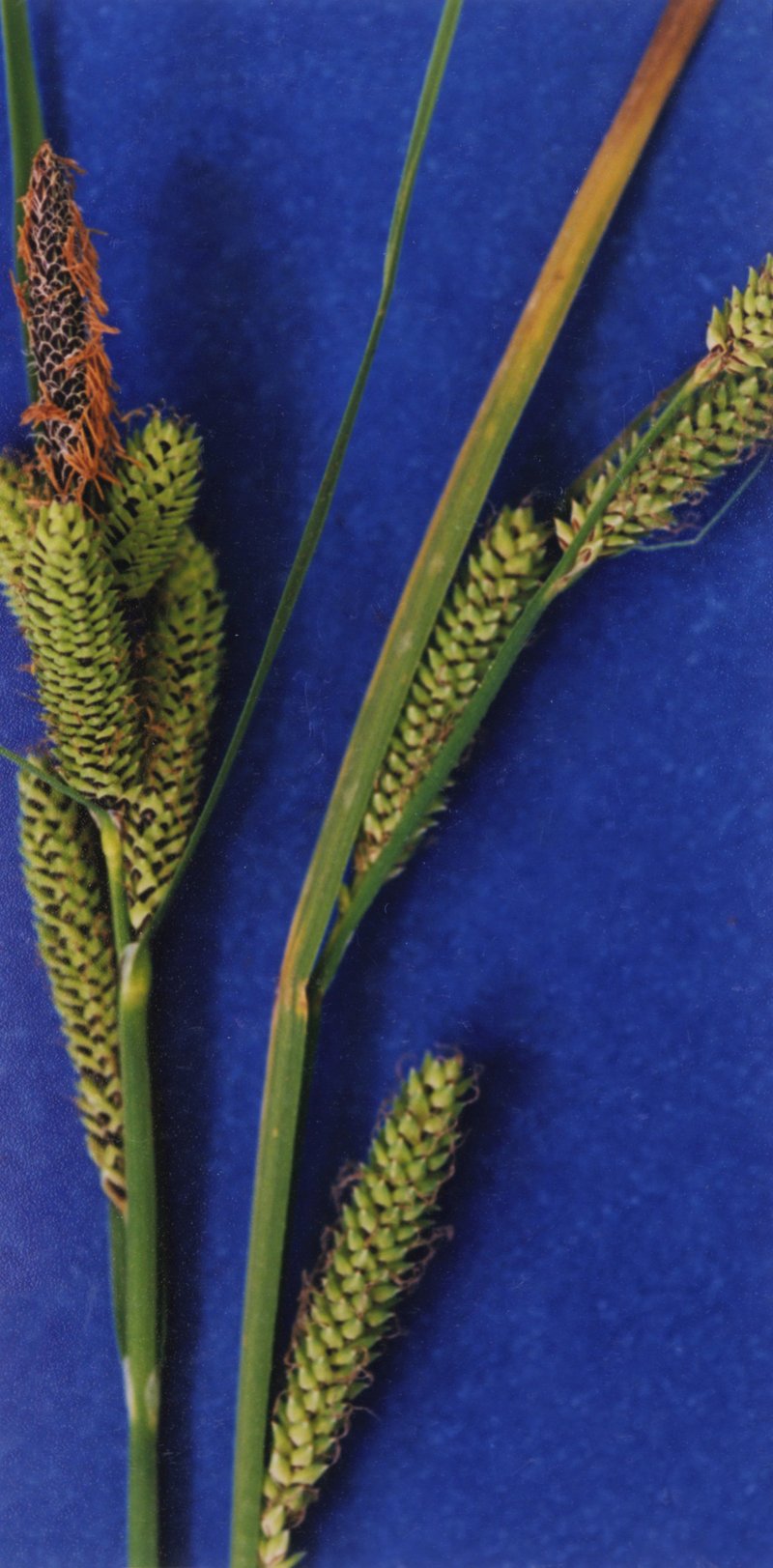
Hurd, E.G., N.L. Shaw, J. Mastrogiuseppe, L.C. Smithman, and S. Goodrich. 1998. Field guide to Intermountain sedges. General Technical Report RMS-GTR-10. USDA Forest Service, RMRS, Ogden. Courtesy of USDA FS RMRS Boise Aquatic Sciences Lab.
Taxonomy
- Division:
- Magnoliophyta | - Flowering plants
- Family:
- Cyperaceae
- Genus:
- Carex
- Species:
- Carex lenticularis
- USDA Symbol:
- CALE8
Growth Characteristics
- Life Cycle:
- Perennial
- Growth Habit:
- Graminoid
- Height:
- 90 cm
- Light Requirements:
- Full Sun,Part Shade,Shade
- Drought Tolerance:
- Low
- Bloom Months:
- may,jun,jul
- Bloom Colors:
- greenish
Garden & Ecology Notes
- Wildlife Value:
- birds, small mammals
Soil Requirements
- Soil Type:
- moist, nutrient-rich, loamy soil
- pH:
- 5.5 - 7.0 (slightly acidic to neutral)
- Drainage:
- tolerates poor drainage
- Moisture:
- consistently moist
- Notes:
- Commonly found in wet meadows and marshes
Propagation & Germination
- Stratification:
- Cold/moist stratification required — 30–60 days
- Germination Time:
- 14–30 days
- Notes:
- Seeds benefit from cold moist stratification for 30-60 days to break dormancy.
Pre-treatment: Seeds are sown directly into target containers with a growing medium of 40:20:20:20 peat:composted fir bark:perlite:pumice and Nutricote controlled release fertilizer at the rate of 0.5 gram per 107 ml container. The containers are then sealed in plastic bags and refrigerated at 1 to 3 °C for 30 days, with weekly checks to ensure they remain moist.
Source: npn.rngr.net