
Common Persimmon
Diospyros virginiana
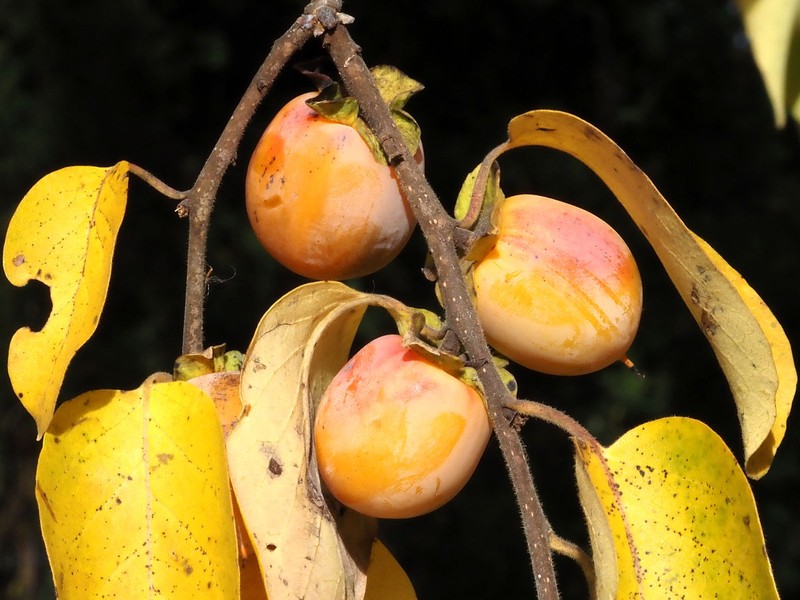
Taxonomy
- Division:
- Magnoliophyta | - Flowering plants
- Family:
- Ebenaceae
- Genus:
- Diospyros
- Species:
- Diospyros virginiana
Growth Characteristics
- Life Cycle:
- Perennial
- Growth Habit:
- Tree
- Height:
- More than 40 ft
- Light Requirements:
- Full Sun, Part Shade
- Drought Tolerance:
- Low
- Bloom Months:
- apr, may, jun
- Bloom Colors:
- Yellow, Green
- Food Forest:
- Plant contains edible parts
Native Range
United States: Alabama, Arkansas, California, Connecticut, District of Columbia, Delaware, Florida, Georgia, Iowa, Illinois, Indiana, Kansas, Kentucky, Louisiana, Massachusetts, Maryland, Missouri, Mississippi, North Carolina, Nebraska, New Jersey, New York, Ohio, Oklahoma, Pennsylvania, South Carolina, Tennessee, Texas, Utah, Virginia, West Virginia
Keystone Species Ranking
- Caterpillar Keystone:
- ★★☆☆☆ Based on number of butterfly and moth species using this genus as host plant (Source: National Wildlife Federation)
Host Plant for Caterpillars
Soil Requirements
- Soil Type:
- rich, well-drained loamy soil
- pH:
- 5.5 - 7.5 (slightly acidic to neutral)
- Drainage:
- tolerates poor drainage
- Moisture:
- dry to moderate
- Notes:
- adaptable to various soil types, including sandy and clay soils
Germination Information
Pre-treatment: Seeds can be sown directly after cleaning or cold stratified at 40°F for 90 days or stratified in damp sphagnum peat moss for three or four months in 36° to 40°F refrigerator.
Establishment: Seeds are collected from various locations including Cumberland Gap National Historical Park, Shenandoah National Park, Great Smoky Mountains National Park, and Chickasaw National Recreation Area. The protocols vary slightly in terms of pre-treatment and sowing techniques.
Source: npn.rngr.net