
Elaeagnus orientalis
Elaeagnus angustifolia
- Native to:
- Afghanistan, China, East Aegean Is., India, Iran, Kazakhstan, Kirgizstan, Lebanon-Syria, Myanmar, North Caucasus, Pakistan, Palestine, Russia, Tadzhikistan, Transcaucasus, Türkiye, Turkmenistan, Ukraine, Uzbekistan
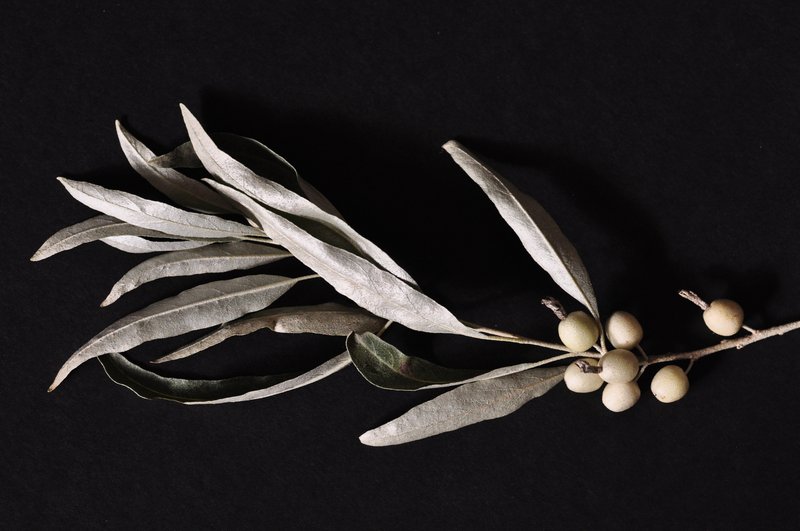
Douglas Goldman,Douglas Goldman,Douglas Goldman,Mykola Swarnyk,Wight, Robert, 1796-1872 Royal College of Physicians of Edinburgh,Wight, Robert,,Katrin Schneider / korina.info,Katrin Schneider / korina.info,Katrin Schneider / korina.info,Photo by Dave Powell, USDA, Forest Service,Katrin Schneider / korina.info,Katrin Schneider / korina.info

Taxonomy
- Division:
- Magnoliophyta | - Flowering plants
- Family:
- Elaeagnaceae
- Genus:
- Elaeagnus
- Species:
- Elaeagnus angustifolia
- USDA Symbol:
- ELOR3
Growth Characteristics
- Height:
- 750 cm
- Drought Tolerance:
- High
- Bloom Months:
- may,jun
- Bloom Colors:
- yellow, cream
Host Plant for Caterpillars
Ceanothus Silkmoth (Hyalophora euryalus), Cecropia moth (Hyalophora cecropia), Columbia silk moth (Hyalophora columbia), Kaslo silkmoth (Hyalophora "kasloensis"), rose sallow (Sideridis rosea)
Reported Fauna Sightings
Bees: Common eastern (Bombus impatiens) Hummingbirds: Anna's Hummingbird (Calypte anna), Ruby-throated Hummingbird (Archilochus colubris)
Garden & Ecology Notes
- Wildlife Value:
- birds, small mammals
- Deer Resistant:
- Yes
- Salt Tolerant:
- Yes
- Fragrant:
- Yes
- Fire Ecology:
- Fire adapted — tolerates or benefits from fire
- Fire Notes:
- Resprouts vigorously from root crown following fire or cutting. Forms extensive root systems.
Propagation & Germination
- Stratification:
- Cold/moist stratification required — 60–90 days
- Germination Time:
- 14–30 days
- Notes:
- Seeds germinate readily after cold stratification. Fresh seed may germinate without treatment.