
Seaberry
Hippophae rhamnoides
- Native to:
- Afghanistan, Austria, Baltic States, Belgium, Bulgaria, China, Czechia-Slovakia, Denmark, Finland, France, Germany, Great Britain, Hungary, India, Iran, Italy, Kazakhstan, Kirgizstan, Netherlands, North Caucasus, Norway, NW. Balkan Pen., Pakistan, Poland, Romania, Spain, Sweden, Switzerland, Tadzhikistan, Türkiye, Turkmenistan, Ukraine, Uzbekistan
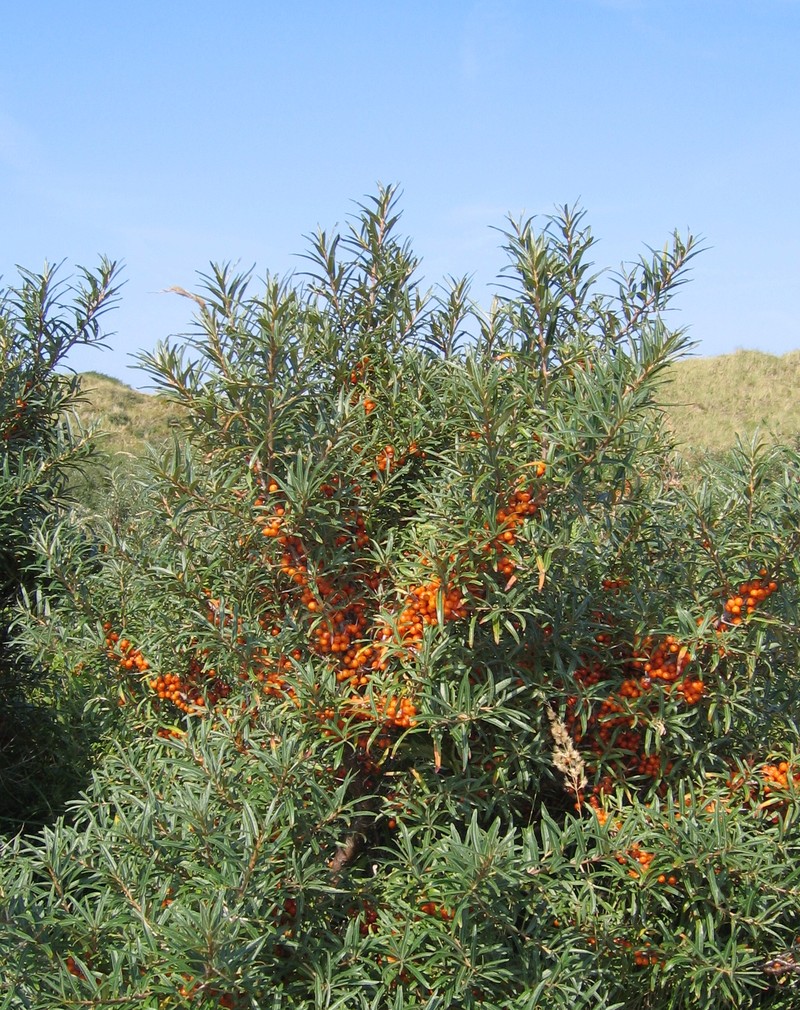
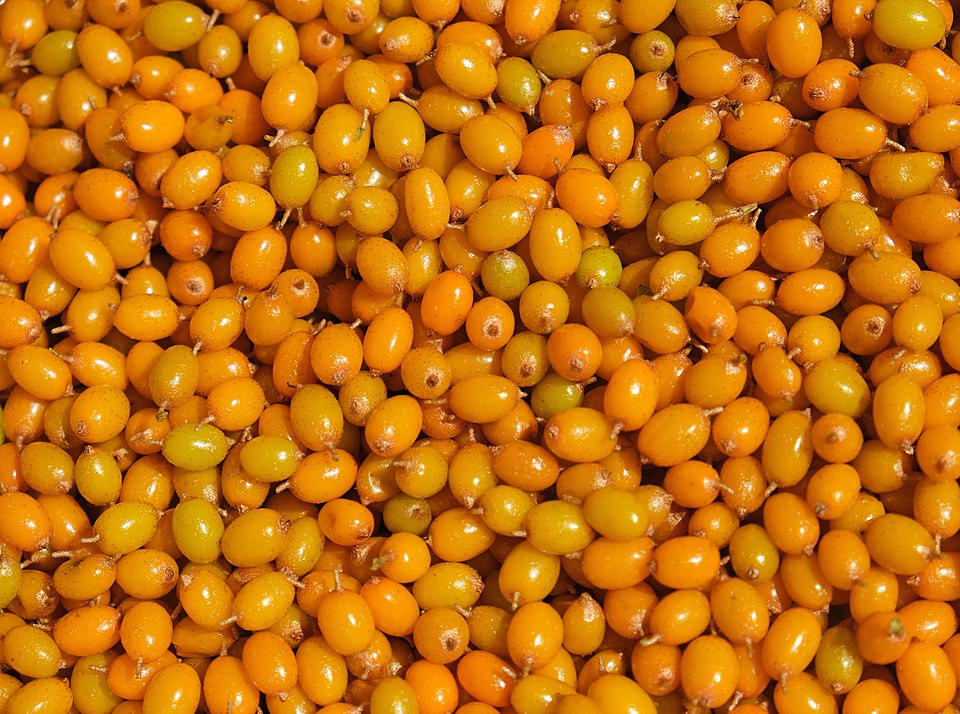
Dmitry Makeev


Taxonomy
- Division:
- Magnoliophyta | - Flowering plants
- Family:
- Elaeagnaceae
- Genus:
- Hippophae
- Species:
- Hippophae rhamnoides
- USDA Symbol:
- HIRH80
Growth Characteristics
- Life Cycle:
- Perennial
- Growth Habit:
- Shrub , Tree
- Height:
- 600 cm
- Light Requirements:
- Full Sun
- Drought Tolerance:
- High
- Bloom Months:
- apr,may
- Bloom Colors:
- yellow
- Food Forest:
- Contains edible parts
- Landscaping Shrub:
- Yes
Host Plant for Caterpillars
Coleophora elaeagnisella
Garden & Ecology Notes
- Wildlife Value:
- birds, small mammals
- Salt Tolerant:
- Yes
- Fall Color:
- yellow, orange
Soil Requirements
- Soil Type:
- sandy, nutrient-poor, well-drained soil
- pH:
- 5.5 - 7.5 (slightly acidic to neutral)
- Drainage:
- excellent drainage required
- Moisture:
- dry to moderate
- Notes:
- thrives in coastal and inland dunes
Propagation & Germination
- Stratification:
- Cold/moist stratification required — 60–90 days
- Germination Time:
- 14–30 days
- Notes:
- Seeds benefit from cold stratification for 2-3 months to break dormancy.
ORGHPS Germination Guide: Sow @ 4C for 3 months, then place @ 20C for 3 months. GA3 improves germination.