
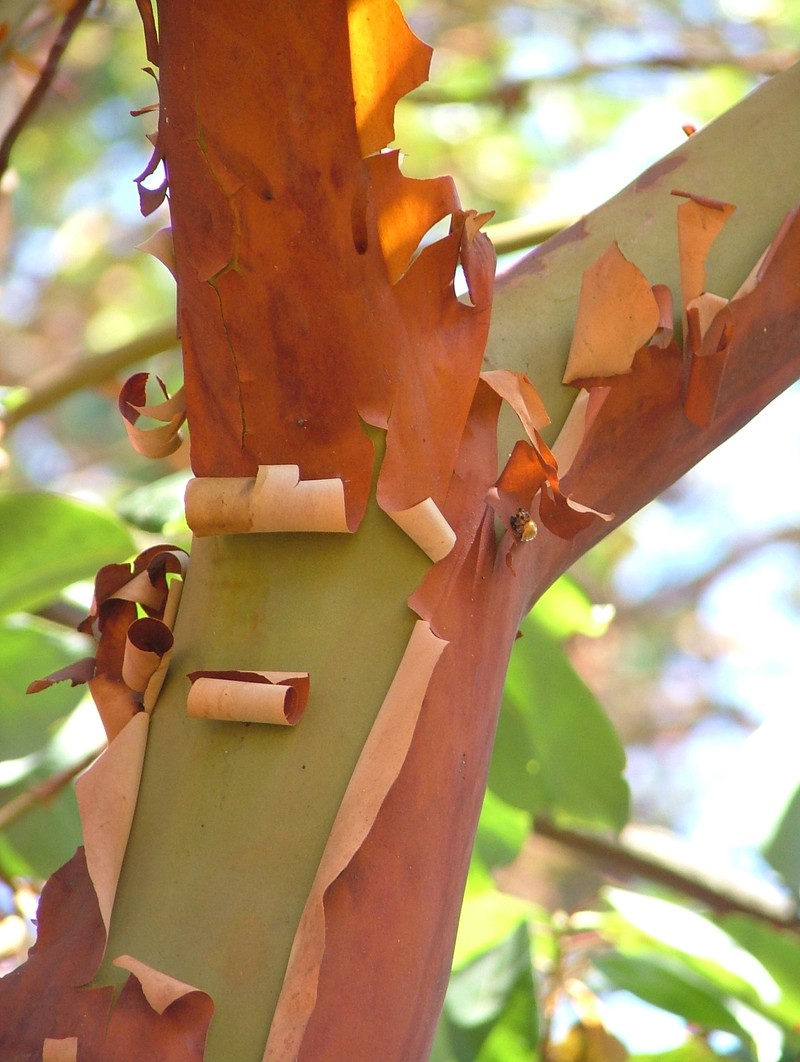
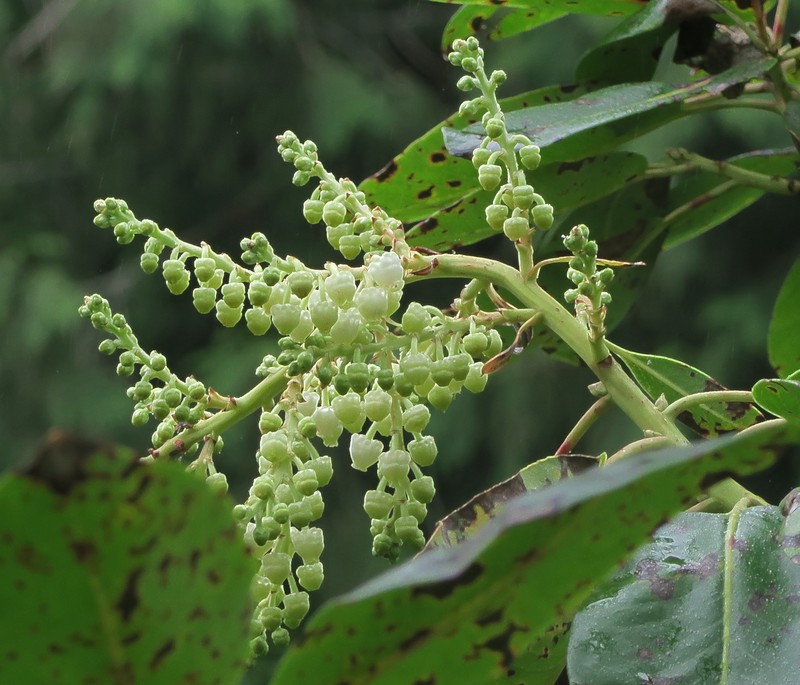
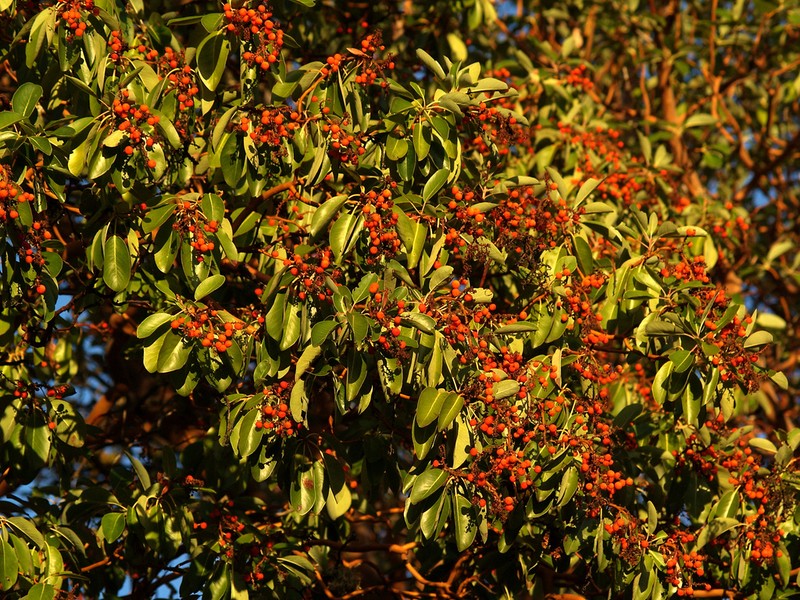
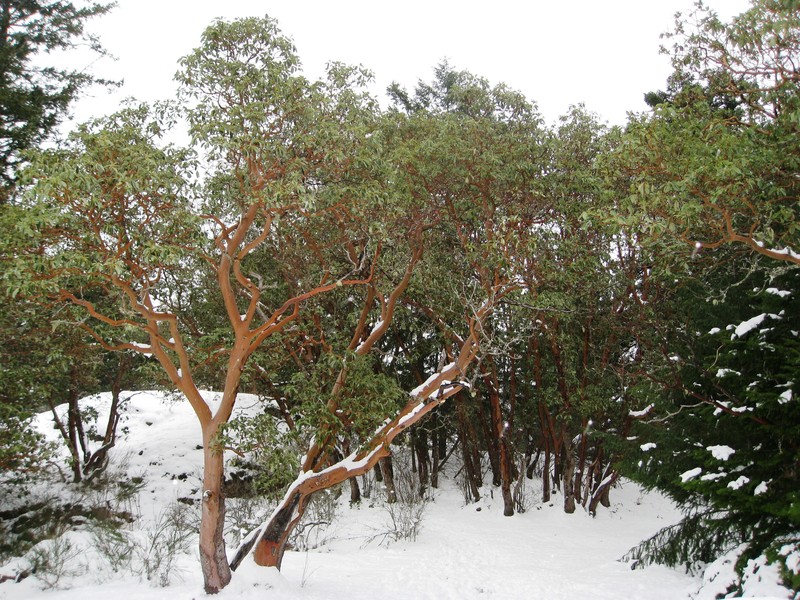
Pacific Madrone
Arbutus menziesii
- Native to:
- Canada, Mexico, United States
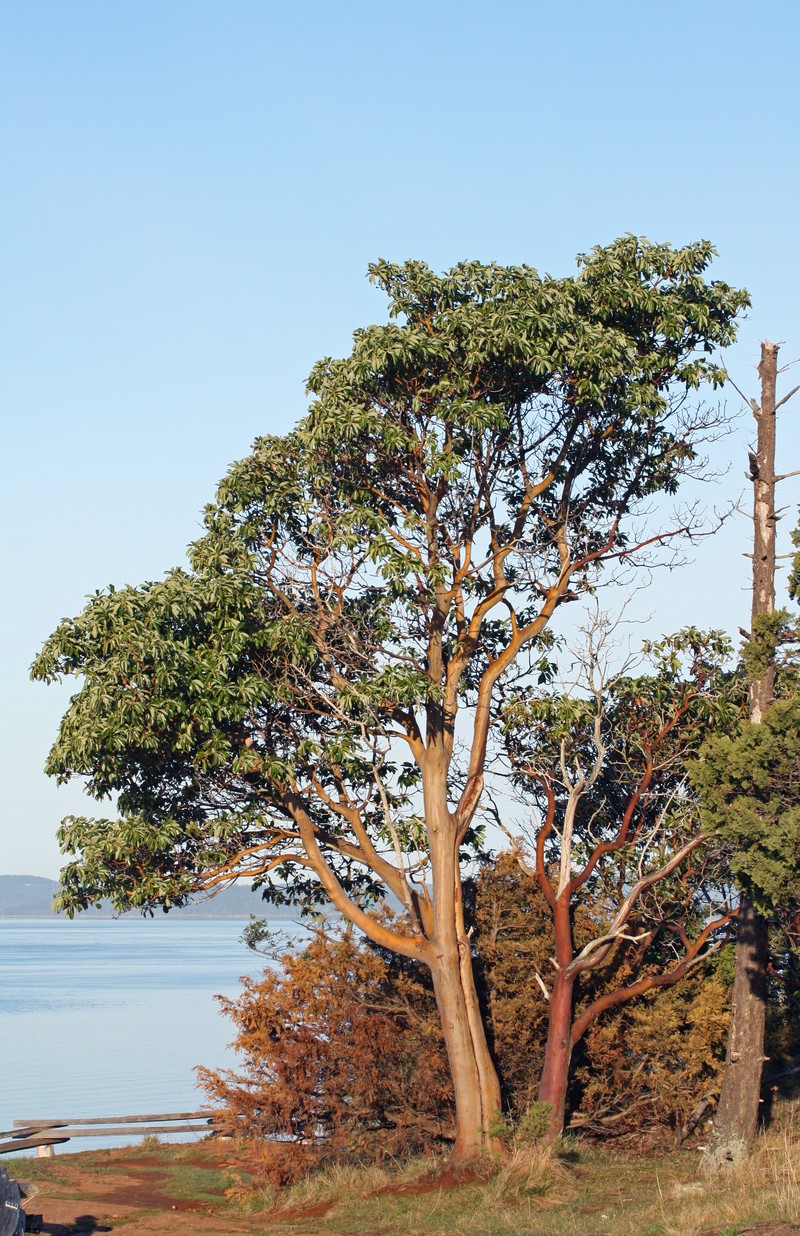
Walter Siegmund (talk)
Taxonomy
- Division:
- Magnoliophyta | - Flowering plants
- Family:
- Ericaceae
- Genus:
- Arbutus
- Species:
- Arbutus menziesii
- USDA Symbol:
- ARME
Growth Characteristics
- Life Cycle:
- Perennial
- Growth Habit:
- Tree
- Height:
- 3000 cm
- Light Requirements:
- Full Sun,Part Shade
- Drought Tolerance:
- Medium
- Bloom Months:
- apr,may
- Bloom Colors:
- white, pink
Wildlife Benefits
- Bees:
- ★☆☆☆☆ Documented bee visitation (GBIF)
- Butterflies & Moths:
- ★★★★★ Documented Lepidoptera association (GBIF)
- Caterpillars:
- ★★★☆☆ Recorded caterpillar host plant (HOSTS Database)
- Hummingbirds:
- ★☆☆☆☆ Documented hummingbird visits (GBIF)
Keystone Species Ranking
- Caterpillar Keystone:
- ★★★★☆ Butterfly & moth species supported by this genus (NWF)
Host Plant for Caterpillars
Aseptis ethnica, Bent-line gray (Iridopsis larvaria), Ceanothus Silkmoth (Hyalophora euryalus), Eastern Tent Caterpillar (Malacosoma americana), Egira crucialis, Elegant sphinx (Sphinx perelegans), Epinotia emarginana, Epinotia terracoctana, Eupithecia graefii, Eupithecia maestosa, Fall webworm (Hyphantria cunea), Gelechia panella, Hydriomena manzanita, madrone shield bearer (Coptodisca arbutiella), Marmara arbutiella, Mendocino saturnia moth (Saturnia mendocino), orange tortrix moth (Argyrotaenia citrana), Orthosia pacifica, Pero mizon, Phyllonorycter arbutusella, Polyphemus moth (Antheraea polyphemus), Pseudochelaria arbutina, Spiramater lutra, Splendid Royal Moth (Citheronia splendens), Spotted Tussock Moth (Lophocampa maculata), Walter's saturnia moth (Saturnia walterorum), Western tent caterpillar (Malacosoma californica), Brown Elfin (Incisalia augustinus)
Reported Fauna Sightings
Bees: ⚠️Western honey bee (Apis mellifera) Moths:Fall webworm (Hyphantria cunea), madrone shield bearer (Coptodisca arbutiella), Marmara arbutiella
Garden & Ecology Notes
- Wildlife Value:
- birds, butterflies, small mammals
- Fragrant:
- Yes
- Fire Ecology:
- Fire adapted — tolerates or benefits from fire
- Fire Notes:
- Arbutus menziesii is fire-adapted; it can resprout from the base after fire and its seeds are stimulated by heat.
Soil Requirements
- Soil Type:
- well-drained, rocky or sandy soil
- pH:
- 5.0 - 7.0 (slightly acidic to neutral)
- Drainage:
- excellent drainage required
- Moisture:
- dry to moderate
- Notes:
- prefers poor, nutrient-poor soils
Propagation & Germination
- Stratification:
- Cold/moist stratification required — 60–90 days
- Germination Time:
- 30–60 days
- Notes:
- Seeds benefit from cold stratification for 60-90 days to break dormancy.
Pre-treatment: Seeds germinated at 21 C
Source: npn.rngr.net
Where to Buy
Nationwide Seller
- Sheffield's Seed (seeds)