
Santa Catalina Island Manzanita
Arctostaphylos catalinae
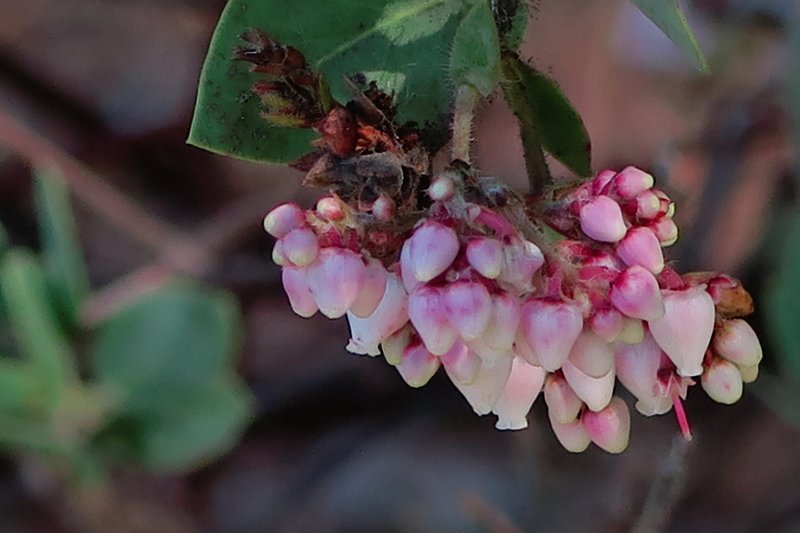
John Rusk from Berkeley, CA, United States of America
Taxonomy
- Division:
- Magnoliophyta | - Flowering plants
- Family:
- Ericaceae
- Genus:
- Arctostaphylos
- Species:
- Arctostaphylos catalinae
Growth Characteristics
- Life Cycle:
- Perennial
- Growth Habit:
- Shrub
- Height:
- 12-20 ft
- Light Requirements:
- Full Sun
- Drought Tolerance:
- High
- Bloom Months:
- jan, feb, mar, apr
- Bloom Colors:
- White
- Landscaping Shrub:
- Yes
Native Range
United States: California
Keystone Species Ranking
- Caterpillar Keystone:
- ★★☆☆☆ Based on number of butterfly and moth species using this genus as host plant (Source: National Wildlife Federation)
- Bee Keystone:
- ★★★★☆ Based on number of native bee species using this genus for pollen and nectar (Source: National Wildlife Federation)
Soil Requirements
- Soil Type:
- sandy, well-drained, nutrient-poor soil
- pH:
- 5.5 - 7.5 (slightly acidic to neutral)
- Drainage:
- excellent drainage required
- Moisture:
- dry to moderate
- Notes:
- native to Catalina Island, prefers coastal conditions
Germination Information
Pre-treatment: For seeds: Scarification using a blender, soaking in water for 24 hours, placement in a flat filled with medium and covered with a layer of chamise and pine needles, and cold moist stratification at 40°F for several months. For cuttings: Recut to 3-4 inch lengths, wounding on one or both sides of stems, dipping in a Physan fungicide solution, and application of Hormex (#3 or #8) rooting powder to base and lateral wounds.
Establishment: Catalina manzanita is a rare and endangered species found in chaparral habitats. Seeds can be collected from late July to mid November, with August and September being optimum. Cuttings are collected in late January from non-flowering shoots. Germination percentages are highly variable and typically low.
Source: npn.rngr.net