
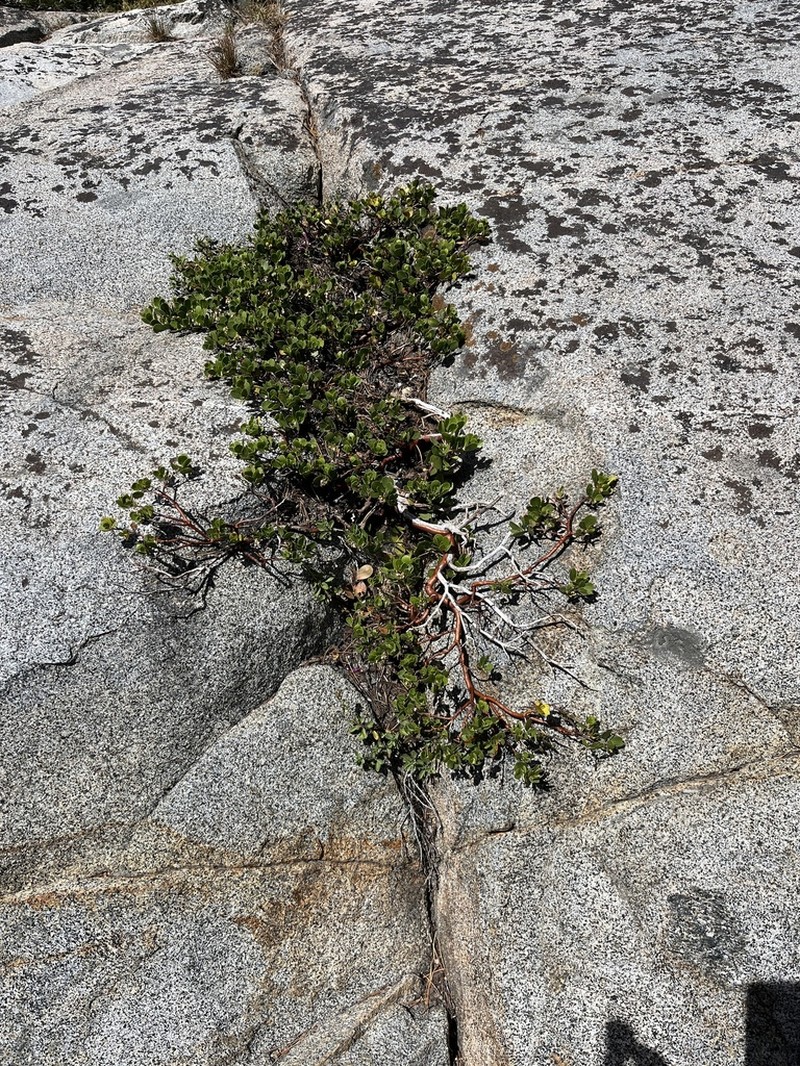
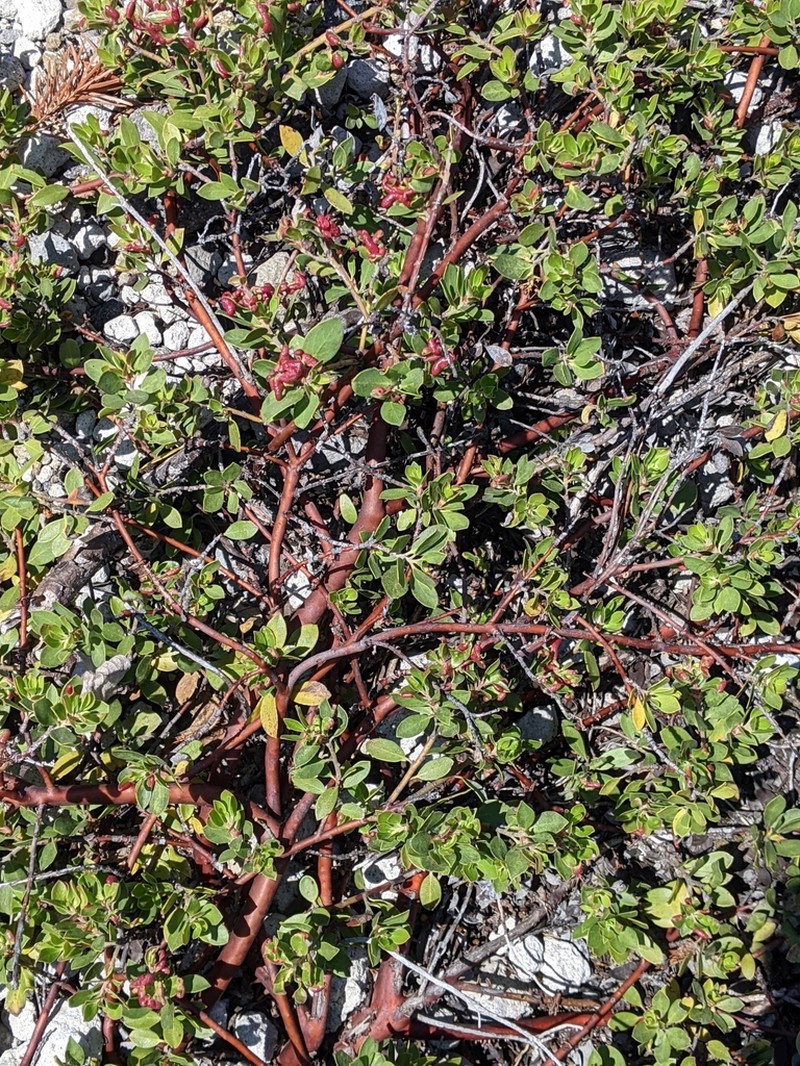
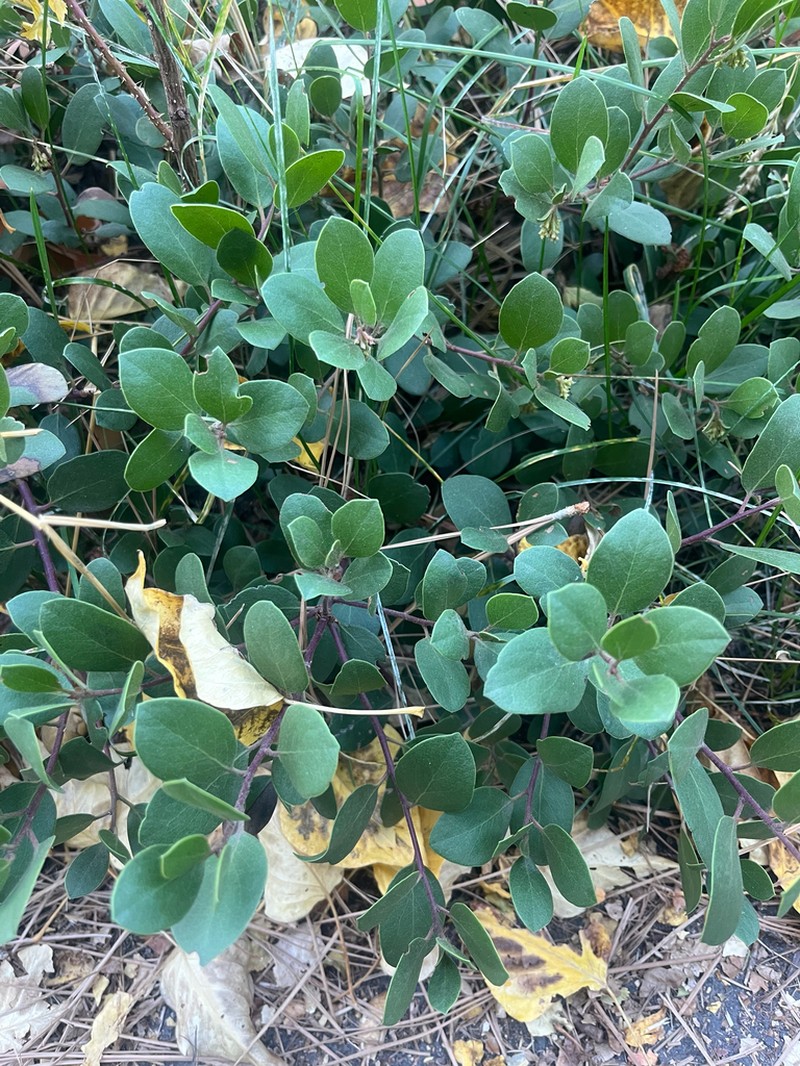
Pinemat Manzanita
Arctostaphylos nevadensis
- Native to:
- United States
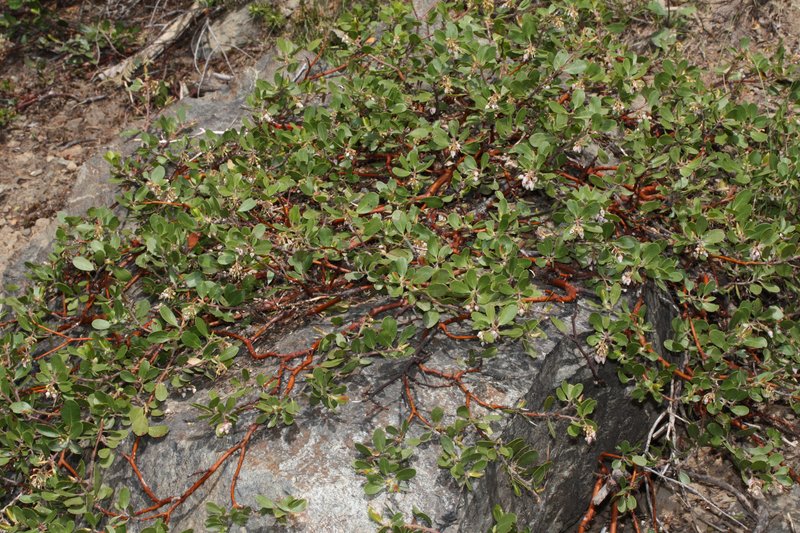
Walter Siegmund (talk)
Taxonomy
- Division:
- Magnoliophyta | - Flowering plants
- Family:
- Ericaceae
- Genus:
- Arctostaphylos
- Species:
- Arctostaphylos nevadensis
- USDA Symbol:
- ARNE
Growth Characteristics
- Life Cycle:
- Perennial
- Growth Habit:
- Shrub , Subshrub
- Height:
- 60 cm
- Light Requirements:
- Part Shade
- Drought Tolerance:
- High
- Bloom Months:
- apr,may,jun
- Bloom Colors:
- white, pink
- Ground Cover:
- Yes
- Evergreen Shrub:
- Yes
- Landscaping Shrub:
- Yes
Wildlife Benefits
- Bees:
- ★☆☆☆☆ Documented bee visitation (GBIF)
- Butterflies & Moths:
- ★★☆☆☆ Documented Lepidoptera association (GBIF)
- Caterpillars:
- ★☆☆☆☆ Recorded caterpillar host plant (HOSTS Database)
Keystone Species Ranking
- Caterpillar Keystone:
- ★★★★☆ Butterfly & moth species supported by this genus (NWF)
- Pollen Specialist Bee Keystone:
- ★★☆☆☆ Native pollen specialist bee species supported by this genus (NWF)
Host Plant for Caterpillars
Reported Fauna Sightings
Garden & Ecology Notes
- Wildlife Value:
- birds, small mammals
- Fire Ecology:
- Fire adapted — tolerates or benefits from fire
- Fire Notes:
- Resprouts from lignotuber after fire; seeds also germinate in post-fire conditions.
Soil Requirements
- Soil Type:
- sandy, acidic, nutrient-poor soil
- pH:
- 5.5 - 7.0 (slightly acidic to neutral)
- Drainage:
- excellent drainage required
- Moisture:
- dry to moderate
- Notes:
- Commonly found in rocky or gravelly soils.
Propagation & Germination
- Stratification:
- Cold/moist stratification required — 60–90 days
- Scarification:
- Seed coat scarification required before sowing
- Germination Time:
- 30–60 days
- Notes:
- Seeds require scarification (acid or hot water) followed by cold stratification for 60-90 days.
Pre-treatment: Cuttings were dipped into a 5% bleach solution for 10 seconds and a fresh basal cut was made just prior to dipping into Hormex #8 rooting hormone (0.8% IBA in a talcum powder base)
Establishment: Mature, 1-year-old cuttings of good vigor and caliper should be collected as late as possible in the fall. Cuttings were collected at Crater Lake just ahead of snowfall in October; where early snowfall and road closure is not a problem cuttings should be collected even later; into November and December.
Source: npn.rngr.net
ORGHPS Germination Guide: Expose to fluctuation outdoor winter temperatures including freezing for 3 months. Gradually increase light and temperature in the spring. Requires light or the seed is very fine. Surface sow and expose to light. Requires scarification. Nick or rub between sheets of sandpaper. Requires soaking. Place in warm water until seeds swell, usually 24-48 hours. Discard water and any seeds that remain floating. * immerse in boiling water for 20 seconds
Where to Buy
Nationwide Seller
- Sheffield's Seed (seeds)