
Greenleaf Manzanita
Arctostaphylos patula
- Native to:
- Mexico, United States
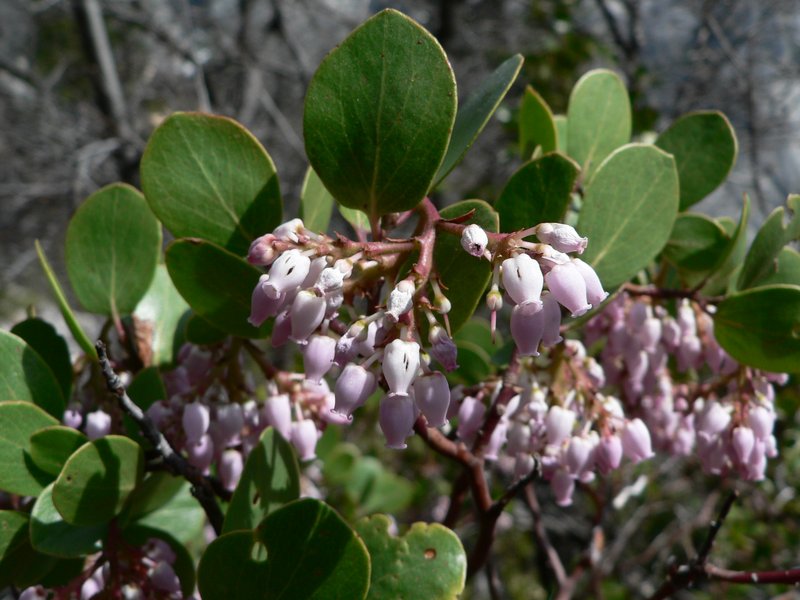
Walter Siegmund (en.wikipedia.org)
Taxonomy
- Division:
- Magnoliophyta | - Flowering plants
- Family:
- Ericaceae
- Genus:
- Arctostaphylos
- Species:
- Arctostaphylos patula
- USDA Symbol:
- ARPA6
Growth Characteristics
- Life Cycle:
- Perennial
- Growth Habit:
- Shrub
- Height:
- 200 cm
- Light Requirements:
- Full Sun
- Drought Tolerance:
- High
- Bloom Months:
- mar,apr,may
- Bloom Colors:
- white, pink
- Evergreen Shrub:
- Yes
- Landscaping Shrub:
- Yes
Wildlife Benefits
- Bees:
- ★★☆☆☆ Documented bee visitation (GBIF)
- Butterflies & Moths:
- ★★★★★ Documented Lepidoptera association (GBIF)
- Caterpillars:
- ★★★★☆ Recorded caterpillar host plant (HOSTS Database)
- Hummingbirds:
- ★☆☆☆☆ Documented hummingbird visits (GBIF)
Keystone Species Ranking
- Caterpillar Keystone:
- ★★★★☆ Butterfly & moth species supported by this genus (NWF)
- Pollen Specialist Bee Keystone:
- ★★☆☆☆ Native pollen specialist bee species supported by this genus (NWF)
Host Plant for Caterpillars
Reported Fauna Sightings
Garden & Ecology Notes
- Wildlife Value:
- birds, small mammals, butterflies
- Fire Ecology:
- Fire adapted — tolerates or benefits from fire
- Fire Notes:
- Resprouts from lignotuber after fire; seeds also germinate in response to fire cues.
Soil Requirements
- Soil Type:
- sandy, acidic, nutrient-poor soil
- pH:
- 5.0 - 7.0 (acidic to neutral)
- Drainage:
- excellent drainage required
- Moisture:
- dry to moderate
- Notes:
- native to dry slopes and ridges
Propagation & Germination
- Stratification:
- Cold/moist stratification required — 60–90 days
- Scarification:
- Seed coat scarification required before sowing
- Germination Time:
- 30–60 days
- Notes:
- Seeds require scarification (hot water or acid) followed by cold stratification.
Pre-treatment: Dormant cuttings: The base of the stem is cut at a 45° angle and immediately dipped in 1000 ppm IBA. Green cuttings: The base of the stem is cut at a 45° angle and immediately dipped in 500 ppm IBA. Cuttings are then inserted into a pre-dibbled hole in well-drained rooting medium of 30:20:30:20 peat:composted fir bark:perlite:pumice with no fertilizer added.
Establishment: Cuttings can be collected in mid-winter or late spring/early summer. For best results, collect mature, dormant 1-year old wood as late into the fall / early winter as possible. There is also a seed propagation protocol involving cold moist stratification for 120 days, but it lacks germination rate information.
Source: npn.rngr.net
ORGHPS Germination Guide: Expose to fluctuation outdoor winter temperatures including freezing for 3 months. Gradually increase light and temperature in the spring. Requires light or the seed is very fine. Surface sow and expose to light. Requires scarification. Nick or rub between sheets of sandpaper. Requires soaking. Place in warm water until seeds swell, usually 24-48 hours. Discard water and any seeds that remain floating. * immerse in boiling water for 20 seconds
Where to Buy
Nationwide Seller
- Sheffield's Seed (seeds)