
Kinnikinnick
Arctostaphylos uva-ursi
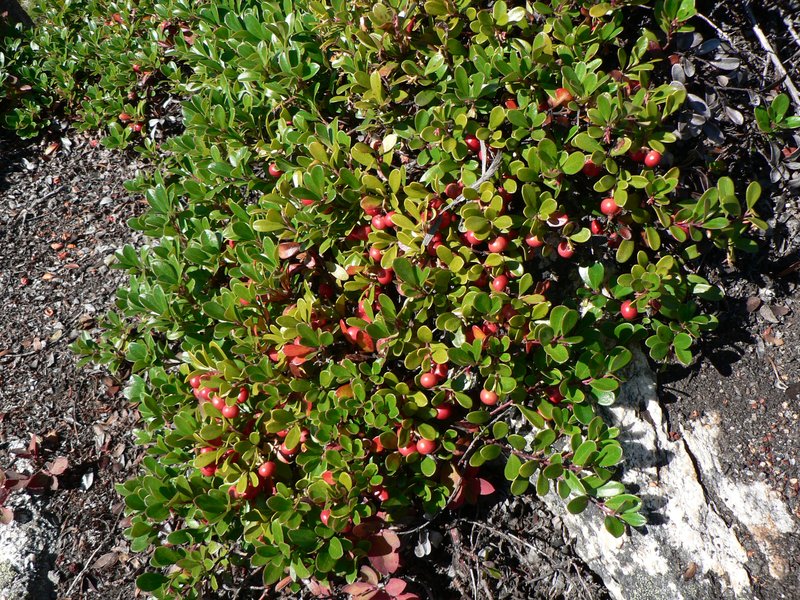
Taxonomy
- Division:
- Magnoliophyta | - Flowering plants
- Family:
- Ericaceae
- Genus:
- Arctostaphylos
- Species:
- Arctostaphylos uva-ursi
Growth Characteristics
- Life Cycle:
- Perennial
- Growth Habit:
- Shrub , Subshrub
- Height:
- 1-2 ft
- Light Requirements:
- Full Sun, Part Shade, Shade
- Drought Tolerance:
- High
- Bloom Months:
- mar, apr, may, jun
- Bloom Colors:
- White, Pink
- Ground Cover:
- Yes
- Lawn Substitute:
- Yes
- Evergreen Shrub:
- Yes
Native Range
United States: Alaska, Arizona, California, Colorado, Connecticut, Delaware, Iowa, Idaho, Illinois, Indiana, Massachusetts, Maryland, Maine, Michigan, Minnesota, Montana, North Dakota, New Hampshire, New Jersey, New Mexico, Nevada, New York, Ohio, Oregon, Pennsylvania, Rhode Island, South Dakota, Utah, Virginia, Vermont, Washington, Wisconsin, West Virginia, Wyoming, Canada: Alberta, British Columbia, Manitoba, New Brunswick, Nova Scotia, Northwest Territories, Nunavut, Ontario, Prince Edward Island, Quebec, Saskatchewan, Yukon
Keystone Species Ranking
- Caterpillar Keystone:
- ★★☆☆☆ Based on number of butterfly and moth species using this genus as host plant (Source: National Wildlife Federation)
- Bee Keystone:
- ★★★★☆ Based on number of native bee species using this genus for pollen and nectar (Source: National Wildlife Federation)
Host Plant for Caterpillars
Reported Fauna Sightings
Soil Requirements
- Soil Type:
- sandy, acidic, nutrient-poor soil
- pH:
- 4.5 - 6.0 (acidic to slightly acidic)
- Drainage:
- excellent drainage required
- Moisture:
- dry to moderate
- Notes:
- prefers open, sunny locations with poor soil fertility
Germination Information
Pre-treatment: For seeds: Scarification with boiling water or sulfuric acid, followed by stratification at room temperature for 2-4 months and cold storage for 2-3 months. For cuttings: Trim to 10-15 cm lengths, remove one third leaves from base, treat with 2,000-3,000 ppm liquid IBA, and place in mistbed with bottom heat at 21C.
Establishment: Cuttings have higher germination rates than seeds. For best results, use donor branches that are prostrate to the soil line or slightly buried by duff. These often have pre-formed root initials and enough stored stem tissue reserves to survive overwintering conditions. Time of collection for cuttings reflects poor access to this ground cover in winter months more than anything else.
Source: npn.rngr.net