
Kinnikinnick
Arctostaphylos uva-ursi
- Native to:
- Albania, Aleutian Is., Austria, Baltic States, Belarus, Bulgaria, Canada, Czechia-Slovakia, Denmark, Finland, France, Germany, Great Britain, Greece, Greenland, Iceland, Ireland, Italy, Labrador, Netherlands, Norway, NW. Balkan Pen., Poland, Prince Edward I., Romania, Russia, Spain, Sweden, Switzerland, Ukraine, United States, Virgin Islands
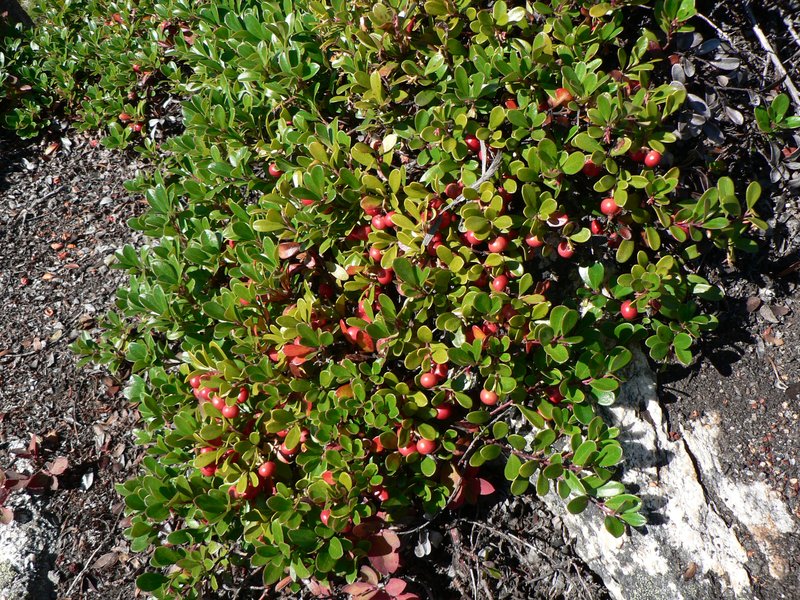
Walter Siegmund (en.wikipedia.org)
Taxonomy
- Division:
- Magnoliophyta | - Flowering plants
- Family:
- Ericaceae
- Genus:
- Arctostaphylos
- Species:
- Arctostaphylos uva-ursi
- USDA Symbol:
- ARUV
Growth Characteristics
- Life Cycle:
- Perennial
- Growth Habit:
- Shrub , Subshrub
- Height:
- 30 cm
- Light Requirements:
- Full Sun,Part Shade,Shade
- Drought Tolerance:
- High
- Bloom Months:
- mar,apr,may
- Bloom Colors:
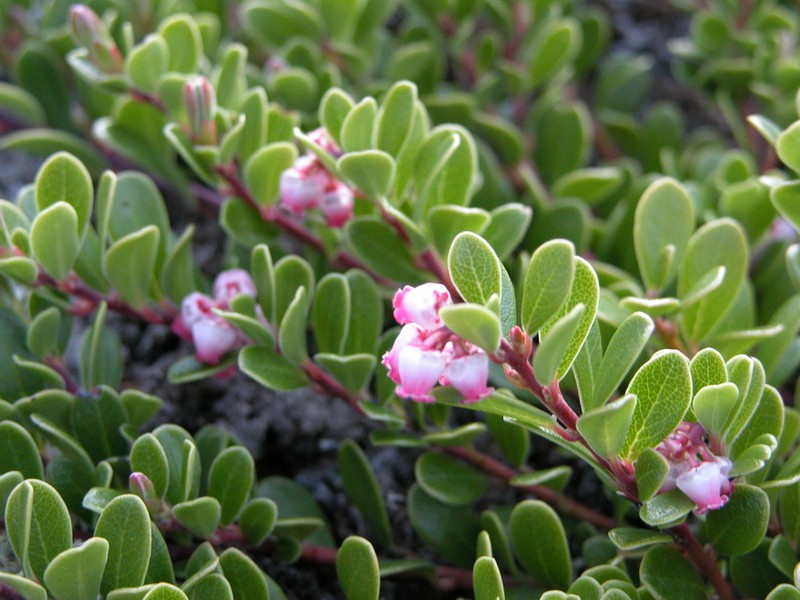
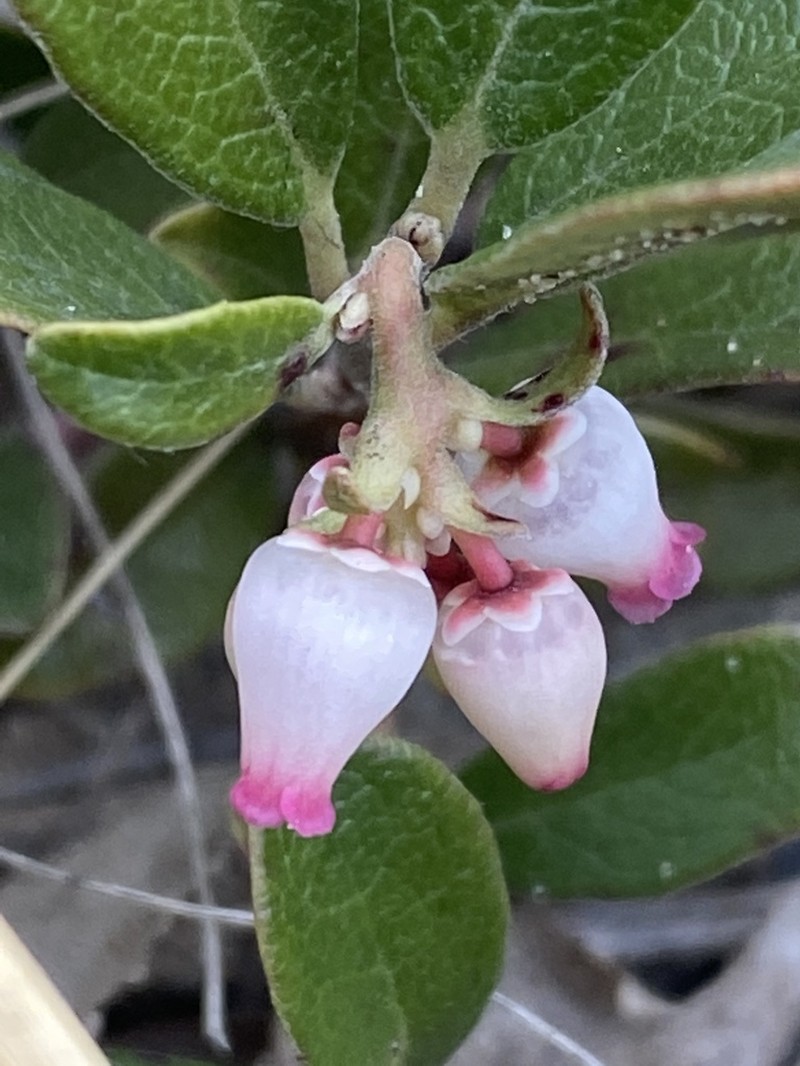
- white, pink
- Ground Cover:
- Yes
- Lawn Substitute:
- Yes
- Evergreen Shrub:
- Yes
- Landscaping Shrub:
- Yes
Wildlife Benefits
- Bees:
- ★☆☆☆☆ Documented bee visitation (GBIF)
- Butterflies & Moths:
- ★★★★★ Documented Lepidoptera association (GBIF)
- Caterpillars:
- ★★☆☆☆ Recorded caterpillar host plant (HOSTS Database)
Keystone Species Ranking
- Caterpillar Keystone:
- ★★★★☆ Butterfly & moth species supported by this genus (NWF)
- Pollen Specialist Bee Keystone:
- ★★☆☆☆ Native pollen specialist bee species supported by this genus (NWF)
Host Plant for Caterpillars
Reported Fauna Sightings
Garden & Ecology Notes
- Wildlife Value:
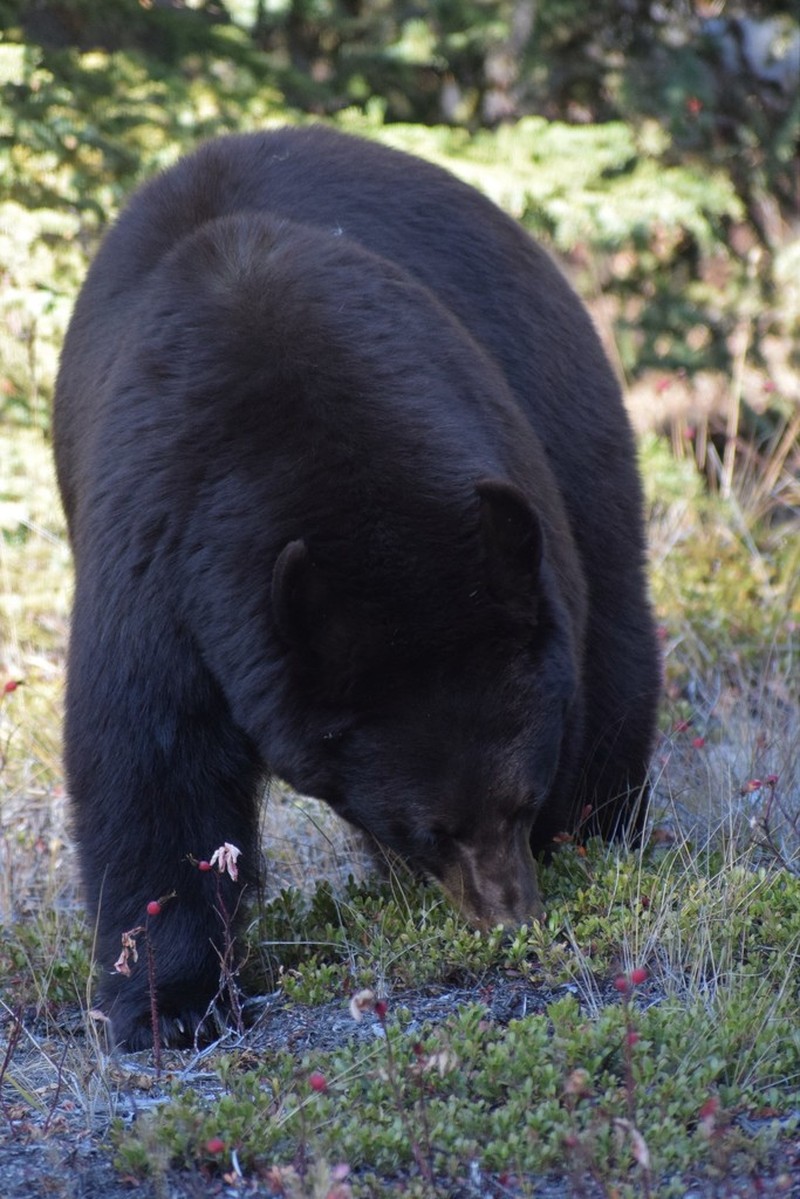
- birds, small mammals, butterflies
- Deer Resistant:
- Yes
- Salt Tolerant:
- Yes
- Fall Color:
- red, bronze
- Fire Ecology:
- Fire adapted — tolerates or benefits from fire
- Fire Notes:
- Resprouts from root crown after fire; seeds may be stimulated by heat or smoke.
Soil Requirements
- Soil Type:
- sandy, acidic, nutrient-poor soil
- pH:
- 4.5 - 6.0 (acidic to slightly acidic)
- Drainage:
- excellent drainage required
- Moisture:
- dry to moderate
- Notes:
- prefers open, sunny locations with poor soil fertility
Propagation & Germination
- Stratification:
- Cold/moist stratification required — 60–90 days
- Scarification:
- Seed coat scarification required before sowing
- Germination Time:
- 30–60 days
- Notes:
- Seeds require scarification (acid or mechanical) followed by cold stratification for 60-90 days.
Pre-treatment: For seeds: Scarification with boiling water or sulfuric acid, followed by stratification at room temperature for 2-4 months and cold storage for 2-3 months. For cuttings: Trim to 10-15 cm lengths, remove one third leaves from base, treat with 2,000-3,000 ppm liquid IBA, and place in mistbed with bottom heat at 21C.
Establishment: Cuttings have higher germination rates than seeds. For best results, use donor branches that are prostrate to the soil line or slightly buried by duff. These often have pre-formed root initials and enough stored stem tissue reserves to survive overwintering conditions. Time of collection for cuttings reflects poor access to this ground cover in winter months more than anything else.
Source: npn.rngr.net
ORGHPS Germination Guide: Sow immediately, Either the viability of these seeds is short or the species propagates best with fresh seed. Stored seed might be coaxed into germination with temperature cycling and patience. Sow at 4°C for 3 months, then place @ 20°C for 3 months. Requires scarification. Nick or rub between sheets of sandpaper. Requires soaking. Place in warm water until seeds swell, usually 24-48 hours. Discard water and any seeds that remain floating. * immerse in boiling water for 20 seconds; protect well first winter
Where to Buy
Nationwide Seller
- Butterfield Seeds (seeds)
- Sheffield's Seed (seeds)