
Dwarf Huckleberry
Gaylussacia dumosa
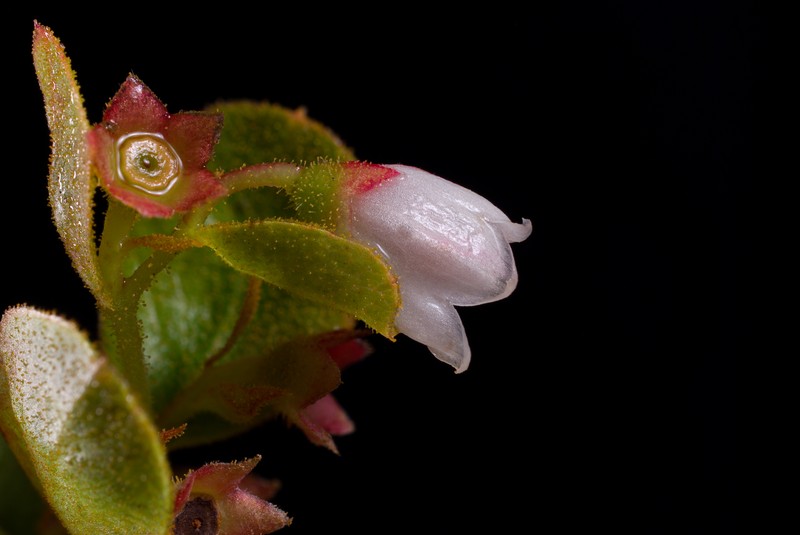
Taxonomy
- Division:
- Magnoliophyta | - Flowering plants
- Family:
- Ericaceae
- Genus:
- Gaylussacia
- Species:
- Gaylussacia dumosa
Growth Characteristics
- Life Cycle:
- Perennial
- Growth Habit:
- Shrub , Subshrub
- Height:
- 1-2 ft
- Light Requirements:
- Part Shade
- Drought Tolerance:
- Low
- Bloom Months:
- mar, apr, may, jun, jul, aug
- Bloom Colors:
- White
- Landscaping Shrub:
- Yes
Native Range
United States: Alabama, Connecticut, District of Columbia, Delaware, Florida, Georgia, Kentucky, Louisiana, Massachusetts, Maryland, Maine, Mississippi, North Carolina, New Hampshire, New Jersey, New York, Pennsylvania, Rhode Island, South Carolina, Tennessee, Virginia, West Virginia, Canada: New Brunswick, Nova Scotia, Prince Edward Island, Quebec
Keystone Species Ranking
- Caterpillar Keystone:
- ★★★☆☆ Based on number of butterfly and moth species using this genus as host plant (Source: National Wildlife Federation)
Host Plant for Caterpillars
Apple Sphinx (Sphinx "gordius"), Apple Sphinx (Sphinx gordius), Formosa Moth (Chrysanympha formosa), Polyphemus moth (Antheraea polyphemus), waxmyrtle wave moth (Cyclophora myrtaria)
Reported Fauna Sightings
Bees: Forest bumble bee (Bombus sylvicola), Forest bumble bee (Bombus sylvicola), Obscure bumble bee (Bombus caliginosus), Obscure bumble bee (Bombus caliginosus), Two-form bumble bee (Bombus bifarius), Two-form bumble bee (Bombus bifarius), Yellow-faced bumble bee (Bombus vosnesenskii), Yellow-faced bumble bee (Bombus vosnesenskii)
Soil Requirements
- Soil Type:
- sandy, acidic, nutrient-poor soil
- pH:
- 4.5 - 6.0 (acidic to slightly acidic)
- Drainage:
- excellent drainage required
- Moisture:
- dry to moderate
- Notes:
- Commonly found in pine barrens and heathlands
Germination Information
Pre-treatment: Cold-moist stratification for 30 days at 1–5°C (34–41°F).; then Cold-moist stratification for 60 days.
Source: OpenAI GPT-4o