
Pink Mountainheath
Phyllodoce empetriformis
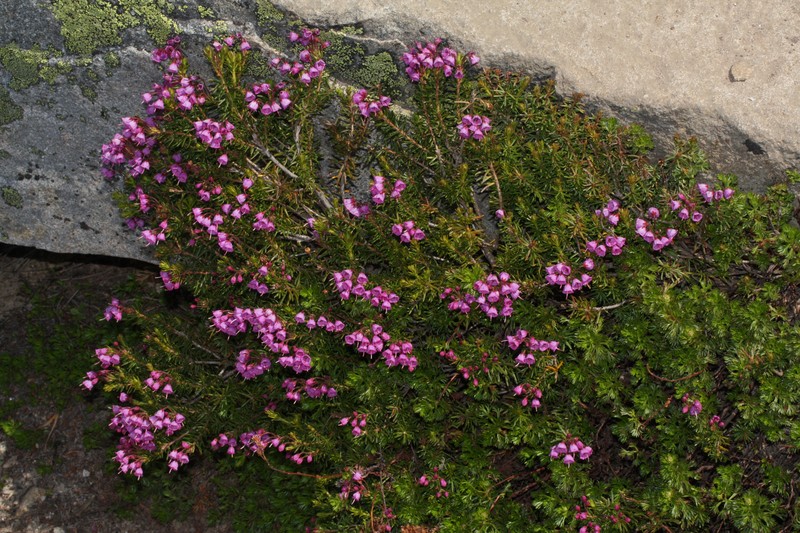
Taxonomy
- Division:
- Magnoliophyta | - Flowering plants
- Family:
- Ericaceae
- Genus:
- Phyllodoce
- Species:
- Phyllodoce empetriformis
Growth Characteristics
- Life Cycle:
- Perennial
- Growth Habit:
- Shrub , Subshrub
- Height:
- 1-2 ft
- Light Requirements:
- Part Shade
- Drought Tolerance:
- High
- Bloom Months:
- jun, jul, aug
- Bloom Colors:
- Pink, Purple
- Ground Cover:
- Yes
- Evergreen Shrub:
- Yes
Native Range
United States: Alaska, Arizona, California, Idaho, Montana, Oregon, Washington, Wyoming, Canada: Alberta, British Columbia, Northwest Territories, Yukon
Reported Fauna Sightings
Soil Requirements
- Soil Type:
- acidic, well-drained, organic-rich soil
- pH:
- 4.5 - 6.0 (strongly acidic to slightly acidic)
- Drainage:
- excellent drainage required
- Moisture:
- consistently moist
- Notes:
- thrives in alpine and subalpine environments
Germination Information
Pre-treatment: Stem tip cuttings and stem cuttings with a heel of subterranean wood treated with 1,000 ppm liquid IBA. Incorporate field collected inoculum into the rooting medium. Rooting medium used is 1:1 (v:v) peat:perlite medium containing root/soil material collected from the rhizosphere of field plants. 8000 ppm IBA talc is recommended for higher rooting percentages.
Establishment: Stem heel cuttings had a higher rate of rooting (37%) than stem tip cuttings (17%). The low rooting percentage is most likely due to the low concentration of IBA (1000 ppm). The plant occurs from Alaska to California, east to Alberta and south through the Rocky Mountains to Colorado.
Source: npn.rngr.net