
Western Labrador Tea
Rhododendron columbianum
- Native to:
- Canada, United States
Thayne Tuason
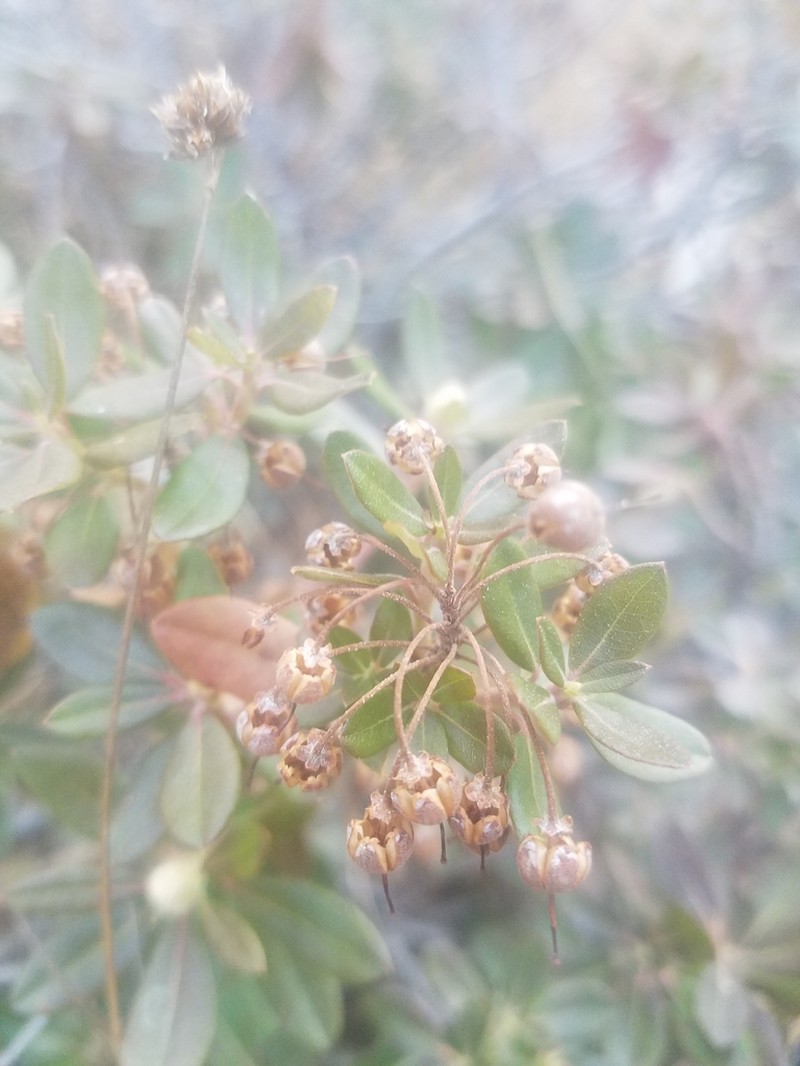
Taxonomy
- Division:
- Magnoliophyta | - Flowering plants
- Family:
- Ericaceae
- Genus:
- Rhododendron
- Species:
- Rhododendron columbianum
- USDA Symbol:
- LEGL
Growth Characteristics
- Life Cycle:
- Perennial
- Growth Habit:
- Shrub
- Height:
- 200 cm
- Light Requirements:
- Full Sun
- Drought Tolerance:
- Low
- Bloom Months:
- may,jun,jul
- Bloom Colors:
- white, cream, pink
- Landscaping Shrub:
- Yes
Wildlife Benefits
- Bees:
- ★☆☆☆☆ Documented bee visitation (GBIF)
- Butterflies & Moths:
- ★★★★☆ Documented Lepidoptera association (GBIF)
- Caterpillars:
- ★☆☆☆☆ Recorded caterpillar host plant (HOSTS Database)
Keystone Species Ranking
- Caterpillar Keystone:
- ★★★★☆ Butterfly & moth species supported by this genus (NWF)
Host Plant for Caterpillars
Reported Fauna Sightings
Garden & Ecology Notes
- Wildlife Value:
- bees, butterflies, hummingbirds
- Fragrant:
- Yes
- Fire Ecology:
- Fire adapted — tolerates or benefits from fire
- Fire Notes:
- Can resprout from root crown following fire. Often found in post-fire succession in boggy areas.
Propagation & Germination
- Stratification:
- Cold/moist stratification required — 60–90 days
- Germination Time:
- 14–42 days
- Notes:
- Seeds require light for germination. Surface sow on moist peat-based medium.
Pre-treatment: Cuttings are 15 cm in length, re-cut at the base, and terminal buds are removed. Cuttings are placed in a 2 minute fungicide bath. Cuttings are treated with 2000 ppm liquid IBA. Trim all cuttings to a 6- to 8-inch length. Remove all buds, leaves, and branches from the basal 2 to 3 in. of each cutting. Recut the base of each cutting at an angle and wound the basal end of the stem. Insert the base into rooting compound.
Establishment: Cuttings taken in June failed to root with the same treatment. Dormant semi-hardwood cuttings taken in early spring or fall give the highest rooting percentages. Cuttings collected at other times of the year may propagate as well or better.
Source: npn.rngr.net
ORGHPS Germination Guide: Requires light or the seed is very fine. Surface sow and expose to light. * sprinkle seed on 10 cm damp sphagnum moss; cover with clear plastic pop bottle cut in half; transplant seedling to acidic mix in shade outdoors when 5 cm high; protect from rodents and give protection in cold frame first winter