
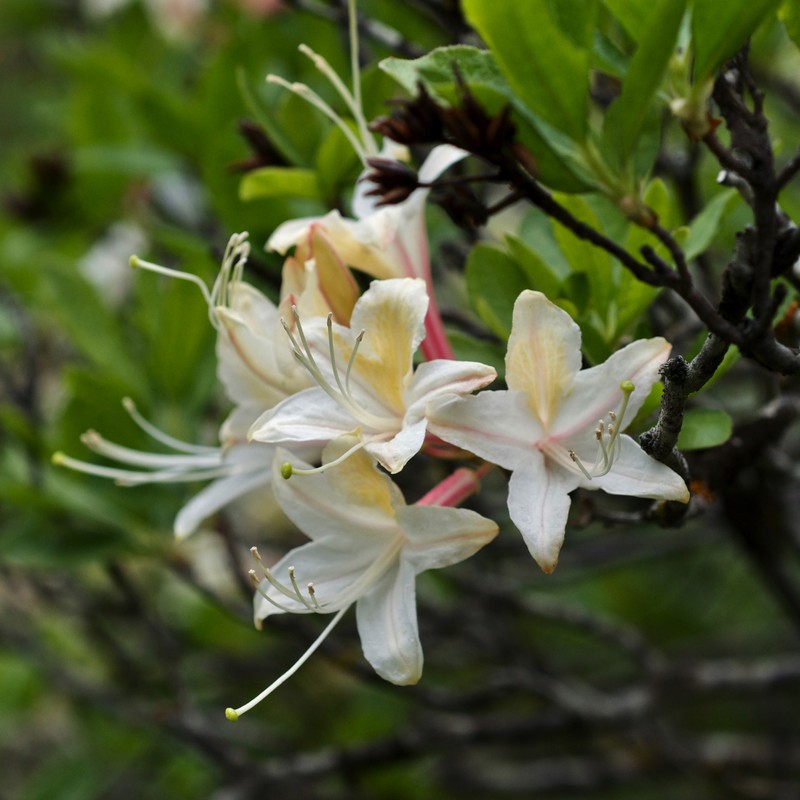
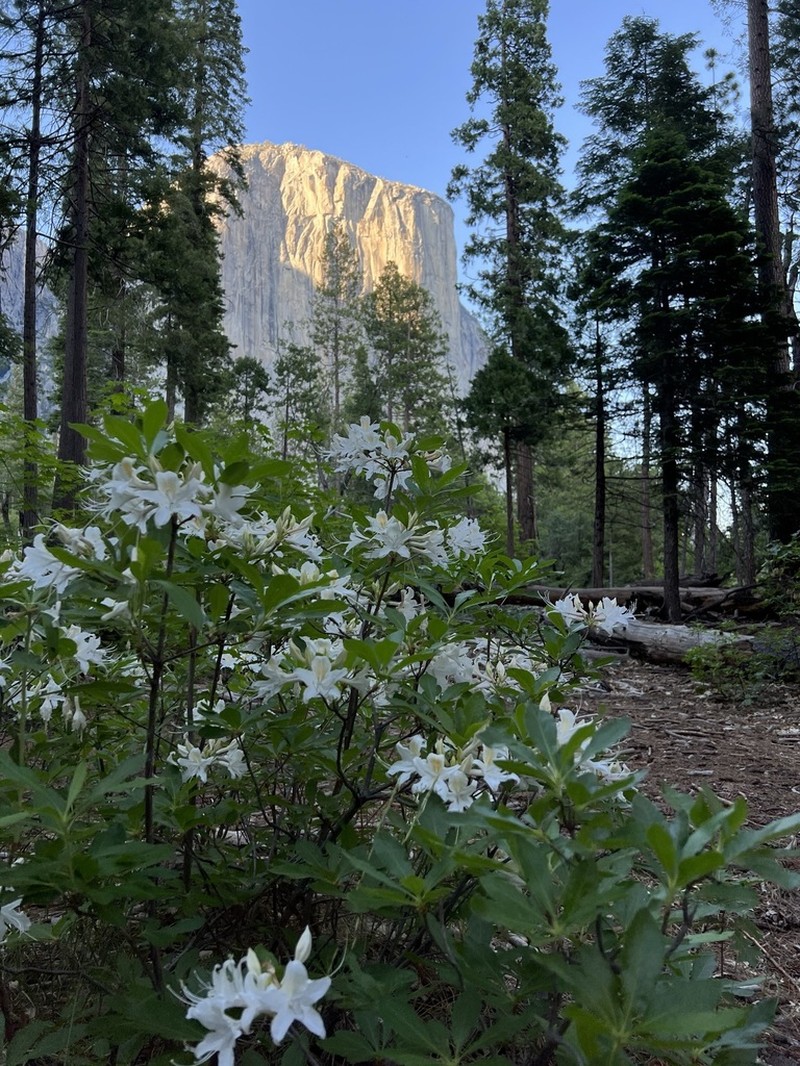
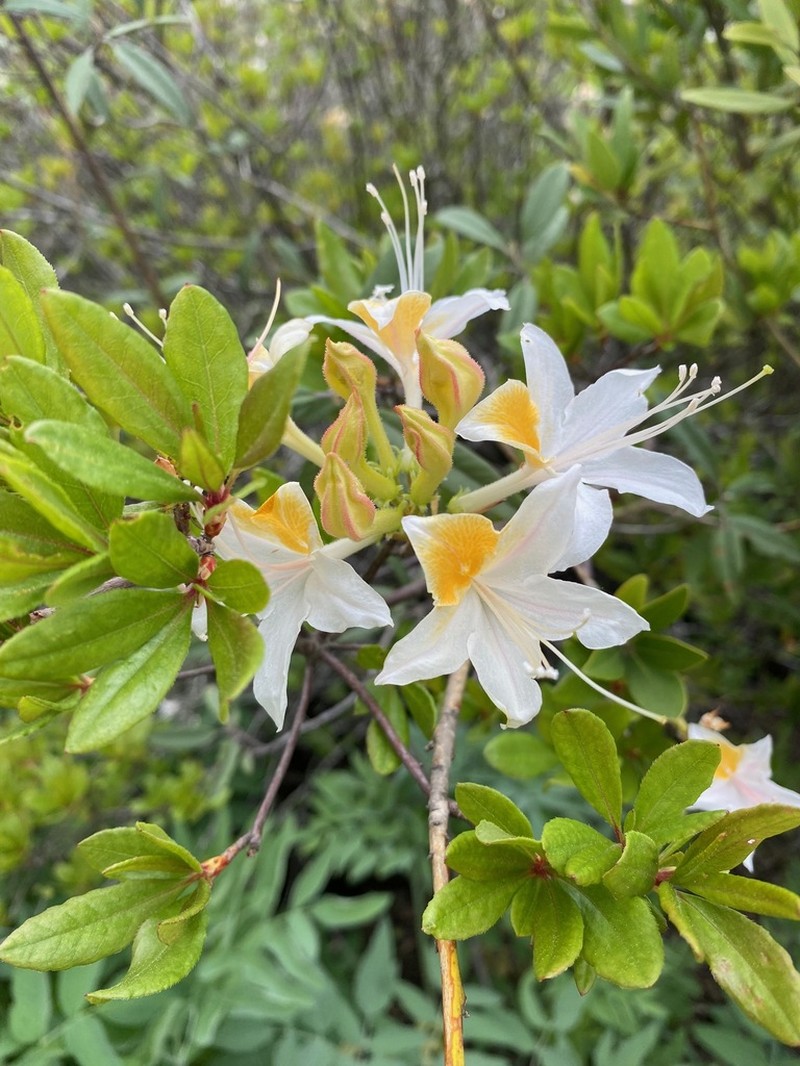
Western Azalea
Rhododendron occidentale
- Native to:
- United States
Eric Hunt
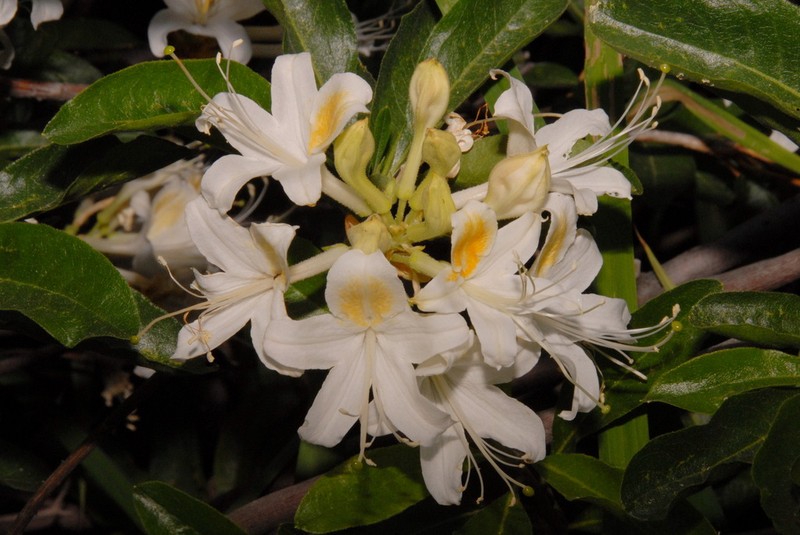
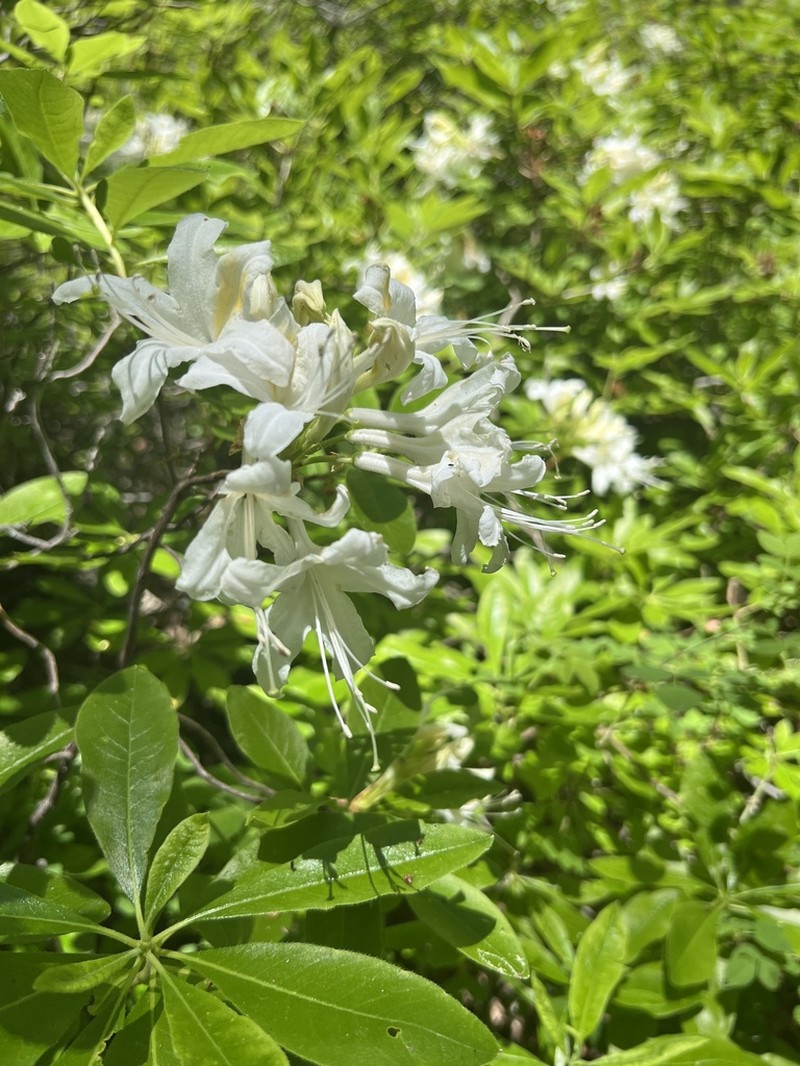
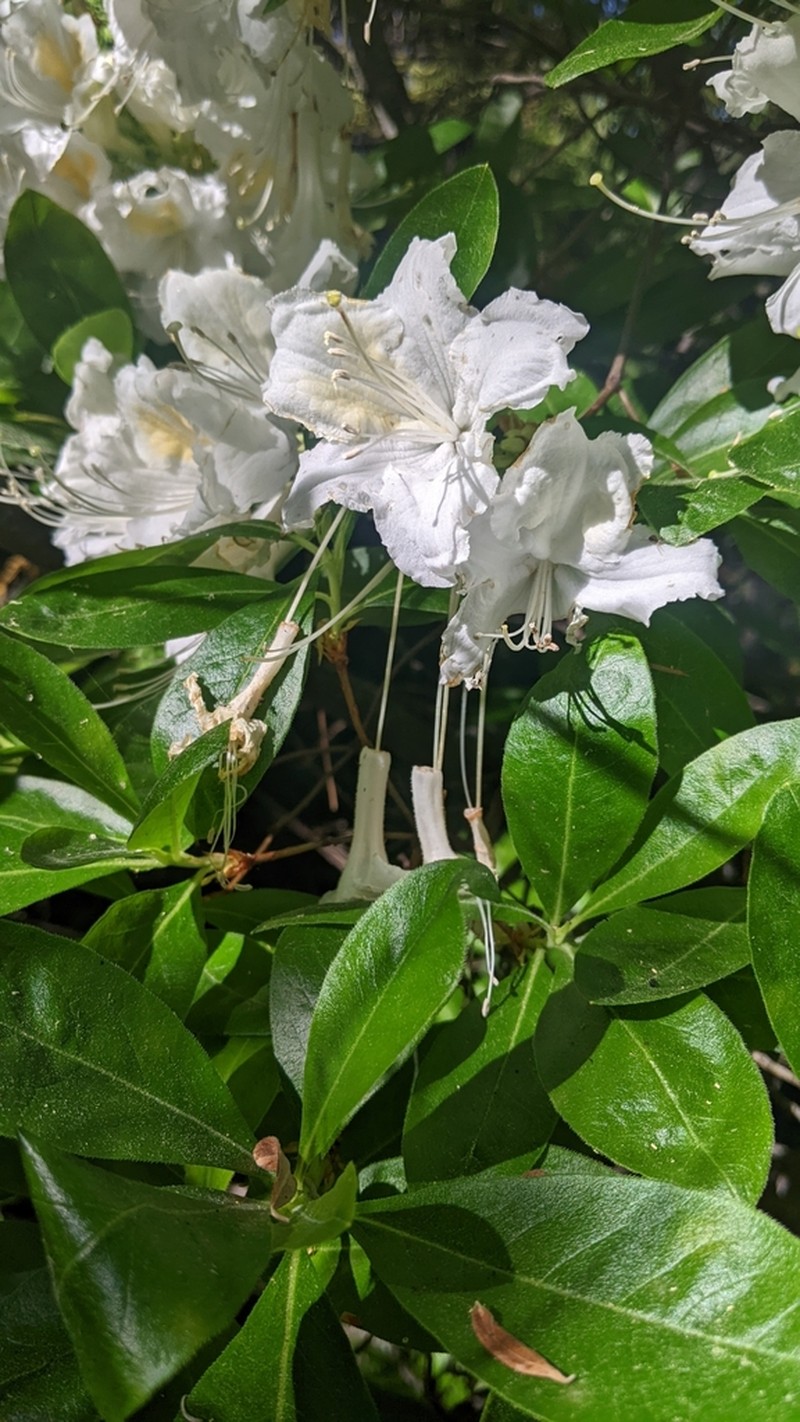
Taxonomy
- Division:
- Magnoliophyta | - Flowering plants
- Family:
- Ericaceae
- Genus:
- Rhododendron
- Species:
- Rhododendron occidentale
- USDA Symbol:
- RHOC
Growth Characteristics
- Life Cycle:
- Perennial
- Growth Habit:
- Shrub
- Height:
- 400 cm
- Light Requirements:
- Part Shade
- Drought Tolerance:
- Low
- Bloom Months:
- apr,may,jun
- Bloom Colors:
- white, pink, yellow
- Landscaping Shrub:
- Yes
Wildlife Benefits
- Bees:
- ★☆☆☆☆ Documented bee visitation (GBIF)
- Butterflies & Moths:
- ★★★★☆ Documented Lepidoptera association (GBIF)
- Caterpillars:
- ★☆☆☆☆ Recorded caterpillar host plant (HOSTS Database)
Keystone Species Ranking
- Caterpillar Keystone:
- ★★★★☆ Butterfly & moth species supported by this genus (NWF)
Host Plant for Caterpillars
Caloptilia ferruginella, Coleotechnites huntella, Lyonetia candida, Green Comma (Polygonia faunus), Zephyr anglewing (Polygonia zephyrus)
Reported Fauna Sightings
Bees: Yellow-faced bumble bee (Bombus vosnesenskii) Butterflies:Western Tiger Swallowtail (Papilio rutulus)
Garden & Ecology Notes
- Wildlife Value:
- bees, butterflies, hummingbirds
- Fragrant:
- Yes
- Fall Color:
- red, orange
Soil Requirements
- Soil Type:
- rich, well-drained loamy soil
- pH:
- 5.0 - 6.0 (acidic)
- Drainage:
- excellent drainage required
- Moisture:
- consistently moist
- Notes:
- prefers organic matter-rich soils
Propagation & Germination
- Stratification:
- Cold/moist stratification required — 60–90 days
- Germination Time:
- 30–60 days
- Notes:
- Seeds require cold stratification for 60-90 days; surface sow on moist peat or sphagnum.
Pre-treatment: Cold-moist stratification for 30 days at 1–5°C (34–41°F).; then Cold-moist stratification for 60 days.
Source: Claude AI
ORGHPS Germination Guide: Requires light or the seed is very fine. Surface sow and expose to light. * sprinkle seed on 10 cm damp sphagnum moss; cover with clear plastic pop bottle cut in half; transplant seedling to acidic mix in shade outdoors when 5 cm high; protect from rodents and give protection in cold frame first winter
Where to Buy
Nationwide Seller
- Sheffield's Seed (seeds)