
Thinleaf Huckleberry
Vaccinium membranaceum
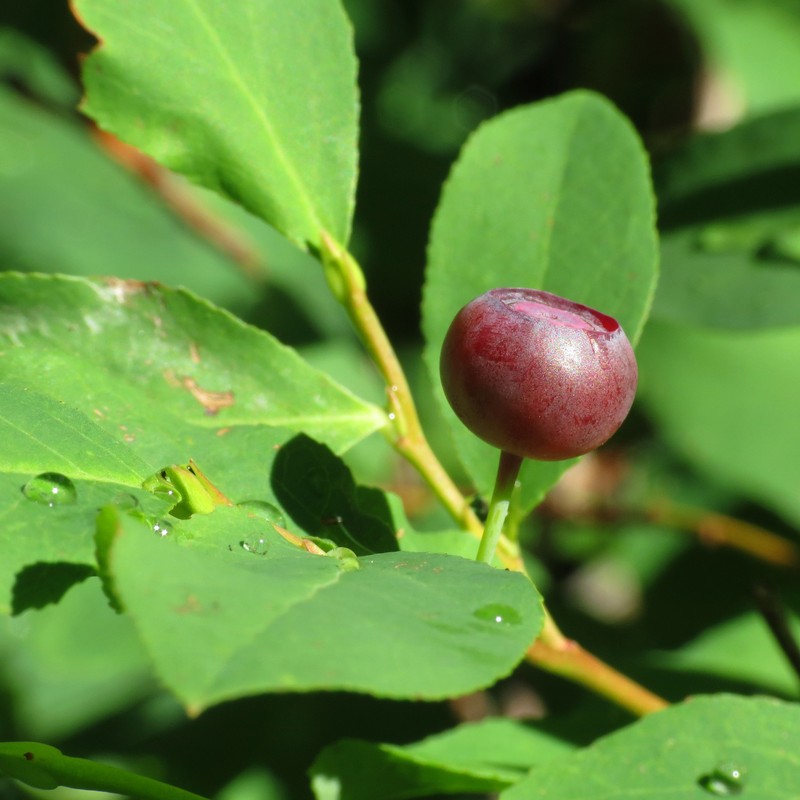
Katja Schulz from Washington, D. C., USA
Taxonomy
- Division:
- Magnoliophyta | - Flowering plants
- Family:
- Ericaceae
- Genus:
- Vaccinium
- Species:
- Vaccinium membranaceum
Growth Characteristics
- Life Cycle:
- Perennial
- Growth Habit:
- Shrub
- Height:
- 6-8 ft
- Light Requirements:
- Full Sun, Part Shade, Shade
- Drought Tolerance:
- High
- Bloom Months:
- apr, may, jun
- Bloom Colors:
- Pink, Yellow
- Evergreen Shrub:
- Yes
- Landscaping Shrub:
- Yes
Native Range
United States: Arizona, California, Colorado, Idaho, Michigan, Minnesota, Montana, Oregon, South Dakota, Utah, Washington, Wyoming, Canada: Alberta, British Columbia, Northwest Territories, Ontario, Yukon
Keystone Species Ranking
- Caterpillar Keystone:
- ★☆☆☆☆ Based on number of butterfly and moth species using this genus as host plant (Source: National Wildlife Federation)
- Bee Keystone:
- ★★★★☆ Based on number of native bee species using this genus for pollen and nectar (Source: National Wildlife Federation)
Reported Fauna Sightings
Soil Requirements
- Soil Type:
- sandy, acidic, nutrient-poor soil
- pH:
- 4.0 - 5.5 (strongly acidic to acidic)
- Drainage:
- excellent drainage required
- Moisture:
- dry to moderate
- Notes:
- Prefers open, sunny locations in native habitats
Germination Information
Pre-treatment: For cuttings, re-cut and remove terminal buds. Treat with 2,000 ppm liquid IBA and place in 1:1 peat: perlite rooting medium in mistbed with bottom heat. For seeds, sow into trays filled with stabilized medium plugs (Q-plugs), seal trays inside plastic bags and refrigerate at 33.8 to 37.4 °F for 60 days. Keep moist and treat with 1% hydrogen peroxide if mold is evident.
Establishment: Cuttings may benefit from inoculation with ericoid mycorrhizal fungi during rooting. Softwood cuttings have higher number and quality of roots compared to semi-hardwood cuttings. Higher concentrations of IBA should be tried using cuttings with 2 yr old wood. Seed germination is extremely slow and somewhat uneven.
Source: npn.rngr.net