
Whortleberry
Vaccinium myrtillus
- Native to:
- Albania, Algeria, Austria, Baltic States, Belarus, Belgium, Bulgaria, Canada, China, Corse, Czechia-Slovakia, Denmark, Finland, Føroyar, France, Germany, Great Britain, Greece, Greenland, Hungary, Iceland, Ireland, Italy, Japan, Kazakhstan, Netherlands, North Caucasus, Norway, NW. Balkan Pen., Poland, Portugal, Romania, Russia, Spain, Sweden, Switzerland, Transcaucasus, Türkiye, Ukraine, United States
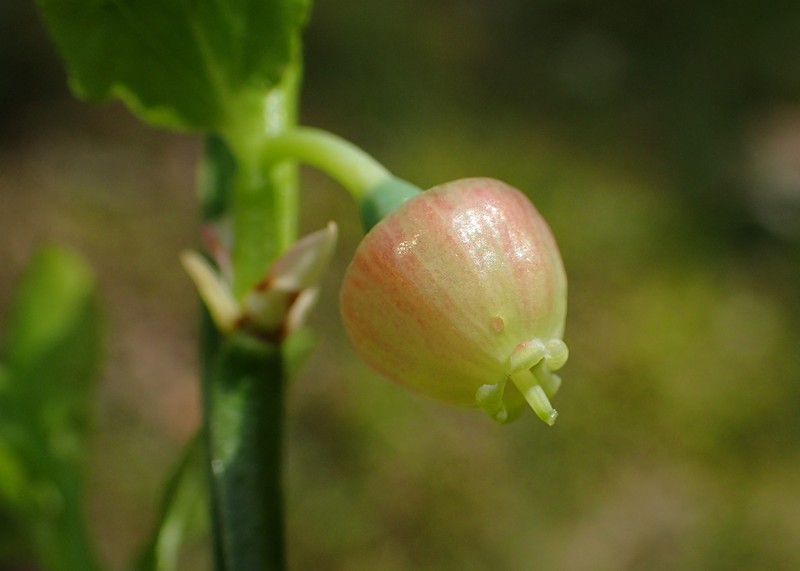
Krzysztof Ziarnek, Kenraiz
Taxonomy
- Division:
- Magnoliophyta | - Flowering plants
- Family:
- Ericaceae
- Genus:
- Vaccinium
- Species:
- Vaccinium myrtillus
- USDA Symbol:
- VAMY2
Growth Characteristics
- Life Cycle:
- Perennial
- Growth Habit:
- Shrub , Subshrub
- Height:
- 60 cm
- Light Requirements:
- Full Sun
- Drought Tolerance:
- Low
- Bloom Months:
- apr,may,jun
- Bloom Colors:
- white, pink
- Landscaping Shrub:
- Yes
Wildlife Benefits
- Bees:
- ★★☆☆☆ Documented bee visitation (GBIF)
- Butterflies & Moths:
- ★★★★★ Documented Lepidoptera association (GBIF)
- Caterpillars:
- ★★☆☆☆ Recorded caterpillar host plant (HOSTS Database)
Keystone Species Ranking
- Caterpillar Keystone:
- ★★★★★ Butterfly & moth species supported by this genus (NWF)
- Pollen Specialist Bee Keystone:
- ★★☆☆☆ Native pollen specialist bee species supported by this genus (NWF)
Host Plant for Caterpillars
Garden & Ecology Notes
- Wildlife Value:
- birds, small mammals, butterflies
- Fall Color:
- red, orange
Soil Requirements
- Soil Type:
- acidic, nutrient-poor, well-drained soil
- pH:
- 4.0 - 5.5 (strongly acidic to acidic)
- Drainage:
- excellent drainage required
- Moisture:
- consistently moist
- Notes:
- Prefers organic matter-rich soils in forested areas
Propagation & Germination
- Stratification:
- Cold/moist stratification required — 60–90 days
- Germination Time:
- 30–60 days
- Notes:
- Seeds require cold stratification for 60-90 days; germination occurs in spring under cool, moist conditions.
Pre-treatment: For seeds: Sow into trays filled with stabilized medium plugs (Q-plugs), seal trays inside plastic bags and refrigerate at 1 to 3 °C for 60 days, checking weekly and keeping moist. If mold is evident, treat with 1% hydrogen peroxide. For cuttings: Re-cut softwood cuttings, remove terminal buds, place in a 2 minute fungicide bath to remove surface pathogens, treat with 2000 ppm liquid IBA, and place in mist bed with at least 2 nodes below the surface of the rooting medium.
Establishment: The species is circumboreal, found in North America from British Columbia and Alberta south to New Mexico, and east to Newfoundland and south to New England. It is also found across Eurasia. There's a variation in propagation methods, with seeds requiring cold stratification and cuttings requiring treatment with fungicide and IBA. Softwood cuttings taken in mid-June had significantly higher number and quality of roots compared to semi-softwood cuttings taken one month earlier.
Source: npn.rngr.net
Where to Buy
Nationwide Seller
- Sheffield's Seed (seeds)