
California Huckleberry
Vaccinium ovatum
- Native to:
- Canada, United States
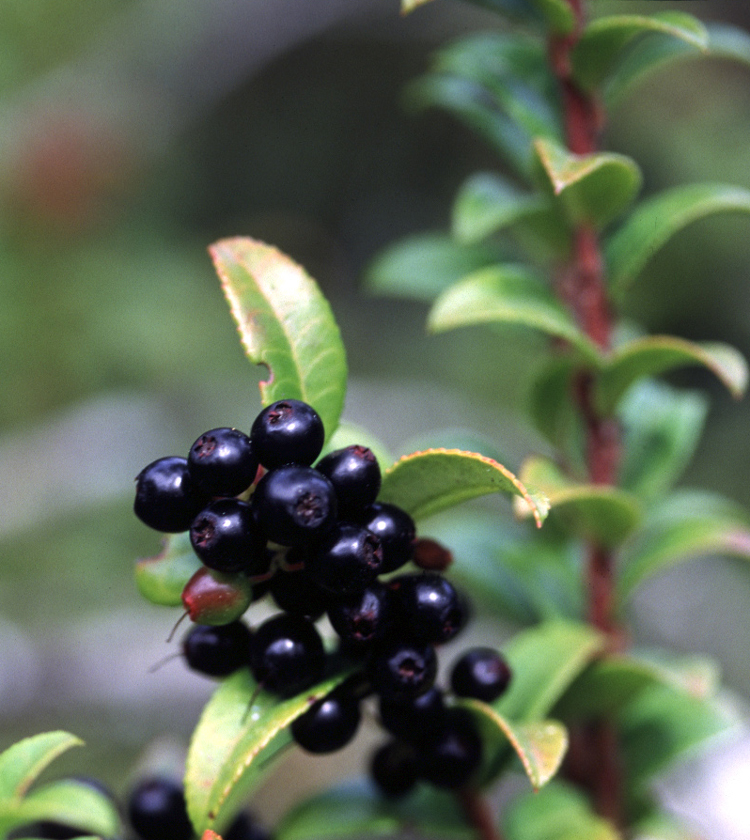
John Rusk (www.flickr.com) from Berkeley, CA, United States of America
Taxonomy
- Division:
- Magnoliophyta | - Flowering plants
- Family:
- Ericaceae
- Genus:
- Vaccinium
- Species:
- Vaccinium ovatum
- USDA Symbol:
- VAOV2
Growth Characteristics
- Life Cycle:
- Perennial
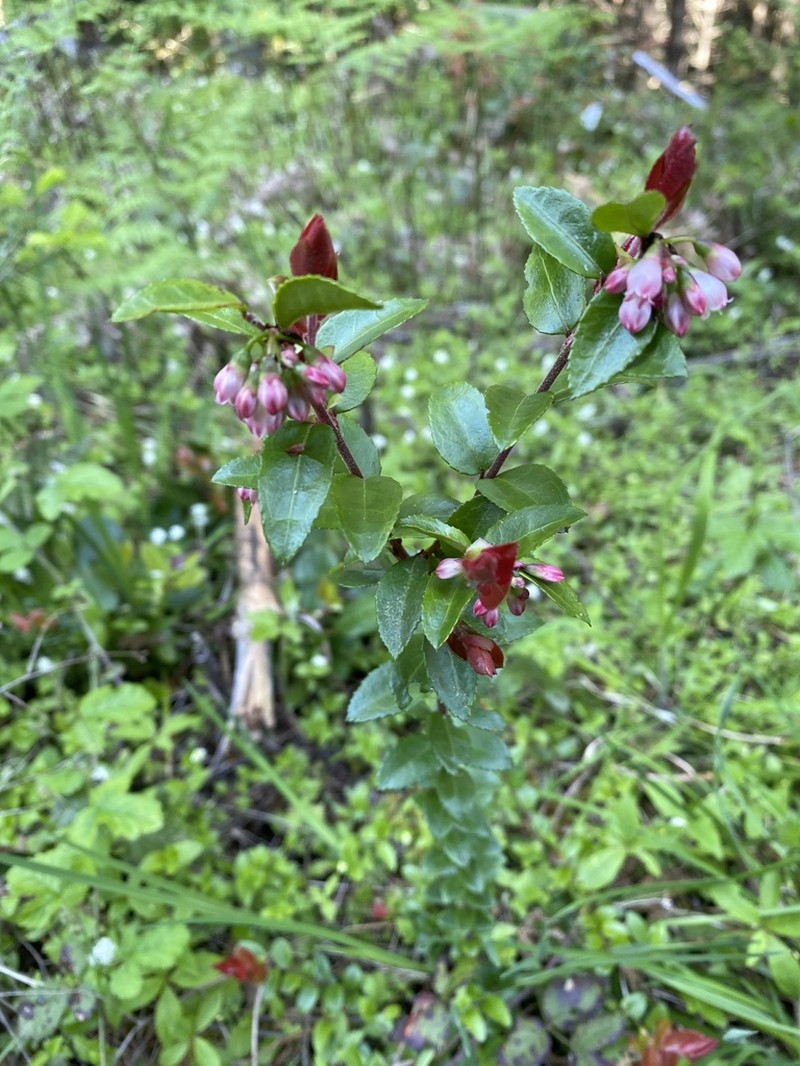
- Growth Habit:
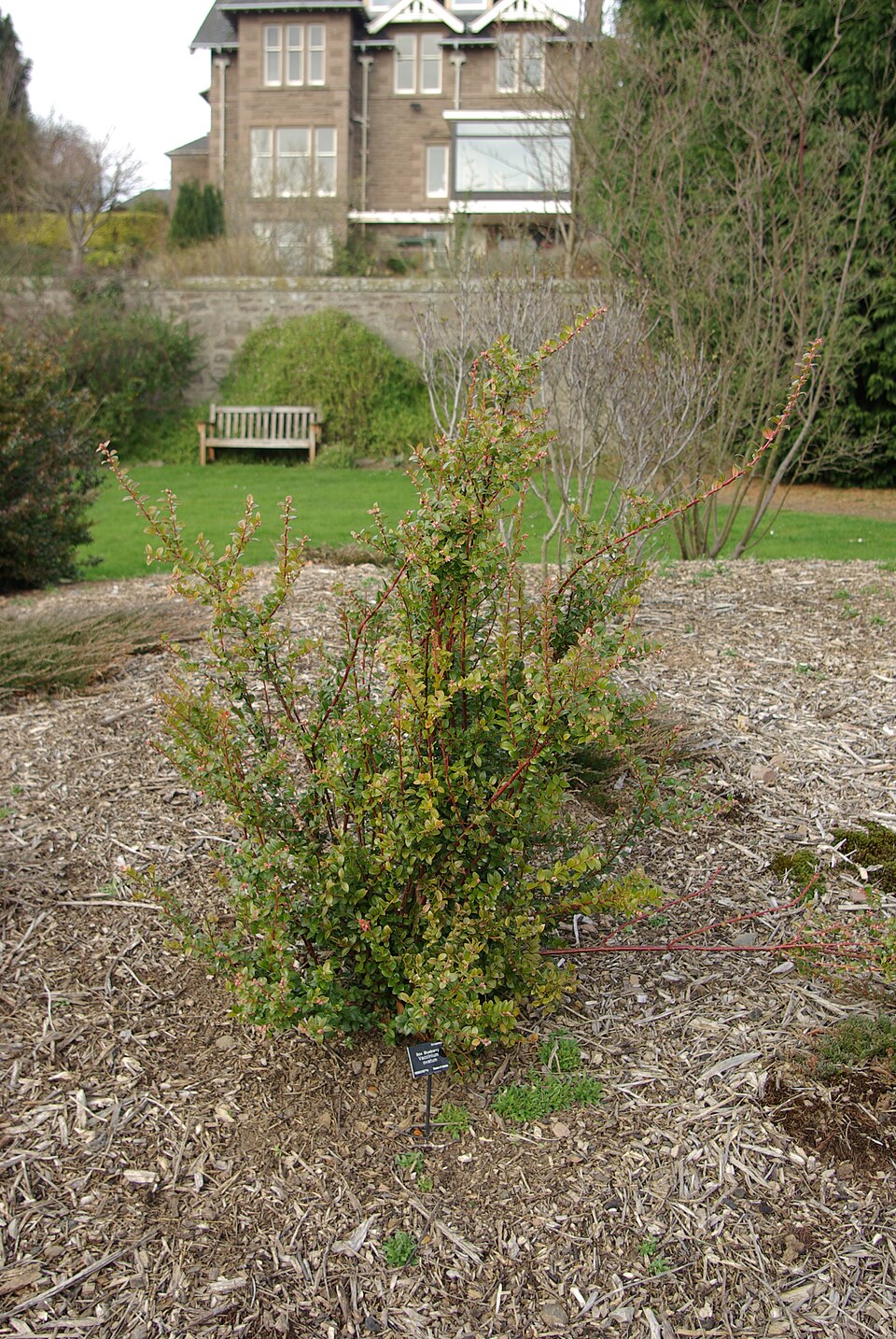
- Shrub , Subshrub
- Height:
- 400 cm
- Light Requirements:
- Full Sun,Part Shade,Shade
- Drought Tolerance:
- Medium
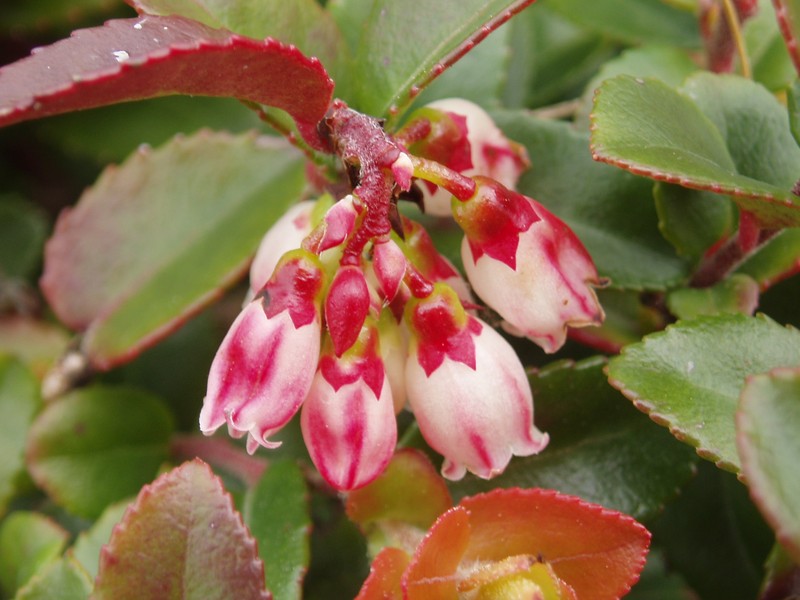
- Bloom Months:
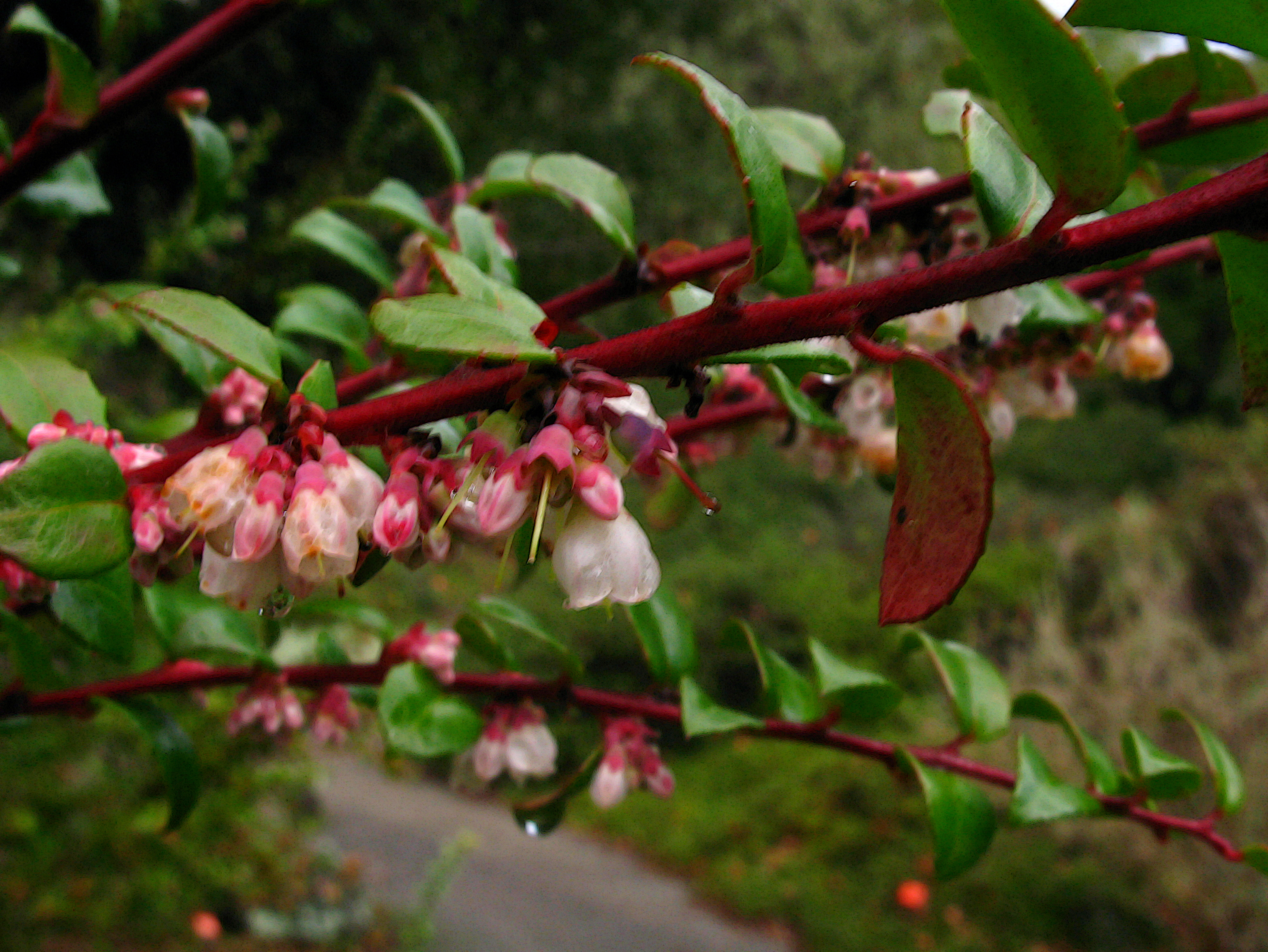
- mar,apr,may
- Bloom Colors:
- white, pink
- Food Forest:
- Contains edible parts
- Evergreen Shrub:
- Yes
- Landscaping Shrub:
- Yes
Wildlife Benefits
- Bees:
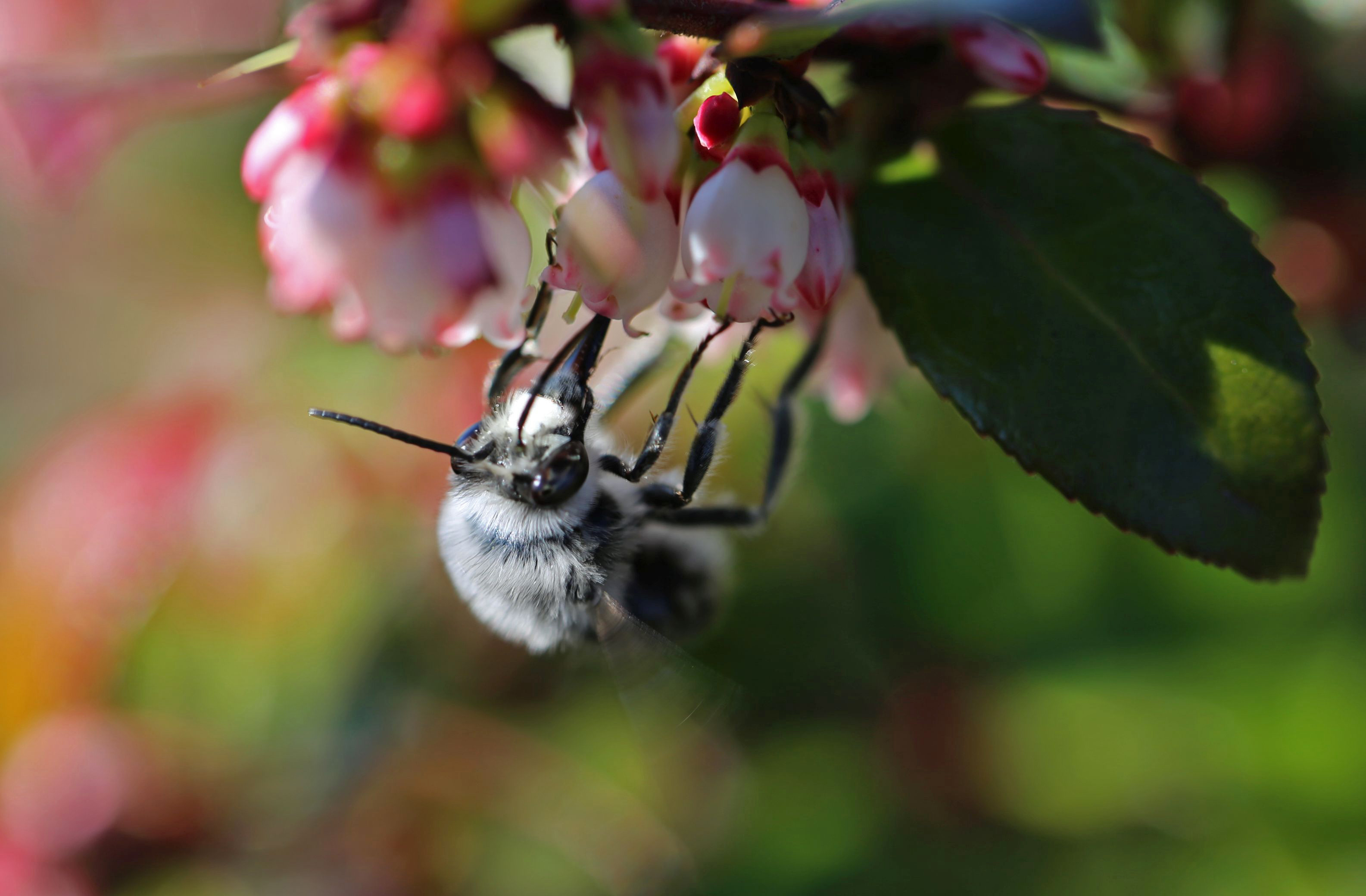
- ★☆☆☆☆ Documented bee visitation (GBIF)
- Butterflies & Moths:
- ★★☆☆☆ Documented Lepidoptera association (GBIF)
- Caterpillars:
- ★☆☆☆☆ Recorded caterpillar host plant (HOSTS Database)
Keystone Species Ranking
- Caterpillar Keystone:
- ★★★★★ Butterfly & moth species supported by this genus (NWF)
- Pollen Specialist Bee Keystone:
- ★★☆☆☆ Native pollen specialist bee species supported by this genus (NWF)
Host Plant for Caterpillars
Adelphagrotis stellaris, Cameraria nemoris, Eucalantica polita, Lotisma trigonana, orange tortrix moth (Argyrotaenia franciscana)
Reported Fauna Sightings
Bees: Black-tailed bumble bee (Bombus melanopygus), Sitka bumble bee (Bombus sitkensis), Yellow-faced bumble bee (Bombus vosnesenskii) Moths:Cameraria nemoris
Garden & Ecology Notes
- Wildlife Value:
- birds, butterflies, small mammals
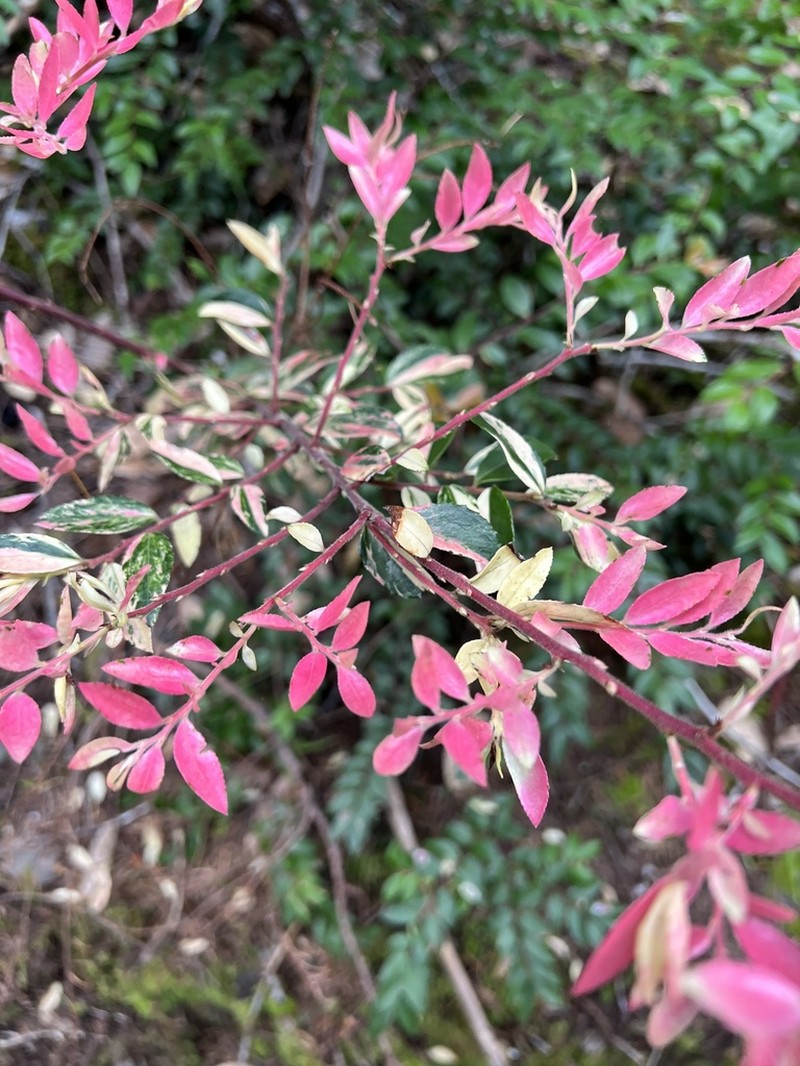
- Fall Color:
- red, purple
Soil Requirements
- Soil Type:
- rich, well-drained loamy soil
- pH:
- 4.5 - 6.0 (acidic)
- Drainage:
- excellent drainage required
- Moisture:
- consistently moist
- Notes:
- Thrives in organic matter-rich environments
Propagation & Germination
- Stratification:
- Cold/moist stratification required — 60–90 days
- Germination Time:
- 30–60 days
- Notes:
- Seeds require cold stratification for 60-90 days to break dormancy.
Pre-treatment: Seeds are stratified for 60 days in the refrigerator.
Establishment: Seeds are collected between July 1st and November 15th. Mature fruits are dark purple. Seed is yellowish-tan at maturity. V. ovatum is found from British Columbia south to San Diego county, California and Santa Rosa and Santa Cruz islands; mostly below 2,500 feet elevation.
Source: npn.rngr.net
Where to Buy
Nationwide Seller
- Sheffield's Seed (seeds)