
Red Huckleberry
Vaccinium parvifolium
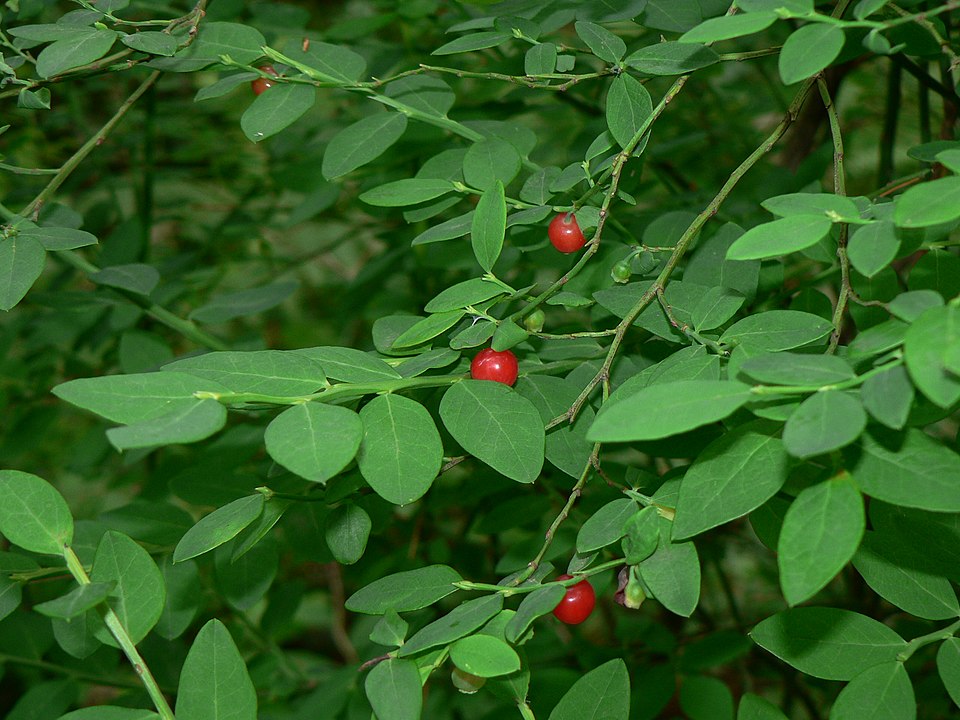
Taxonomy
- Division:
- Magnoliophyta | - Flowering plants
- Family:
- Ericaceae
- Genus:
- Vaccinium
- Species:
- Vaccinium parvifolium
Growth Characteristics
- Life Cycle:
- Perennial
- Growth Habit:
- Shrub
- Height:
- 20-40 ft
- Light Requirements:
- Full Sun, Part Shade, Shade
- Drought Tolerance:
- Medium
- Bloom Months:
- may, jun
- Bloom Colors:
- White, Pink, Green
- Evergreen Shrub:
- Yes
- Landscaping Shrub:
- Yes
Native Range
United States: Alaska, California, Oregon, Washington, Canada: British Columbia
Keystone Species Ranking
- Caterpillar Keystone:
- ★☆☆☆☆ Based on number of butterfly and moth species using this genus as host plant (Source: National Wildlife Federation)
- Bee Keystone:
- ★★★★☆ Based on number of native bee species using this genus for pollen and nectar (Source: National Wildlife Federation)
Reported Fauna Sightings
Bees: Fuzzy-horned bumble bee (Bombus mixtus), Fuzzy-horned bumble bee (Bombus mixtus), Yellow-faced bumble bee (Bombus vosnesenskii), Yellow-faced bumble bee (Bombus vosnesenskii)
Soil Requirements
- Soil Type:
- moist, well-drained, acidic forest soil
- pH:
- 4.5 - 6.0 (acidic to slightly acidic)
- Drainage:
- excellent drainage required
- Moisture:
- consistently moist
- Notes:
- Thrives in forest understory with organic matter
Germination Information
Pre-treatment: Sow seeds into trays filled with stabilized medium plugs (Q-plugs). Seal trays inside plastic bags and refrigerate at 1 to 3 °C for 60 days. Check trays weekly and keep moist. If mold is evident, treat with 1% hydrogen peroxide.
Establishment: Collect fruit when berries are ripe, from July to August. Store in a plastic bag at ~4 °C until extraction, within two weeks to prevent mold growth.
Source: npn.rngr.net