
Lingonberry
Vaccinium vitis-idaea
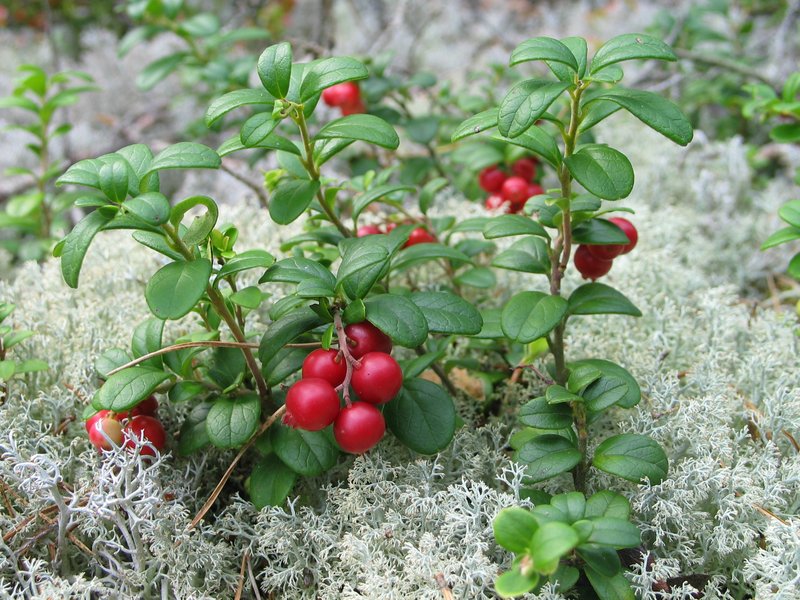
Taxonomy
- Division:
- Magnoliophyta | - Flowering plants
- Family:
- Ericaceae
- Genus:
- Vaccinium
- Species:
- Vaccinium vitis-idaea
Growth Characteristics
- Life Cycle:
- Perennial
- Growth Habit:
- Shrub , Subshrub
- Height:
- 6 in - 1 ft
- Light Requirements:
- Full Sun, Part Shade, Shade
- Drought Tolerance:
- Medium
- Bloom Months:
- jun, jul
- Bloom Colors:
- Pink
- Ground Cover:
- Yes
- Evergreen Shrub:
- Yes
Native Range
United States: Alaska, Connecticut, Massachusetts, Maine, Michigan, Minnesota, New Hampshire, Vermont, Wisconsin, Canada: Alberta, British Columbia, Manitoba, New Brunswick, Nova Scotia, Northwest Territories, Nunavut, Ontario, Prince Edward Island, Quebec, Saskatchewan, Yukon
Keystone Species Ranking
- Caterpillar Keystone:
- ★☆☆☆☆ Based on number of butterfly and moth species using this genus as host plant (Source: National Wildlife Federation)
- Bee Keystone:
- ★★★★☆ Based on number of native bee species using this genus for pollen and nectar (Source: National Wildlife Federation)
Host Plant for Caterpillars
cranberry fruitworm (Acrobasis vaccinii), Goldilocks moth (Lithomoia solidaginis), grey mountain carpet (Entephria caesiata)
Reported Fauna Sightings
Bees: Forest bumble bee (Bombus sylvicola), Forest bumble bee (Bombus sylvicola)
Soil Requirements
- Soil Type:
- sandy, acidic, nutrient-poor soil
- pH:
- 4.0 - 6.0 (acidic to slightly acidic)
- Drainage:
- excellent drainage required
- Moisture:
- consistently moist
- Notes:
- Thrives in cool, temperate climates
Germination Information
Pre-treatment: Seeds are placed in cold moist stratification for the duration of the winter
Source: npn.rngr.net