
Koa
Acacia koa
Also known as: Koaoha
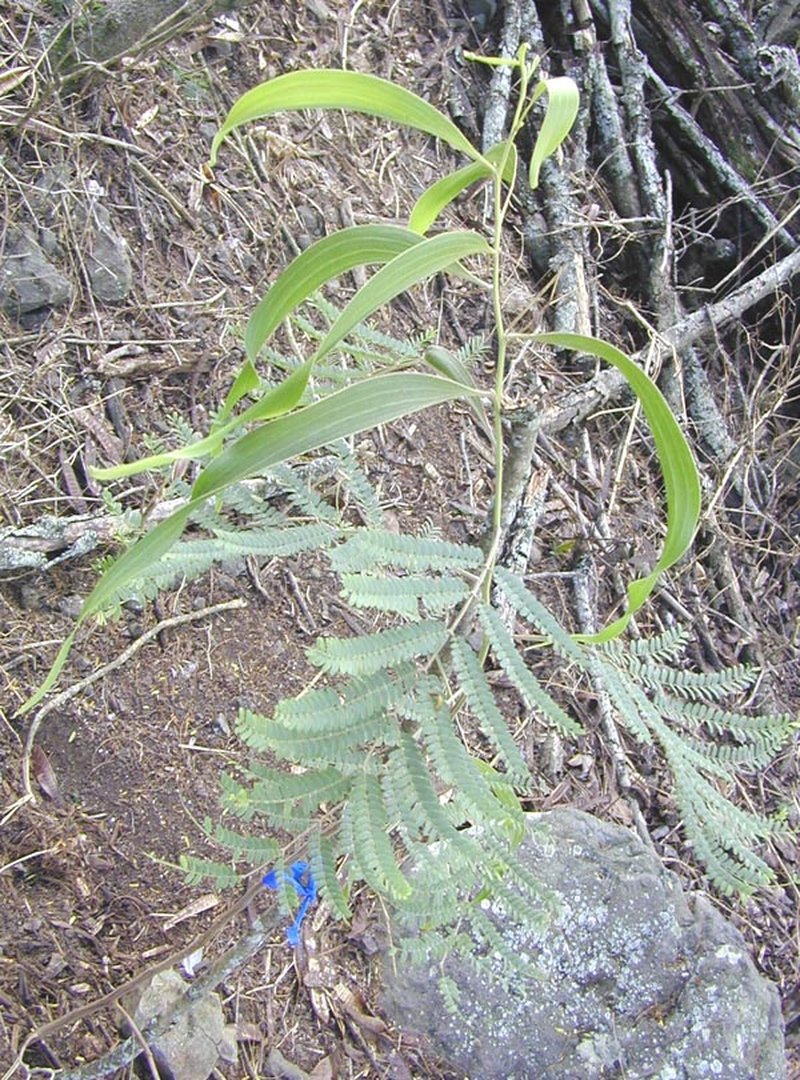
Taxonomy
- Division:
- Magnoliophyta | - Flowering plants
- Family:
- Fabaceae
- Genus:
- Acacia
- Species:
- Acacia koa
Growth Characteristics
- Life Cycle:
- Perennial
- Growth Habit:
- Tree
- Height:
- More than 40 ft
- Light Requirements:
- Full Sun
- Drought Tolerance:
- Medium
- Bloom Months:
- jan, feb, mar, apr, may, jun, jul, aug, sep, oct, nov, dec
- Bloom Colors:
- Yellow
Native Range
United States: Hawaii
Keystone Species Ranking
- Caterpillar Keystone:
- ★★★☆☆ Based on number of butterfly and moth species using this genus as host plant (Source: National Wildlife Federation)
Host Plant for Caterpillars
Reported Fauna Sightings
Soil Requirements
- Soil Type:
- fertile, well-drained volcanic soil
- pH:
- 5.0 - 6.5 (slightly acidic to neutral)
- Drainage:
- excellent drainage required
- Moisture:
- dry to moderate
- Notes:
- Common in upland forests of Hawaii
Germination Information
Pre-treatment: Scarification is required. This can be done mechanically or with hot water treatment (195°F, 90°C) in a volume ratio of at least 5 parts water to one part seed for 1-3 minutes. Alternatively, sulfuric acid can be used, soaking time 10-60 minutes depending on seed size. In all cases, scarified seeds are soaked overnight to allow water to penetrate into the seed.
Establishment: Koa is native to the Hawaiian Islands. Found on all six major Hawaiian Islands: Hawaii, Molokai, Maui, Lanai, Oahu and Kauai. The largest and most thriving koa trees are found between 3000 and 6000 feet (915 and 1830 meters) elevation. Introduced pests and diseases limit their presence below 2000 feet. Genetic quality is a crucial aspect of koa performance and yield, and source must be carefully considered and matched for the outplanting site before seeds are collected.
Source: npn.rngr.net