
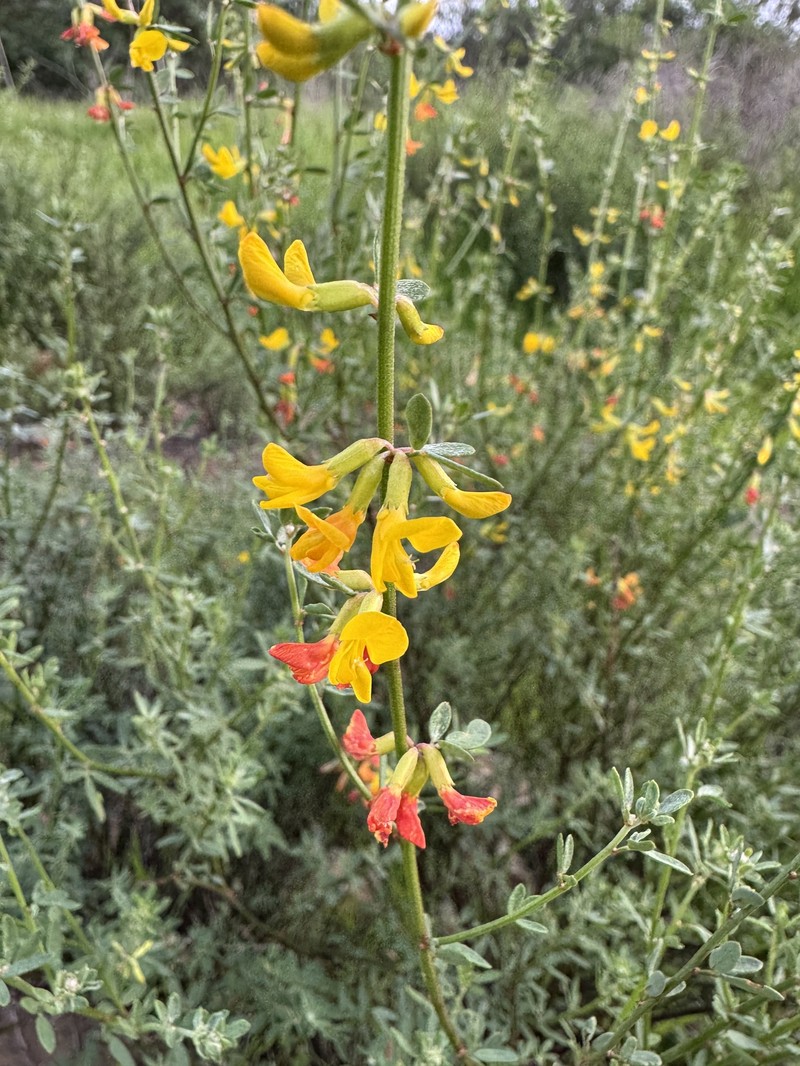
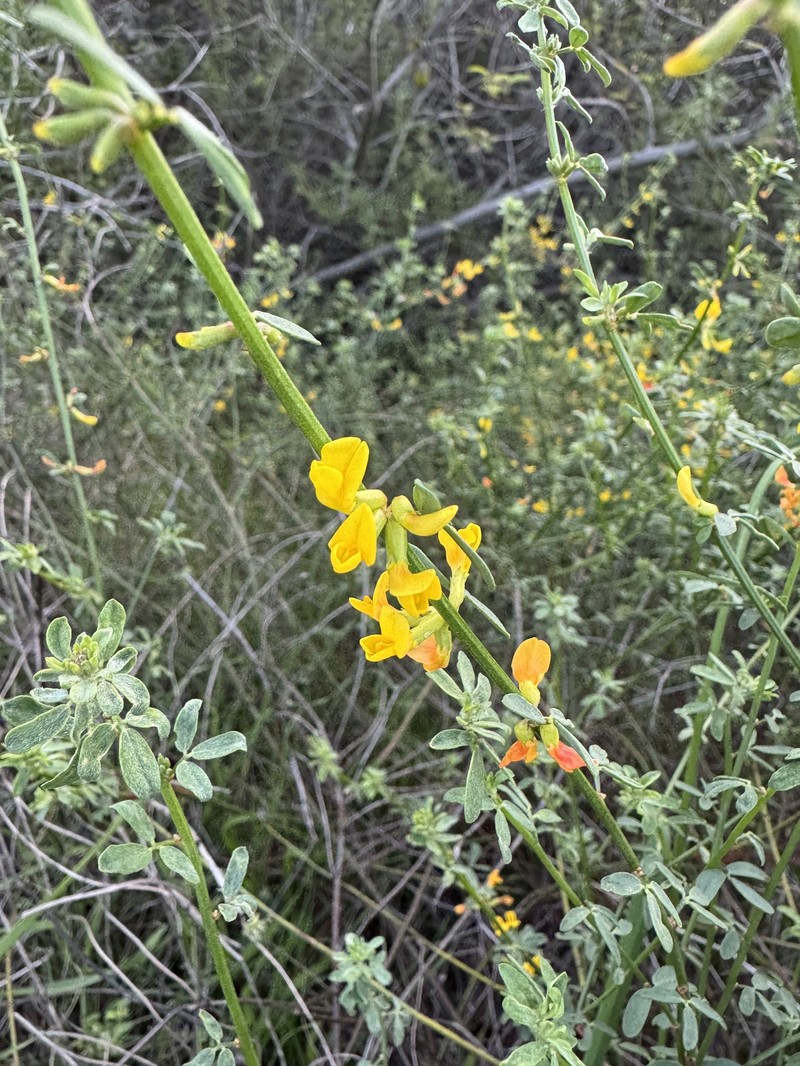
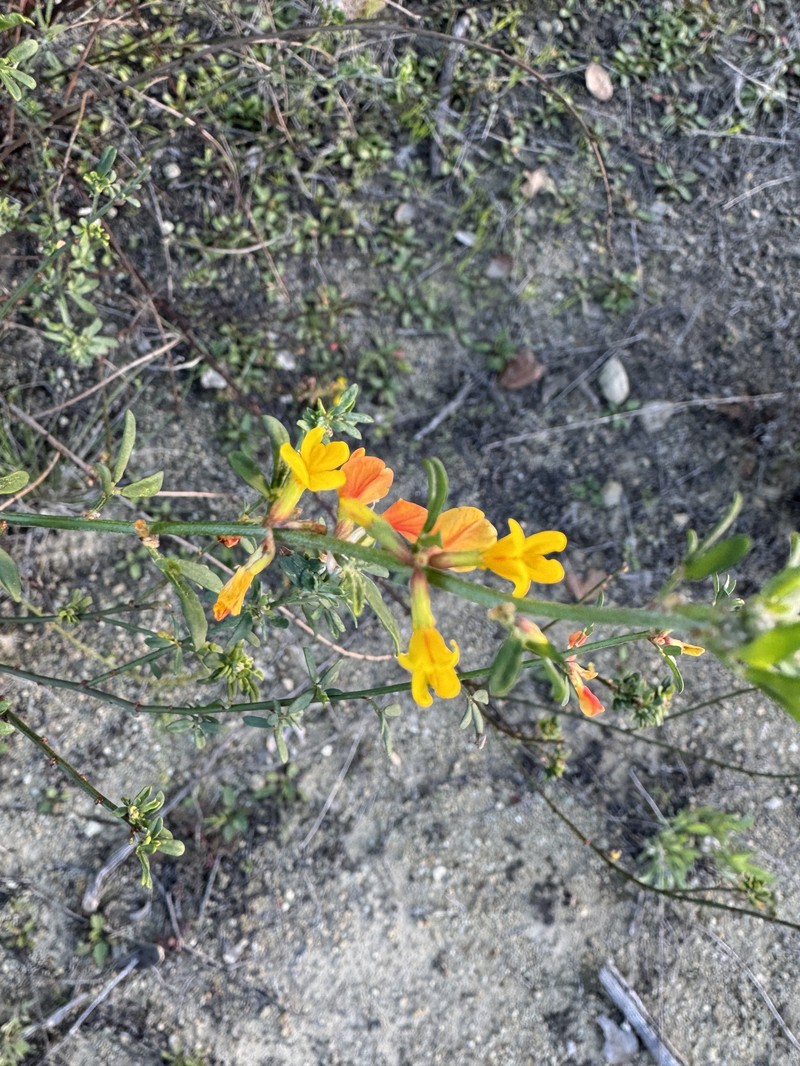
Common Deerweed
Acmispon glaber subsp. glaber
- Native to:
- Mexico, United States
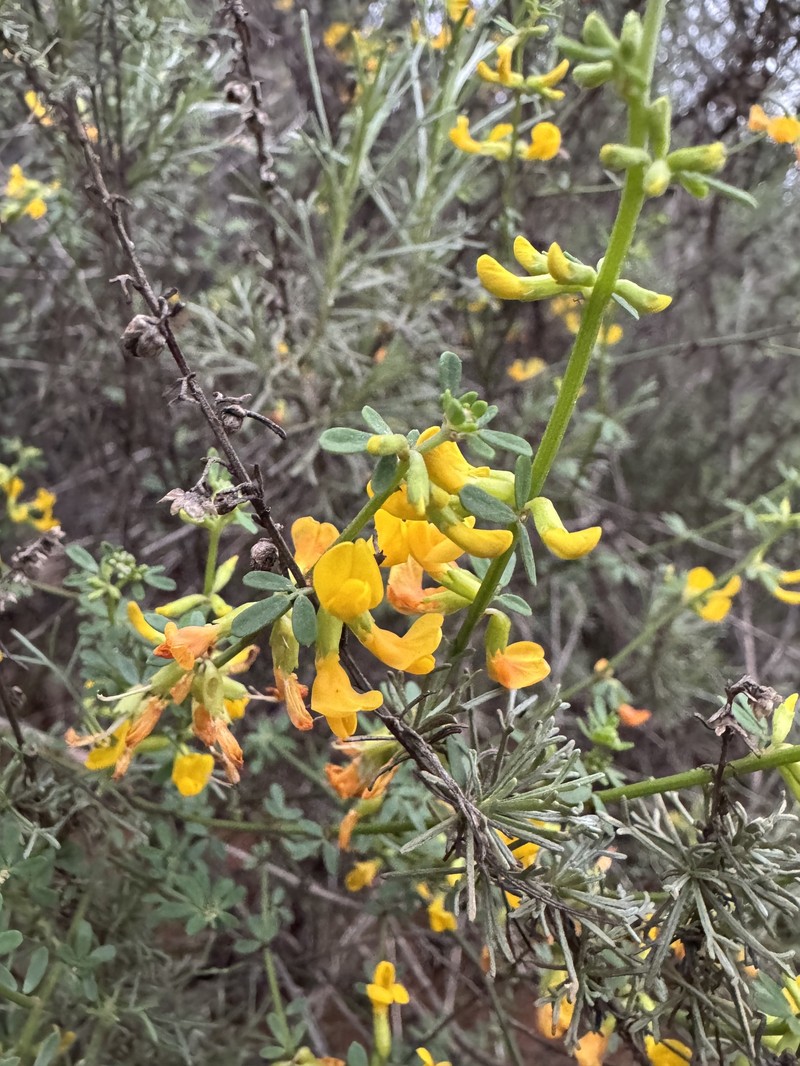
GBIF: smfang
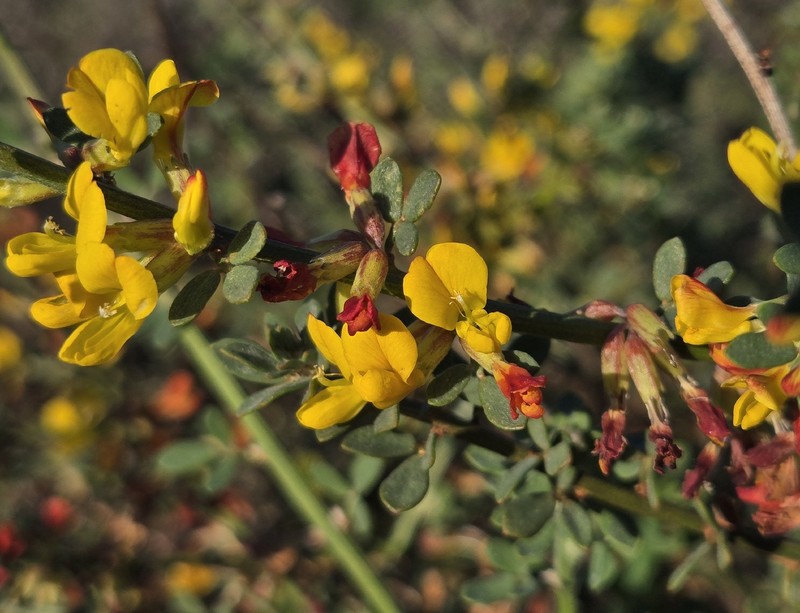
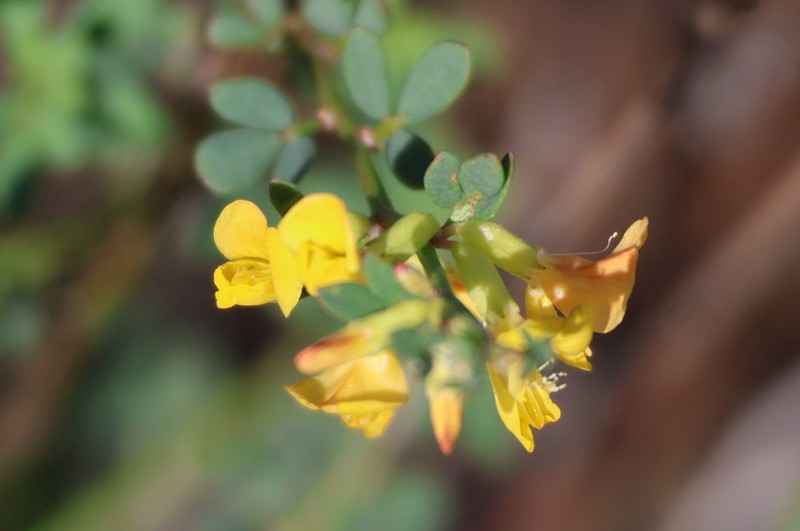
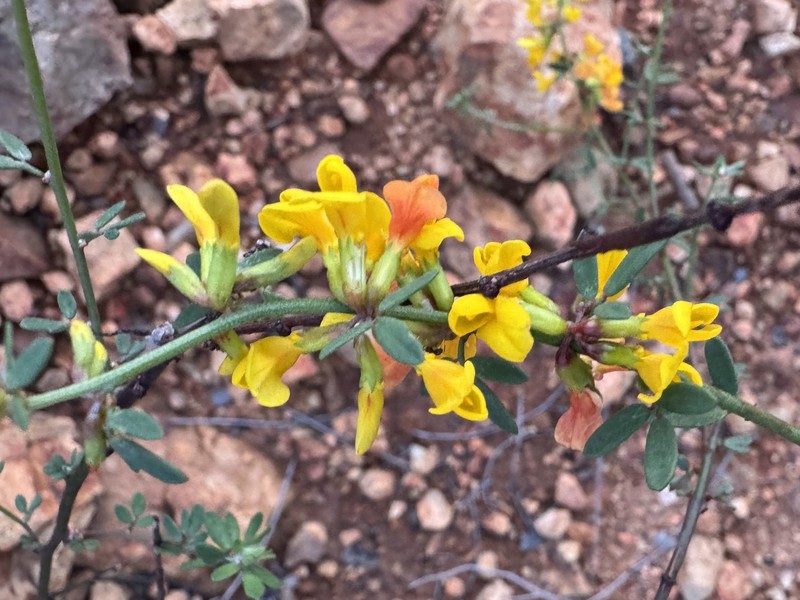
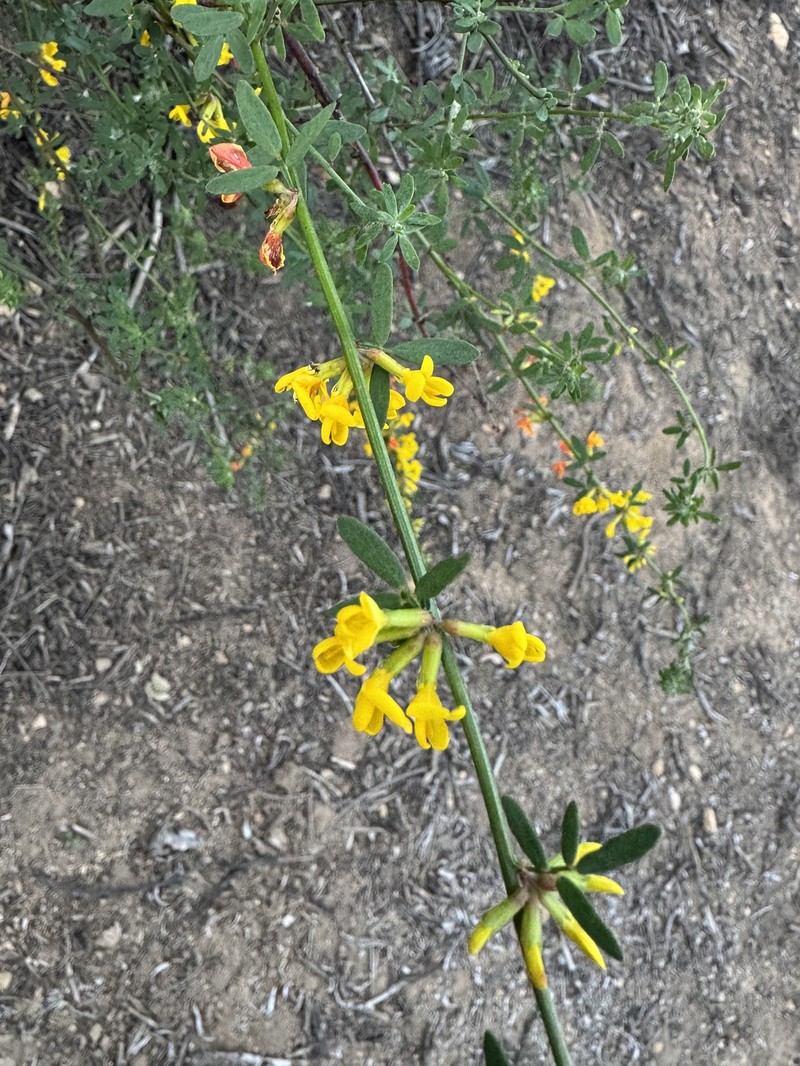
Taxonomy
- Division:
- Magnoliophyta | - Flowering plants
- Family:
- Fabaceae
- Genus:
- Acmispon
- Species:
- Acmispon glaber subsp. glaber
- USDA Symbol:
- LOSC2
Growth Characteristics
- Life Cycle:
- Perennial
- Growth Habit:
- Subshrub
- Height:
- 90 cm
- Light Requirements:
- Full Sun
- Drought Tolerance:
- High
- Bloom Months:
- mar,apr,may,jun,jul,aug
- Bloom Colors:
- yellow, orange, red
- Landscaping Shrub:
- Yes
Wildlife Benefits
- Bees:
- ★☆☆☆☆ Documented bee visitation (GBIF)
- Butterflies & Moths:
- ★☆☆☆☆ Documented Lepidoptera association (GBIF)
- Caterpillars:
- ★★★☆☆ Recorded caterpillar host plant (HOSTS Database)
Host Plant for Caterpillars
Arla diversella, California looper moth (Semiothisa californiaria), Coleophora accordella, Euclidia ardita, Eupithecia nevadata, Glossy Black Idia (Idia lubricalis), Painted Tiger Moth (Arachnis picta), Spilosoma vestalis, Acmon blue (Plebejus acmon), Avalona hairstreak (Strymon avalona), Dusky Green Hairstreak (Callophrys dumetorum), Funereal Duskywing (Erynnis funeralis), Holly Blue (Celastrina argiolus), Marine Blue (Leptotes marina), Orange Sulphur (Colias eurytheme), ⚠️Persius duskywing (Erynnis persius), Queen Alexandra's Sulphur (Colias alexandra), Silvery Blue (Glaucopsyche lygdamus), 🛑Xerces blue (Glaucopsyche xerces)
Garden & Ecology Notes
- Wildlife Value:
- bees, butterflies, birds
- Deer Resistant:
- Yes
- Salt Tolerant:
- Yes
- Fire Ecology:
- Fire adapted — tolerates or benefits from fire
- Fire Notes:
- Resprouts vigorously from root crown after fire. Short-lived perennial that colonizes burned areas rapidly and benefits from fire in chaparral ecosystems.
Soil Requirements
- Soil Type:
- sandy, well-drained, nutrient-poor soil
- pH:
- 6.0 - 8.0 (slightly acidic to neutral)
- Drainage:
- excellent drainage required
- Moisture:
- dry to moderate
- Notes:
- Commonly found in coastal sage scrub and chaparral habitats.
Propagation & Germination
- Stratification:
- None required
- Scarification:
- Seed coat scarification required before sowing
- Germination Time:
- 7–21 days
- Notes:
- Scarify or hot water treatment improves germination. Inoculation with Rhizobium improves establishment and nitrogen fixation.
Pre-treatment: Heat fresh water to 190F. Remove container from heat. Add seeds, cover, and let soak for 12 hours.
Establishment: Seeds are collected between May 1st and August 1st. Mature inflorescences are brown, papery pods. Each pod contains 1 seed. L. scoparius is found on dry slopes and fans below 5,000 feet elevation; from Humboldt and Plumas counties to Lower California.
Source: npn.rngr.net