
False Indigo Bush
Amorpha fruticosa
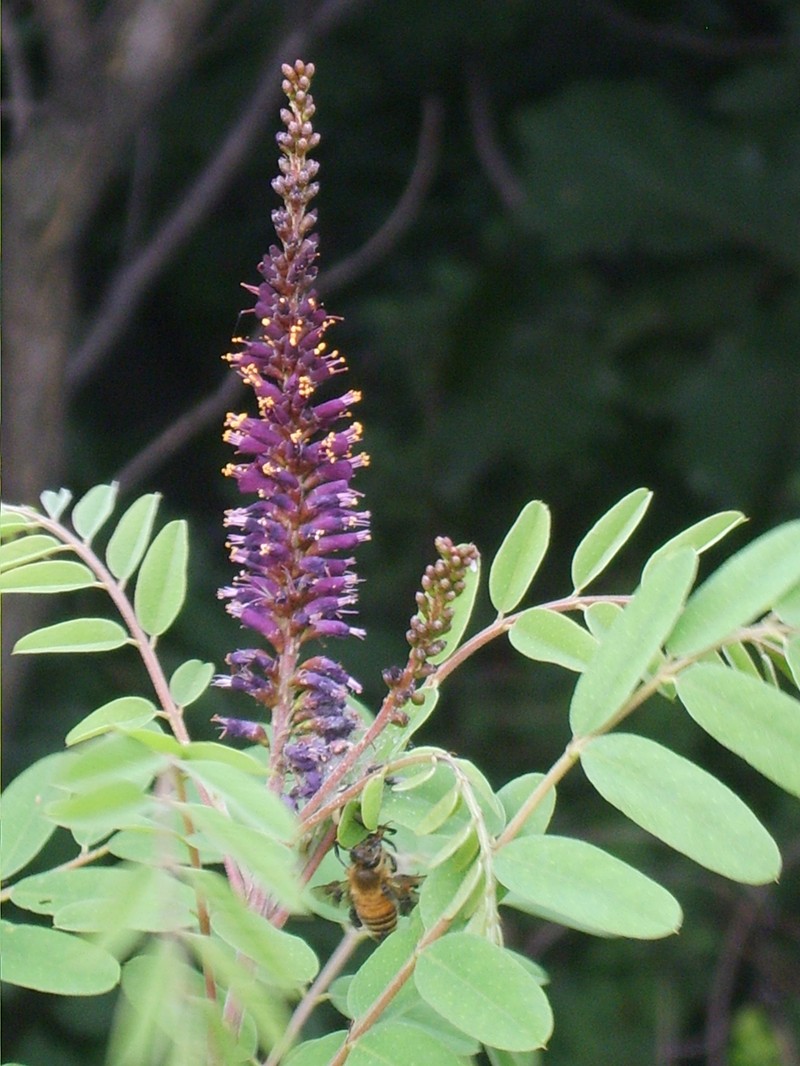
Taxonomy
- Division:
- Magnoliophyta | - Flowering plants
- Family:
- Fabaceae
- Genus:
- Amorpha
- Species:
- Amorpha fruticosa
Growth Characteristics
- Life Cycle:
- Perennial
- Growth Habit:
- Shrub
- Height:
- 12-20 ft
- Light Requirements:
- Full Sun, Part Shade
- Drought Tolerance:
- High
- Bloom Months:
- apr, may, jun
- Bloom Colors:
- Orange, Blue, Purple, Violet
- Landscaping Shrub:
- Yes
Native Range
United States: Alabama, Arkansas, Arizona, California, Colorado, Connecticut, District of Columbia, Delaware, Florida, Georgia, Iowa, Idaho, Illinois, Indiana, Kansas, Kentucky, Louisiana, Massachusetts, Maryland, Maine, Michigan, Minnesota, Missouri, Mississippi, North Carolina, North Dakota, Nebraska, New Hampshire, New Jersey, New Mexico, New York, Ohio, Oklahoma, Oregon, Pennsylvania, Rhode Island, South Carolina, South Dakota, Tennessee, Texas, Utah, Virginia, Vermont, Washington, Wisconsin, West Virginia, Wyoming, Canada: Manitoba, New Brunswick, Ontario, Quebec
Host Plant for Caterpillars
Reported Fauna Sightings
Soil Requirements
- Soil Type:
- moist, fertile, well-drained loam
- pH:
- 6.0 - 8.0 (slightly acidic to neutral)
- Drainage:
- tolerates poor drainage
- Moisture:
- consistently moist
- Notes:
- Commonly found in riparian zones and floodplains
Germination Information
Pre-treatment: Seeds germinate at 30/20 C. Mechanical scarification for 15 seconds using a Forsberg seed scarifier. Seeds are planted in late October using a Love seeder set at 3rd gear at 10 setting into prepared field beds.
Establishment: Seeds are typically collected from local sources or hand harvested from a population of Central Appalachian Amorpha fructosa. The fruits are legumes that are light tan at maturity and typically contain 1 or 2 seeds per pod and usually mature in August and September. Seeds are glossy, smooth, and olive brown and are 2 to 2.8 mm (0.07 to 0.11 in) long.
Source: npn.rngr.net